





A Sanctuary for the Stars
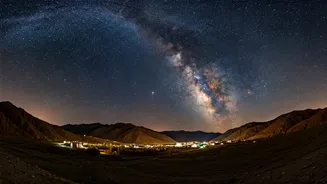
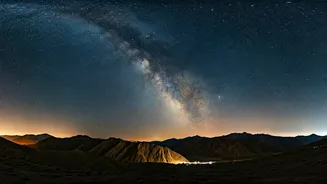
First, what exactly is a Dark Sky Reserve? It’s an area that is officially recognised for its exceptionally dark and starry nights, with policies in place to protect it from light pollution. In late 2022, a 1,073-square-kilometre area around the village
of Hanle in Ladakh was designated as India's first Dark Sky Reserve. This initiative, a collaboration between local authorities and the Indian Institute of Astrophysics (IIA), aims to preserve the pristine sky for both scientific research and a special kind of tourism called astro-tourism. By controlling artificial lighting—using shielded lamps and asking residents to draw thick curtains—the reserve ensures the night sky remains as dark and clear as possible, creating a perfect stage for celestial shows.
The High-Altitude Advantage
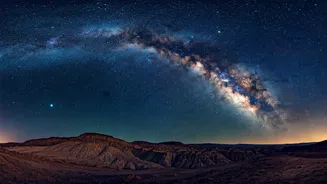
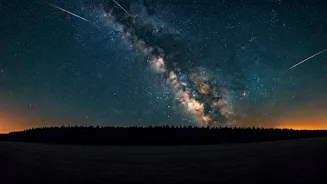
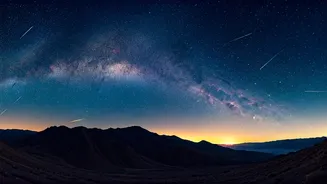
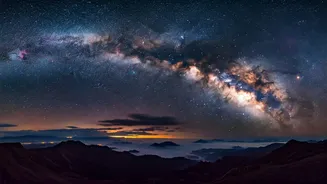
One of Hanle’s biggest secrets to success is its location. Situated in the Changthang region at a breathtaking altitude of about 4,500 metres (nearly 14,800 feet), it is one of the highest astronomical observatories in the world. At such heights, the Earth’s atmosphere is significantly thinner. A thinner atmosphere means less distortion and absorption of light from distant stars and meteors. This results in a sharper, more brilliant view of the cosmos. Think of it as looking through a cleaner, clearer window. This high-altitude placement puts viewers in Hanle much closer to the action, making faint meteors and the sprawling band of the Milky Way appear with stunning clarity.
A Desert Climate for Flawless Skies
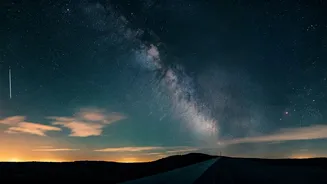
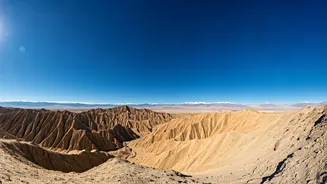
Ladakh is a cold desert, a high-altitude region that sits in a rain shadow, meaning it receives very little rainfall or cloud cover. Hanle benefits from this dry, arid climate, boasting an average of 270 to 300 clear, cloudless nights per year. Low humidity and minimal atmospheric water vapour are critical for good stargazing. Moisture in the air can scatter light and blur our view of the stars. Hanle's dry air acts as a natural lens, ensuring that light from meteor showers like the Perseids in August or the Geminids in December travels straight to your eyes with minimal interference, making the streaks appear brighter and more defined.
Winning the War on Light Pollution
In most parts of the world, the faint glow of meteor showers is washed out by the glare of artificial lights from cities and towns. Hanle's remoteness is its greatest asset in this fight. The region is sparsely populated, far from major urban centres, and its official reserve status means light discipline is taken seriously. Local communities have been trained and equipped with ground-facing lights and other tools to minimise light spill. This commitment has earned Hanle's sky a Bortle-1 classification in some areas, which is the darkest level possible, signifying a night sky virtually free from any man-made light pollution. For a meteor shower, this means you can see not just the bright fireballs but also the dozens of fainter shooting stars that are invisible from anywhere else.
A Community of Stargazers
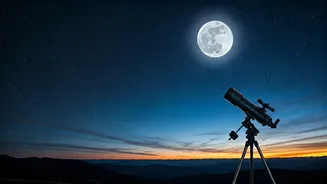
The success of the Hanle Dark Sky Reserve isn't just about geography; it's also about people. The local community has been deeply involved in this project, with many residents trained as 'Astronomy Ambassadors'. Equipped with telescopes and knowledge of the night sky, they guide visitors, sharing the wonders of the cosmos and turning astro-tourism into a sustainable livelihood. This community-led approach enriches the experience for visitors, who not only get to see the stars but also connect with the people dedicated to preserving them. It transforms a simple viewing into a memorable cultural and scientific journey, solidifying Hanle’s status as a world-class destination for anyone who loves to look up.