




The Underarm That Shamed a Nation
In February 1981, Australia faced New Zealand in a One Day International. With New Zealand needing six runs off the final ball to tie, Australian captain Greg Chappell made a decision that lives in infamy. He instructed his younger brother, Trevor, to bowl
the ball underarm, rolling it along the ground. This made hitting a six impossible for batsman Brian McKechnie. While technically legal at the time, the act was universally condemned as a complete violation of sportsmanship. New Zealand's Prime Minister called it an "act of true cowardice." The incident was so controversial that it led to underarm bowling being banned from limited-overs cricket, ensuring such a cynical play could never happen again.
When a Kick Met a Raised Bat
The 1981 Perth Test between Australia and Pakistan delivered one of cricket's ugliest on-field confrontations. Pakistani batsman Javed Miandad took a single, and as he ran, fast bowler Dennis Lillee appeared to deliberately block his path. After a collision, Lillee aimed a kick at Miandad. In response, Miandad raised his bat as if to strike the bowler. Umpires and players rushed in to separate the two fiery competitors before blows could be landed. It was a shocking scene that saw two of the game's biggest stars nearly come to a physical fight in the middle of the pitch. Lillee was fined a small amount, but the image of Miandad's raised bat and Lillee's kick remains a stark reminder of how high tensions can run.
The Dropped Catch That Lost a World Cup
It’s a moment that has haunted South African cricket for decades. During a crucial 1999 World Cup Super Six match against Australia, Herschelle Gibbs dropped a relatively simple catch. The batsman was Steve Waugh, who was on 56 at the time. Gibbs took the catch but, in his haste to celebrate by throwing the ball in the air, he lost control and dropped it. Waugh went on to score an unbeaten 120, leading Australia to victory and eventually the World Cup title. The moment is famously, though perhaps apocryphally, linked to Waugh telling Gibbs, "You've just dropped the World Cup." Whether he said it or not, the drop proved to be one of the most costly errors in the history of the tournament.
‘Sandpapergate’: A National Disgrace
In March 2018, Australian cricket was plunged into its biggest crisis in a generation. During a Test match against South Africa, television cameras caught Australian fielder Cameron Bancroft trying to alter the condition of the ball using a small, yellow piece of sandpaper hidden in his trousers. The ensuing investigation revealed that captain Steve Smith and vice-captain David Warner were part of the premeditated plan. The scandal, dubbed 'Sandpapergate', led to national outrage, with even the Australian Prime Minister calling it a "terrible disgrace." Smith and Warner were banned from the sport for a year, and Bancroft for nine months, in one of the heaviest punishments ever handed down for ball-tampering.
A World Cup Decided by a Tie-Breaker
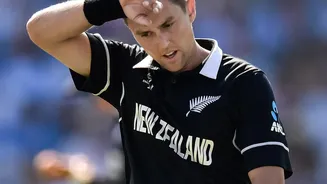
The 2019 Cricket World Cup final between England and New Zealand was arguably the most dramatic one-day match ever played. After 100 overs, the scores were tied. The match went to a 'Super Over', a one-over shootout to decide the winner. Incredibly, the Super Over also ended in a tie. The winner was then decided by one of the game's most obscure tie-breaking rules: the team that had hit more boundaries (fours and sixes) in the match would be crowned champion. England, having scored 26 boundaries to New Zealand's 17, won their first-ever World Cup. While England celebrated, the cricketing world was left stunned and divided over a final being decided on such a contentious technicality, a rule that was later scrapped.