



The Tale of Two Sweeteners
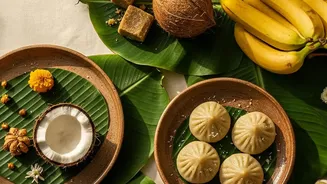
Jaggery, or gur, is a cornerstone of Indian culinary heritage, especially during winter. It's an unrefined sweetener made by boiling sugarcane juice until it solidifies, a process that retains the natural molasses. This gives jaggery its characteristic
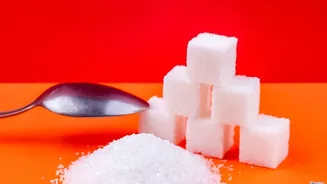
golden-to-dark-brown colour and a complex, earthy flavour reminiscent of caramel. White sugar, on the other hand, is the result of extensive refining. The sugarcane juice is processed to strip away all molasses and minerals, leaving behind pure, crystalline sucrose. This fundamental difference in processing is the source of all the health claims and debates that follow. While white sugar provides a neutral sweetness, jaggery adds a distinctive flavour to everything from winter sweets like chikki and laddoos to a simple cup of chai.
A Nutritional Face-Off
On the surface, jaggery seems to have a clear nutritional advantage. Because it is unrefined, it contains several minerals that are absent in white sugar, such as iron, magnesium, potassium, and calcium. A 100-gram serving of jaggery can offer a notable amount of these nutrients. In contrast, white sugar provides what are often called 'empty calories'—energy without any vitamins or minerals. However, context is everything. While the mineral content in jaggery is impressive per 100 grams, a typical serving size is much smaller, usually around one or two teaspoons (10-15 grams). At this quantity, the mineral contribution is minimal, providing only a small fraction of your daily needs. Calorie-wise, both sweeteners are nearly identical, with jaggery having around 383 calories per 100 grams and white sugar about 387.
The Glycemic Index Surprise
One of the most persistent beliefs is that jaggery is better for blood sugar control. However, scientific data tells a different story. The Glycemic Index (GI) measures how quickly a food raises blood glucose levels. Surprisingly, most sources indicate that sugarcane jaggery has a higher GI (around 84) than white sugar (around 65). This means that jaggery can cause a faster and higher spike in blood sugar, which is the opposite of what many people assume. The reason for this is that jaggery contains free glucose and fructose which are absorbed more quickly, while the pure sucrose in white sugar needs to be broken down first. For individuals managing diabetes or insulin resistance, neither sweetener is a 'safe' option, and the idea of liberally substituting sugar with jaggery for blood sugar benefits is a myth.
Traditional Wisdom and Winter Wellness
For centuries, jaggery has been a staple in traditional Indian medicine and winter diets for its perceived health benefits. It's considered a 'warming' food that helps generate body heat, making it popular during colder months. Traditional beliefs credit it with aiding digestion, acting as a cleansing agent for the lungs and respiratory tract, and boosting immunity. Some of these claims have a basis in its nutritional profile. For instance, its iron content can help prevent anaemia, a condition that causes fatigue. Its antioxidant properties, derived from minerals like zinc and selenium, may support the immune system. However, while these traditional uses are culturally significant, it's important to remember that jaggery is not a medicine. Many of its purported benefits, like 'blood purification', are not scientifically proven.
The Verdict: It’s All in the Big Picture
So, is jaggery healthier than sugar? The answer is nuanced. Jaggery is marginally better due to its mineral and antioxidant content, and it is a less processed, more natural product. Its rich, complex flavour is also a culinary advantage. However, it is not a 'health food'. In terms of calories and its effect on blood sugar, it is very similar to, and in some cases more potent than, white sugar. The key takeaway, as suggested by the headline, is to view sweeteners within the context of your entire diet. Neither jaggery nor sugar should be consumed in large quantities. The real health benefits come not from swapping one for the other, but from reducing overall intake of added sugars.