




An Invisible, Adaptive Shield
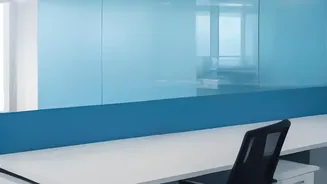
Imagine a window that knows when to let sunlight in and when to block its heat. That's the core idea behind smart window coatings. Unlike traditional tints or films, which have a fixed level of darkness, smart glass can change its properties. This technology
involves applying ultra-thin layers of advanced materials to glass that can alter the amount of light and heat passing through in response to an external trigger. This allows them to be transparent on a cool day but become tinted or reflective when the sun beats down, providing a dynamic shield against unwanted heat without sacrificing natural light entirely.
The Science of Blocking Heat
There are two main types of active smart glass technologies: electrochromic and suspended particle devices (SPD). Electrochromic windows use a low-voltage electrical charge to trigger a chemical reaction that tints the glass. Ions move between layers within the glass, causing it to darken and absorb or reflect the sun's heat-carrying infrared rays. A key benefit is that once the state is changed, it requires no further electricity to maintain its tint. SPD technology works differently, using a liquid suspension of tiny particles. When the power is off, these particles are randomly scattered, making the glass opaque; when power is applied, they align instantly, making the glass clear. A third, passive type is thermochromic technology, which automatically reacts to temperature. A special coating, often made with vanadium oxide, will begin to block infrared radiation once the glass heats up to a certain temperature, without needing any electrical input.
Translating Tech to Tangible Savings
The primary benefit of blocking solar heat is a significant reduction in the need for air conditioning. Buildings account for a massive portion of energy consumption, with heating and cooling being the largest components. Studies show that up to 30% of a home's heating and cooling energy can be lost through its windows. By dynamically managing solar heat gain, smart windows can reduce the workload on HVAC systems, leading to annual energy savings of up to 20%, according to some estimates. This not only cuts down on operational costs for building owners but also lessens the overall strain on the power grid, especially during peak demand on hot summer days.
A Solution for Urban Heat Islands
In dense urban environments, the benefits are even more pronounced. Cities often suffer from the "urban heat island" effect, where vast expanses of concrete and asphalt absorb and radiate heat, making the area significantly warmer than surrounding rural landscapes. This drives up energy demand for cooling across the board. Widespread adoption of smart windows and reflective surfaces can help mitigate this effect. By reflecting unwanted solar radiation, buildings with smart glass contribute less to the ambient heat of the neighborhood, creating a cooler microclimate and potentially lowering air temperatures city-wide.
Barriers to Widespread Adoption
Despite the clear benefits, smart windows are not yet standard in most buildings. The primary hurdle is cost. Smart glass can be several times more expensive than traditional energy-efficient windows, with installation costs also being higher due to the need for electrical wiring in active systems. The lifespan of the technology and potential maintenance needs are other considerations. However, as manufacturing processes improve and economies of scale grow, prices are expected to fall. Researchers are continually developing more cost-effective materials and simpler application methods, such as spray-on coatings, to make this energy-saving technology more accessible for both new construction and retrofitting existing buildings.