


Beyond Looking for a Second Earth
For decades, the search for extraterrestrial life has focused on finding 'Earth-like' planets. The logic was simple: find another world that mirrors our own, and we might find life. However, a growing number of scientists, including geobiologist Dirk
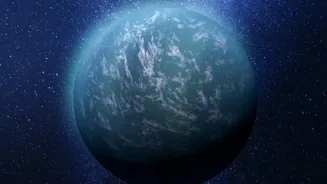
Schulze-Makuch, are challenging this geocentric view. They argue that we shouldn't just be looking for a twin of our planet, but for worlds that could be even more suitable for life. This shift in thinking has given rise to the concept of the 'superhabitable' world — a planet or moon with conditions potentially more favourable for the emergence and evolution of rich biodiversity than Earth itself. The goal is to identify planets that aren't just habitable, but where life could truly thrive in greater abundance and diversity.
The Recipe for a 'Better' Planet
So, what makes a planet 'superhabitable'? Researchers have outlined several key characteristics. Such a world would likely be older, a little larger, slightly warmer, and possibly wetter than Earth. An ideal age is estimated to be between 5 to 8 billion years old, compared to Earth's 4.5 billion. This extra time would allow for complex life to develop and for the planet to settle into a stable geological state. A planet up to 1.5 times Earth’s mass would have stronger gravity, helping it to retain a thicker atmosphere over billions of years. This increased mass would also fuel more prolonged internal heating, which drives crucial processes like plate tectonics that recycle minerals and stabilise the climate.
A Warmer, Wetter World
While we worry about global warming on Earth, a slightly higher average surface temperature on another planet could be a good thing for biology. A planet with an average temperature about 5 degrees Celsius warmer than Earth's might foster greater biodiversity, similar to how Earth's own tropical rainforests are bursting with life compared to colder regions. A thicker atmosphere would also help moderate the climate, reducing extreme temperature swings between poles and the equator. Abundant water is a given, but a superhabitable world might feature a landscape of scattered shallow seas and archipelagos rather than massive, deep oceans. This would create extensive, life-rich coastal areas.
The Perfect Stellar Host
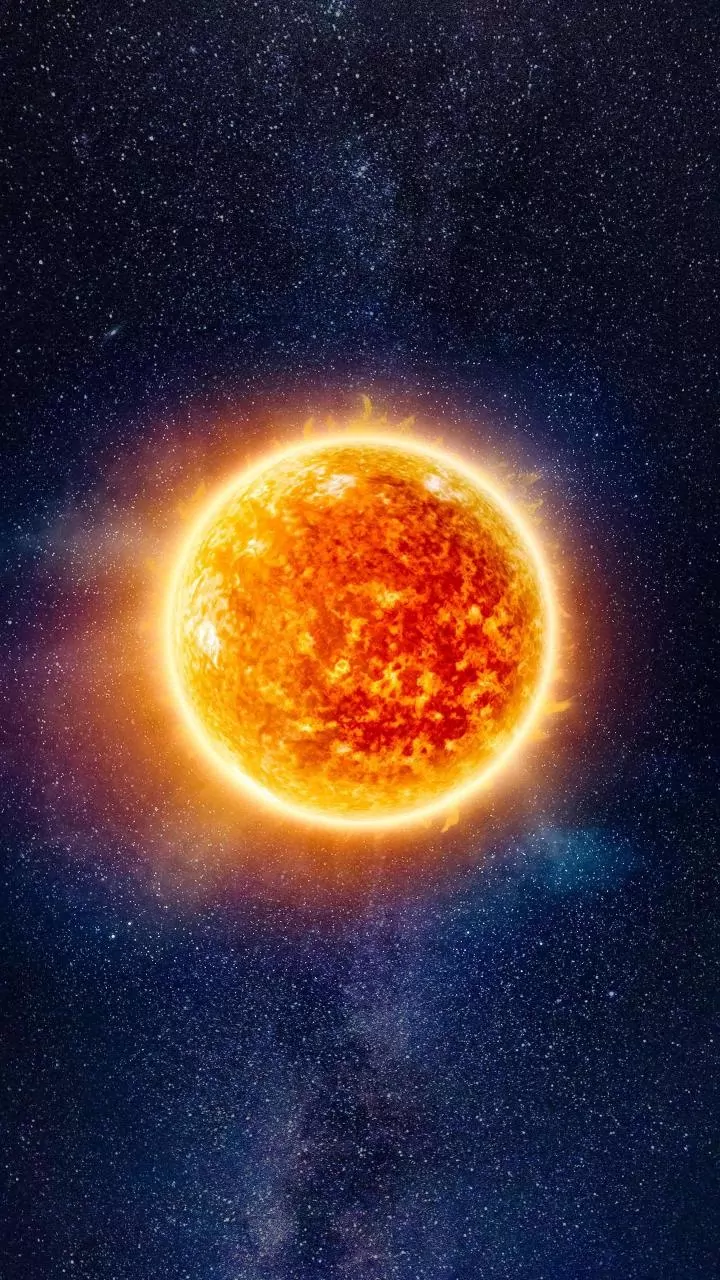
The ideal home for a superhabitable planet may not be a star like our Sun. Our Sun is a G-type star with a lifespan of about 10 billion years. Considering it took nearly 4 billion years for complex life to appear on Earth, stars like ours might not offer a long enough window for life to reach its full potential. Researchers believe K-dwarf stars, also known as orange dwarfs, are much better candidates. These stars are less massive and luminous than the Sun, but they have incredibly long lifespans, burning for 20 to 70 billion years. This provides a much longer, more stable period for life to arise and evolve. K-dwarfs are also less prone to violent stellar flares than the even smaller and more common M-dwarf (red dwarf) stars, making their planetary systems a safer neighbourhood for biology.
Are There Any Candidates Out There?
This isn't just a theoretical exercise. In a 2020 study published in the journal Astrobiology, Schulze-Makuch and his colleagues sifted through the catalogue of over 4,500 known exoplanets to find potential candidates. They identified 24 top contenders that meet some of the key criteria. None of them are a perfect match, but one, designated KOI 5715.01, stands out. This planet is estimated to be about 5.5 billion years old and orbits a stable K-dwarf star about 2,965 light-years away. While all these candidates are too distant for us to visit, they serve as crucial targets for next-generation observatories like the James Webb Space Telescope. By studying their atmospheres, scientists hope to find biosignatures that could hint at the presence of life.