





Day 1: Arrival in Pune and Peshwa Grandeur
Begin your journey in Pune, the cultural capital of Maharashtra. Your first stop is Shaniwar Wada, the historic seat of the Peshwa dynasty. Although a fire in 1828 destroyed much of the palace's wooden superstructure, its imposing stone fortifications,
grand gates, and foundations remain. Walk through the Delhi Darwaja, the main gate, and imagine the power that once emanated from these walls. The complex includes courtyards and the famous Hazari Karanje, a lotus-shaped fountain. Spend the afternoon exploring the remnants of this once-magnificent structure, which served as the center of the Maratha Empire until 1818. The site is open to visitors daily and offers a fascinating glimpse into a pivotal era of Indian history.
Day 2: A Journey to a Medieval Stepwell
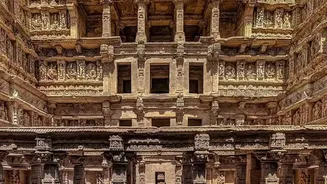
Travel southeast from Pune for approximately 75 kilometres to the village of Loni Bhapkar. Here, you'll discover a stunning medieval temple complex complete with a historic stepwell, or 'Pushkarini'. This intricately designed tank, likely dating to the 13th century, is adorned with niches that once held sculptures. The adjacent Mallikarjuna temple, though now dedicated to Shiva, shows architectural signs of originally being a Vishnu shrine. The site is a testament to the Yadava period's architectural prowess and the region's deep historical layers. Spend time admiring the detailed carvings and the serene atmosphere of a site that beautifully combines spiritual architecture with sophisticated water management.
Day 3: The Forts and Palaces of Satara
Continue your journey to the historic city of Satara, named for the seven hills that surround it. Your primary destination is the Ajinkyatara Fort, which translates to 'The Impregnable Star'. Perched at an elevation of 3,300 feet, this fort offers panoramic views of the entire city. Built in the 12th century and later captured by Chhatrapati Shivaji Maharaj in 1673, it was a key stronghold for the Marathas. Explore the fort's massive gates, defensive walls, and the temples dedicated to Mangalai Devi and Hanuman inside. In the city itself, you can visit the Old Palace (Juna Rajwada), built in 1824, which showcases a blend of Anglo-Maratha architectural styles.
Day 4: The Marvel of Bara Motachi Vihir
A short drive from Satara city lies Limb village, home to one of Maharashtra's most spectacular stepwells: Bara Motachi Vihir. Constructed between 1641 and 1646 by Sau Virubai Bhosale, this well is a unique architectural marvel. Its name refers to the twelve pulleys ('bara mota') used to draw water. The octagonal well is 110 feet deep and features a gallery and a small underground palace-like structure. Secret passages and a royal seat for holding court add to its mystique. Unlike the stepwells of Rajasthan, this structure has steps leading down from only one side, guiding visitors into its cool, stone-carved depths. It served not just as a water source but also as a secret meeting place.
Day 5: Reflection and Return from Satara
On your final day, take some time to absorb the rich history you've witnessed. Before departing from Satara, consider a visit to the Shri Chhatrapati Shivaji Museum, which houses Maratha-era artefacts, including weapons and costumes, providing further context to the palaces and forts you've explored. For a final taste of palace life, view the Jalmandir Palace, the current residence of the Satara royal family, from a distance, reflecting on the continuity of history in this remarkable region. This journey offers more than just sightseeing; it’s an immersion into the architectural ingenuity and strategic brilliance of Maharashtra's past, leaving you with a deeper appreciation for its hidden heritage.