






As monsoon rains intensify and urban floods become an annual ordeal, Indian cities are finding a powerful ally in an often-overlooked feature of the landscape: wetlands. These natural sponges are proving to be a critical line of defence.
Our Cities Under Water
The story is painfully
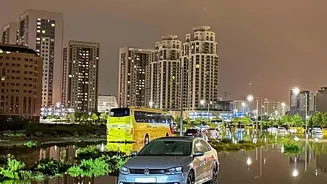
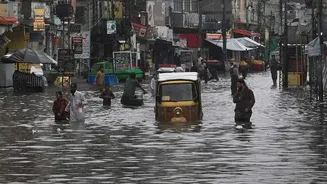
familiar across urban India. A few hours of intense monsoon rainfall, and city life grinds to a halt. Roads turn into canals, homes are inundated, and drainage systems are completely overwhelmed. In recent years, cities from Chennai to Mumbai have faced catastrophic flooding, causing billions in damages and displacing millions. This isn't just a matter of unusually heavy rain; it's a crisis magnified by urban planning that has systematically ignored nature. As concrete and asphalt replace green spaces, rainwater has nowhere to go, sheeting off hard surfaces and funnelling into overburdened drains. Studies show that a significant decrease in green spaces and water bodies directly increases flood risk in Indian cities.
Nature’s Overlooked Solution
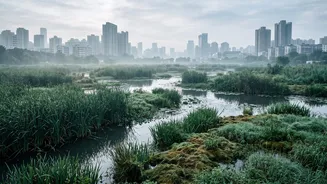
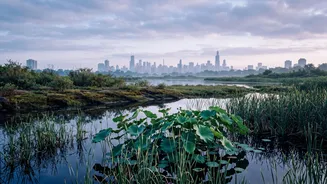
Amidst the concrete jungle lies a nature-based solution: the urban wetland. Often dismissed as 'wastelands' ripe for development, these areas—which include marshes, ponds, lakes, and floodplains—are highly effective, living infrastructure. Think of a wetland as a giant natural sponge. During heavy downpours, they absorb and store vast quantities of excess rainwater, slowing its release into the drainage network. This simple act reduces the peak flow of water, giving conventional drains a chance to cope and preventing the sudden, widespread waterlogging that paralyses our cities. Their vegetation and soil act as natural filters, trapping pollutants and helping to recharge precious groundwater aquifers, tackling both floods and water scarcity at once.
Kolkata’s Living Flood Barrier
For a real-world example of this principle in action, look to the East Kolkata Wetlands (EKW). This 12,500-hectare marvel of nature and human ingenuity serves as a vital organ for the city. Designated as a Ramsar Site of International Importance, the EKW not only acts as a massive flood buffer for the low-lying city but also functions as the world's largest natural resource recovery system. Every day, it naturally treats around 900 million litres of Kolkata's sewage and stormwater. The nutrient-rich water then supports fisheries that supply a significant amount of fish to the city's markets and irrigates agricultural land, creating a sustainable, circular economy. During the monsoons, its vast network of ponds and channels absorbs and holds rainwater, protecting the dense urban core from severe flooding.
More Than Just Soaking Rain
The benefits of preserving urban wetlands extend far beyond flood control. They are biodiversity hotspots, providing critical habitats for countless species of plants, birds, fish, and insects in otherwise developed areas. These green-blue spaces also help combat the 'urban heat island' effect by cooling the surrounding air through evaporation and providing shade. Furthermore, wetlands are incredibly effective carbon sinks, with coastal wetlands capable of sequestering carbon up to 55 times faster than tropical rainforests, making them essential allies in the fight against climate change. They also offer invaluable recreational, cultural, and educational spaces for city dwellers, improving overall well being.
A Disappearing Defence
Despite their immense value, India's urban wetlands are among the most threatened ecosystems. In the last few decades, India has lost nearly a third of its natural wetlands to rapid urbanisation, pollution, and encroachment. As cities expand, these vital areas are often filled in for real estate development. They are also used as dumping grounds for untreated sewage and industrial waste, which poisons the water and destroys the ecosystem's ability to function. The devastating Chennai floods of 2015 were a tragic lesson in this regard; the city had lost the vast majority of its wetlands to development, leaving the floodwaters with nowhere to go. Without robust protection and restoration efforts, our cities are dismantling one of their most effective natural defences against climate change.