




Introducing The Contenders
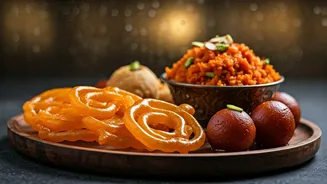
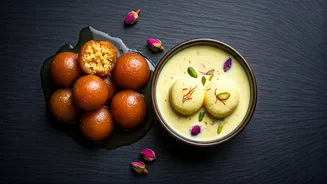
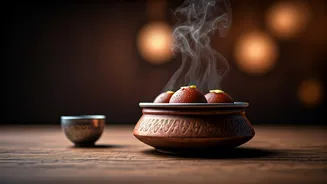
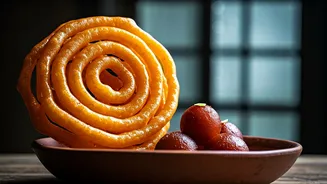
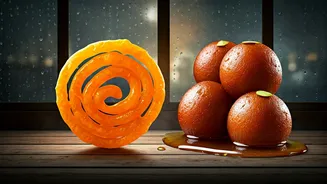
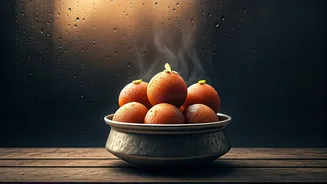
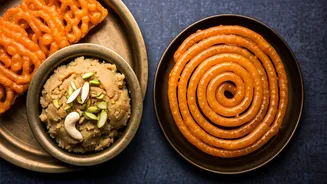
In one corner, we have the chaotic, crispy, and brilliantly orange Jalebi, a spiral of fried batter drenched in sugar syrup. In the other, the dignified, soft, and heart-warmingly spongy Gulab Jamun, a milk-solid dumpling that bathes gracefully in its
own fragrant, sweet bath. Both are titans of the Indian dessert world, with origins tracing back to Persian and Middle Eastern influences, brought to the subcontinent centuries ago. Gulab Jamun's name itself is a nod to its Persian roots, with 'gulab' meaning rosewater and 'jamun' for the berry it resembles. Jalebi, similarly, evolved from the West Asian 'Zalabiya'. Both have been so thoroughly embraced that they are now quintessentially Indian, woven into the fabric of celebrations, festivals, and everyday life.
The Case for Gulab Jamun: A Warm Embrace
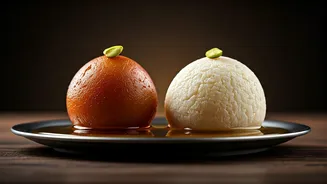
There are few things as purely comforting as a warm Gulab Jamun on a cool, rainy day. Each spoonful is a study in softness. The spongy ball, traditionally made from khoya (milk solids), readily gives way, having soaked up the rose or cardamom-scented syrup it resides in. It’s a dessert that feels like an embrace from the inside. Its appeal lies in its consistent, melt-in-your-mouth texture and its ability to deliver a deep, satisfying sweetness that feels both luxurious and homely. The warmth it provides is a direct counter to the damp chill of the monsoon, making it a go-to comfort food for many. It’s the dessert you turn to for emotional support, a reliable and generous treat that symbolizes hospitality and joy.
The Case for Jalebi: A Crispy Delight
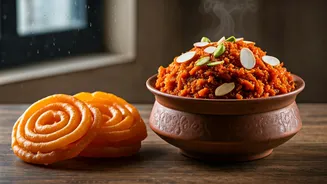
If Gulab Jamun is a warm hug, Jalebi is a firework. It’s the excitement you crave when the world outside is grey and muted. The magic of Jalebi lies in its duality: a shatteringly crisp exterior that gives way to a chewy, syrup-filled interior. Made by deep-frying a fermented batter in intricate spirals, it's a spectacle to watch being made and even more thrilling to eat. Served hot from the kadhai, its warmth is immediate and invigorating. The auditory crunch, followed by a rush of sweetness, is a multi-sensory experience that cuts through the monotony of a downpour. It doesn’t soothe; it energizes. For many, the first sign of rain is a signal to seek out the nearest vendor frying up a fresh batch.
The Rainy-Day Tiebreaker
To crown a champion, we must judge them on criteria specific to a rainy day. First, the 'Freshness Factor'. While a Gulab Jamun is delightful when warm, it can also be prepared in advance. Jalebi, however, demands to be eaten moments after it leaves the hot oil; its crispy texture is fleeting, making it an event, a treat sought out specifically for the occasion. Next, the 'Texture Test'. The soft-on-soft experience of a Gulab Jamun in damp weather is comforting, but the textural contrast offered by a crispy Jalebi is arguably more rewarding. It provides a delightful crunch that stands in stark opposition to the soft, wet world outside. Finally, the 'Chai Compatibility'. While both pair well with tea, the less overwhelming sweetness and intricate texture of a Jalebi arguably make it a slightly better companion to a cup of hot, milky chai, allowing both to shine without one overpowering the other.
The Verdict: A Champion is Crowned
While Gulab Jamun holds the undisputed title for all-occasion comfort and festive ubiquity, the specific context of a rainy day gives Jalebi a slight edge. The monsoon season is about embracing contrasts—the cool rain against warm skin, the dark clouds against a flash of lightning, and the sound of the downpour against a moment of quiet. Jalebi, with its dynamic texture of crisp and chewy, its vibrant colour, and the immediacy of eating it fresh and hot, embodies this spirit perfectly. It’s not just a sweet; it's an experience, a small, bright spark of joy against a grey backdrop. The Gulab Jamun is the dessert for every celebration, but the Jalebi, in all its chaotic, crunchy, syrupy glory, is the undisputed champion of the rainy day.