


Understanding the Basic Movement
At its core, Cat-Cow is a simple, flowing sequence of two poses. Starting on your hands and knees in a 'tabletop' position with wrists under shoulders and knees under hips, you move between spinal extension and flexion. For Cow pose (Bitilasana), you inhale
as you drop your belly, lift your chest and tailbone, and look forward. For Cat pose (Marjaryasana), you exhale as you press the mat away, round your spine towards the ceiling, tuck your chin to your chest, and scoop your tailbone under. This continuous movement gently mobilises all 24 vertebrae, creating space and fluidity from your neck down to your lower back.
The Power of Slow, Intentional Breath
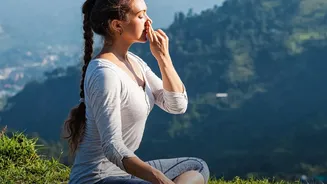
The secret to transforming Cat-Cow from a simple stretch into a meditative practice is the breath, known in yoga as 'pranayama'. Slow, deep breathing, particularly diaphragmatic breathing, has a profound effect on the nervous system. When you breathe slowly, it signals to the brain that it's time to relax. Specifically, long exhales stimulate the vagus nerve, a key part of the body's 'rest and digest' system. This activation helps lower your heart rate, reduce blood pressure, and shift your body out of a 'fight or flight' stress response, promoting a sense of calm.
How to Sync Breath with Movement
Coordinating your breath with the Cat-Cow movement is intuitive and enhances the stretch. The key is to let the breath lead the movement. As you inhale, the lungs and rib cage naturally expand, which complements the chest-opening action of Cow pose. So, begin a slow inhale through your nose and let that breath guide you as you lower your belly and arch your spine into Cow. Hold the pose for a moment. Then, begin a slow exhale and allow that action to guide you as you round your spine into Cat pose, gently pulling your navel in to expel all the air. The goal is to make the movement last for the entire duration of your inhale and exhale, creating a seamless, rhythmic flow. Aim for five to ten slow rounds.
Deeper Benefits of the Practice
When movement and slow breath are combined, the benefits multiply. This mindful practice improves spinal flexibility and can relieve tension in the back, neck, and shoulders. The rhythmic motion also boosts circulation, pushing fresh blood to the muscles and discs along the spine. On a deeper level, the practice enhances your mind-body connection and interoception—the awareness of internal bodily sensations. The gentle expansion and compression massages the abdominal organs like the kidneys and adrenal glands. Most importantly, by activating the parasympathetic nervous system through slow breathing, this simple flow becomes a powerful tool for reducing stress and calming the mind.
Tips and Modifications
To get the most from your practice, move slowly and avoid forcing the stretch. If you have sensitive wrists, you can perform the pose on your fists or forearms. For those who find it difficult to be on the floor, a seated version can be done in a chair by placing your hands on your knees and following the same breathing and spinal movement pattern. Focus on the sensation of your spine moving segment by segment, like a wave. Let your head be a natural extension of your spine, avoiding any strain on the neck. The true aim is not the depth of the arch but the quality of your attention and the synchronicity with your breath.