


Why Go Natural with Your Rangoli?
Choosing natural materials over synthetic, chemical-laden powders is more than a trend; it's a return to tradition and a gesture of care for the environment. Natural rangolis are non-toxic, making them safe for households with children and pets. They
are also completely biodegradable, meaning they return to the earth without causing pollution. In fact, traditionally, rice flour was used as the base so that small creatures like ants and birds could feed on it, symbolizing a harmonious coexistence with nature. This approach connects us to an age-old wisdom that was both meaningful and sustainable.
Your Kitchen-Sourced Colour Palette
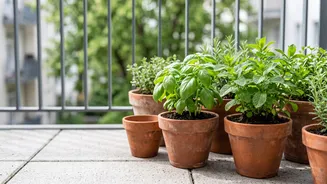
Creating vibrant colours is easier than you think. A quick look in your pantry and garden can provide a full spectrum of beautiful, earthy pigments. The most common base for homemade colours is plain rice flour, known for its classic white hue and ideal texture. Yellow: Mix turmeric powder (haldi) with rice flour for a bright, auspicious yellow. Red & Pink: For a deep red, you can use kumkum. Alternatively, dried and powdered beetroot or hibiscus petals will create lovely pink and magenta shades. Orange: Dried marigold petals or even orange peels, ground into a powder, produce a wonderful orange. Green: Dry and crush spinach, mint, or coriander leaves to make a natural green powder.* Brown: Cinnamon powder or coffee powder can be used for rich, earthy brown tones. For a coarser texture, you can use coloured salt or sand. You can also use whole grains and pulses for a unique look.
Simple Designs for Beginners
You don't need to be a seasoned artist to create a stunning rangoli. Simplicity is often the key to elegance. Geometric patterns are a great starting point for beginners. You can create beautiful designs using circles, squares, triangles, and dots. Using everyday objects as tools can help ensure symmetry and clean lines. Try using bangles of different sizes to create perfect circles, or use a string to draw a large, even circular outline. Bottle caps can be used for smaller dots, and earbuds or matchsticks are perfect for adding fine details and patterns. Stencils are another excellent option if you're not confident in your freehand drawing skills.
Step-by-Step: A Simple Flower Petal Design
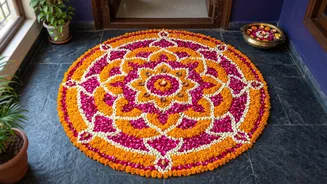
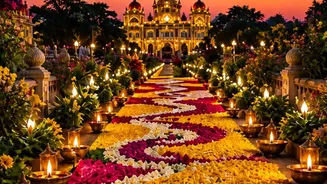
A flower rangoli, also known as a 'Pookalam', is one of the easiest and most beautiful sustainable options. Start by drawing a simple flower shape on your clean doorstep with chalk. You can make a large circle in the middle and surround it with six to eight petal shapes. Gather petals from flowers like marigolds for orange and yellow, roses for reds and pinks, and white chrysanthemums or jasmine. Begin by filling the center circle with yellow marigold petals. Then, fill the surrounding petals, perhaps alternating between red rose petals and white jasmine. For the outline, you can use green leaves or even a line of white rice flour to make the colours pop. This design is not only fragrant and beautiful but also fully compostable.
Finishing Touches and Eco-Friendly Cleanup
To elevate your rangoli, place earthen diyas or small candles around and within your design. The soft glow will highlight the natural textures and colours, creating a warm, festive ambiance. When the festivities are over, the cleanup is simple and guilt-free. Flower petals, leaves, and food-based powders can be swept up and added to your compost pile. This ensures that your beautiful creation returns to the earth, leaving no waste behind and perfectly completing the sustainable cycle of your celebration.