



What is CAPSTONE and Why Does Its Orbit Matter?
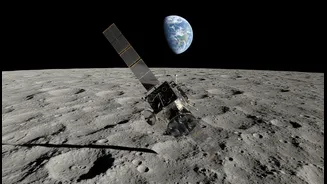
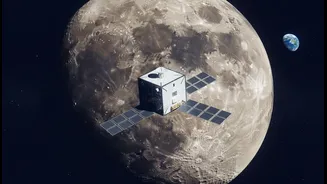
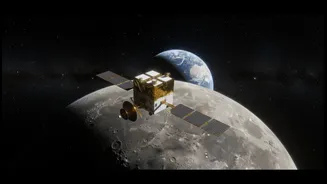
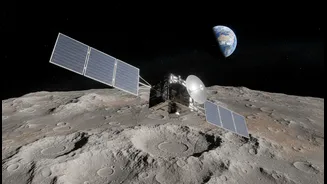
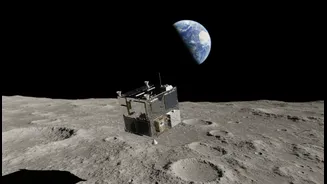
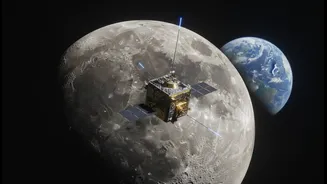
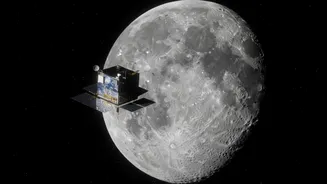
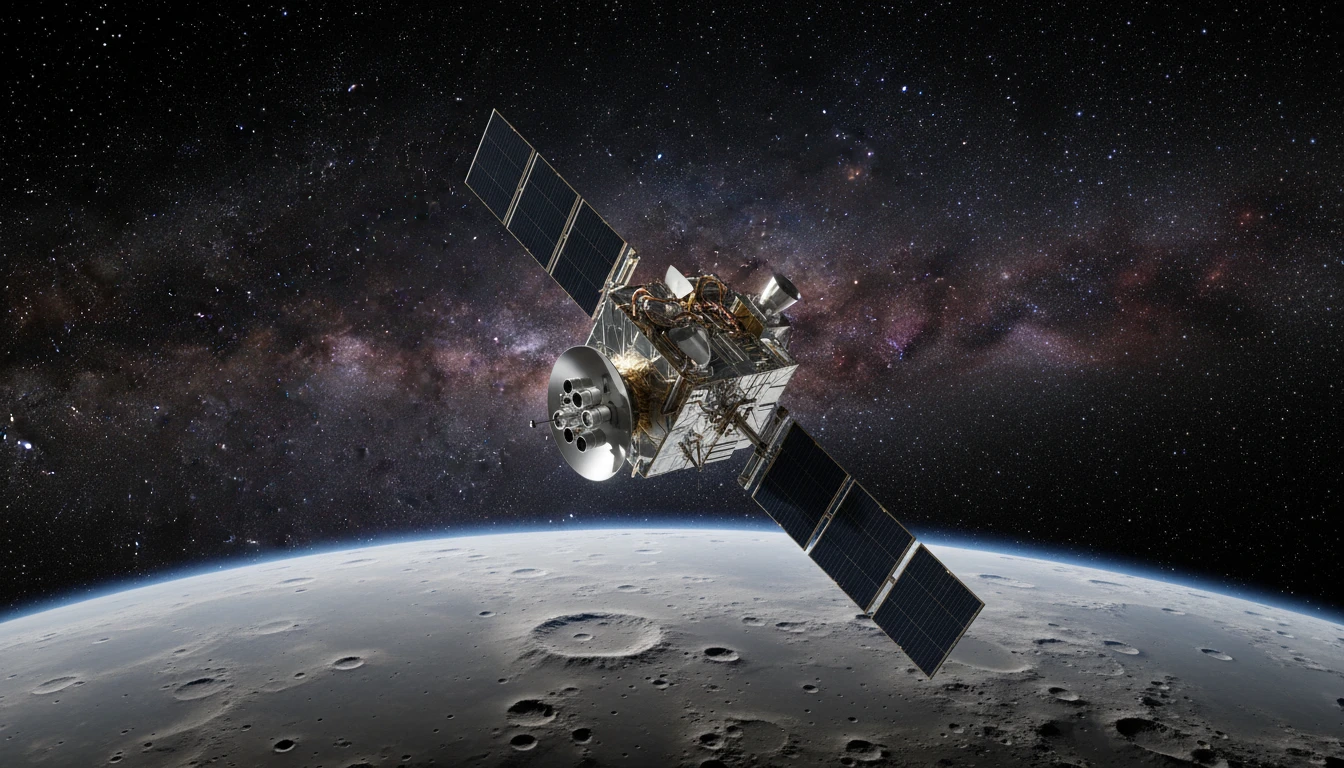
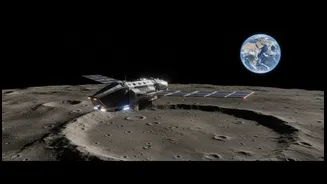
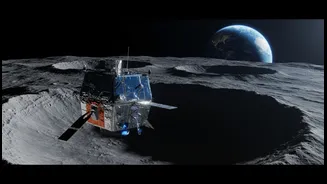
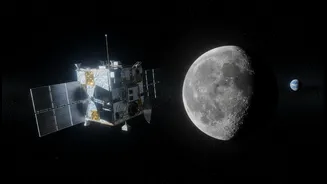
CAPSTONE, short for Cislunar Autonomous Positioning System Technology Operations and Navigation Experiment, is a small CubeSat that launched in June 2022. Its primary goal was to be the very first spacecraft to test a highly elliptical and efficient path
around the Moon called a Near-Rectilinear Halo Orbit (NRHO). This specific orbit is vital because it's the intended staging ground for the Lunar Gateway, a future space station that will support missions to the lunar surface. By flying this path for an extended period, CAPSTONE has successfully validated the stability of the orbit and the propulsion required to stay there, significantly reducing the risks for the much larger and more complex Gateway.
How Does Its 'GPS' for the Moon Actually Work?
The mission's groundbreaking secondary objective is to test the Cislunar Autonomous Positioning System (CAPS). Think of it as a foundational GPS for the Moon. Instead of constantly relying on massive antennas on Earth for location data, CAPS allows spacecraft to determine their position autonomously. The system works by having CAPSTONE communicate directly with another spacecraft, in this case, NASA's Lunar Reconnaissance Orbiter (LRO). By sending signals back and forth, the software can calculate its own position relative to the LRO. This peer-to-peer navigation is a game-changer.
Why is Autonomous Navigation So Important?
Relying on Earth-based tracking for everything in deep space is a bottleneck. The Deep Space Network (DSN) is an incredible resource, but it's oversubscribed as the number of missions grows. Autonomous navigation frees up these ground stations to prioritize critical communications and valuable science data over routine operational tracking. It makes cislunar operations more scalable, efficient, and resilient, especially for the future when dozens of government and commercial missions might be operating around the Moon at the same time. This system paves the way for spacecraft to manage themselves, a crucial step for establishing a sustained human presence on the Moon and venturing further into the solar system.
What Were the Main Engineering Challenges?
Operating a small CubeSat in deep space is fraught with challenges. The cislunar environment involves extreme radiation, power constraints, and complex gravitational forces from both the Earth and the Moon. For the navigation experiment, the engineering team had to develop software that could reliably calculate a spacecraft's position from relative data in this dynamic environment. This involved overcoming issues like weak signals, long communication delays, and creating algorithms robust enough to function when the spacecraft is on the far side of the Moon, completely cut off from Earth. The team also had to solve for hardware reliability over a long-duration mission far from home.
So, Did It Work? What Did the Mission Accomplish?
Yes, spectacularly. CAPSTONE has been a resounding success. It achieved all of its primary mission objectives and has continued to operate in an extended mission phase. It successfully entered and maintained its position in the NRHO, proving the orbit's viability. More importantly, the CAPS software demonstrated that autonomous navigation in lunar orbit is not just possible, but practical. The spacecraft successfully used data from its link with LRO to determine its position without ground intervention. NASA concluded its activities with the highly successful mission in June 2026, and the data gathered will directly inform navigation and communication strategies for future Artemis missions.