





The future of shipping is here, and it’s self-driving. Indian Institute of Technology Madras is at the helm of this revolution, developing a cutting-edge platform to test autonomous ships, charting a new course for India’s maritime ambitions.
A New Horizon for Global Shipping
The global
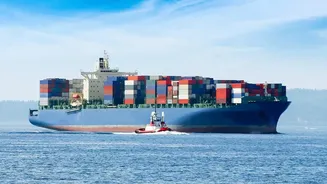
shipping industry, responsible for moving over 80% of world trade, is on the cusp of a technological transformation. The next frontier is autonomous vessels—ships that can navigate the high seas with minimal human intervention. This shift promises to dramatically enhance safety by reducing human error, a primary cause of maritime accidents. Furthermore, it aims to increase efficiency and lower operational costs. As nations race to develop these technologies, India is making significant waves. The work being done at IIT Madras, particularly through its Department of Ocean Engineering, is positioning the country as a key player in this advanced technological field.
Introducing SeaNav: A Digital Ocean
The headline innovation from IIT Madras is 'SeaNav', a state-of-the-art digital twin platform. Think of it as an ultra-realistic video game for ships. The challenge with developing self-driving ships is that real-world testing is incredibly expensive, complex, and potentially dangerous. SeaNav solves this by creating a high-fidelity virtual maritime environment. Here, researchers can simulate everything from ocean waves and vessel movements to dense ship traffic and adverse weather conditions like fog and rain. This 'digital twin' allows for the rigorous testing and validation of navigation algorithms in a safe, controlled, and cost-effective manner before they are deployed on actual vessels.
How the Technology Works
Built on the powerful Unity3D engine, SeaNav creates a virtual world that mirrors reality with remarkable accuracy. The system has been calibrated using a benchmark model of a 320-meter-long oil tanker, ensuring that the simulation's results closely match real-world behaviour. But it’s more than just a simulation. SeaNav integrates artificial intelligence, advanced sensor fusion, and even virtual reality (VR). Unlike other simulators, it realistically models sensor limitations, such as noise and delays, to train the AI to navigate in challenging, low-visibility conditions. Using VR headsets, operators and trainees can immerse themselves in the ship's bridge, practising collision avoidance and emergency manoeuvres in a lifelike setting.
Aligning with National Ambitions
The SeaNav project is not just an academic exercise; it's a strategic initiative that aligns with India's longterm maritime goals. It directly supports the government's 'Sagarmala Programme' and the 'Maritime India Vision 2030', both of which emphasize the need for smart ports, digitalization, and autonomous systems. By fostering indigenous technology, the project aims to reduce India's reliance on foreign expertise and save significant costs. The Center for Marine Autonomous Systems at IIT Madras envisions becoming a global hub for maritime technology, creating not just innovative systems but also the trained manpower to operate them.
Impact Beyond Commercial Shipping
While the primary focus is on making commercial shipping safer and more efficient, the applications of SeaNav and autonomous vessel technology extend much further. Its multivessel simulation capabilities are invaluable for national security and public safety applications. This includes coordinating coastal surveillance operations, planning complex searchandrescue missions, and enhancing maritime defence strategies. By improving navigation, the technology can also help reduce fuel consumption and lower carbon emissions, contributing to a greener and more sustainable shipping industry while minimizing the risk of environmental disasters like oil spills.