






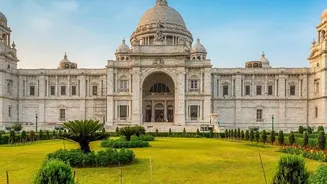
Kolkata carries many titles, but few are as intriguing as the 'London of India'. This nickname isn't just a flight of fancy; it's rooted in a deep, complex history when the city was the jewel of the British Empire.
The Empire's Nerve Centre
To understand the 'London of India' comparison,
one must travel back to when Kolkata, then Calcutta, was the capital of British India. From 1772 until the capital shifted to Delhi in 1911, the city was the undisputed political, commercial, and financial heart of the British Raj. The area known today as B.B.D. Bagh, formerly Dalhousie Square, was the epicentre of this power. It was established as the central business district and administrative stronghold, designed to project the might and permanence of the Empire, much like London itself. This district became the engine of British commerce in the East, a bustling hub of trade and governance that mirrored London’s global role.
An Architectural Echo of London
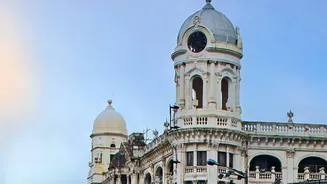
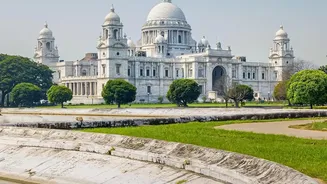
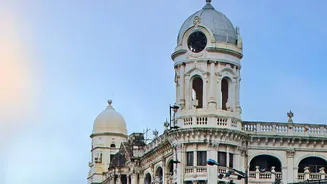
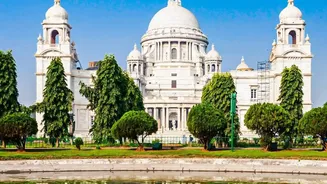
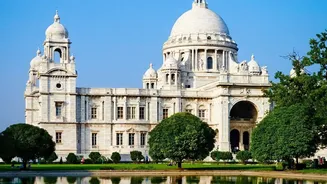
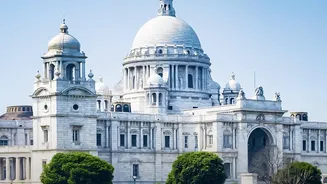
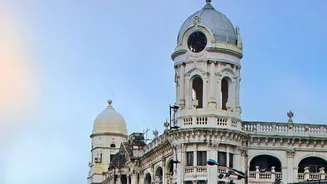
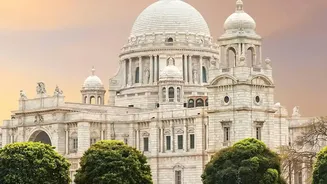
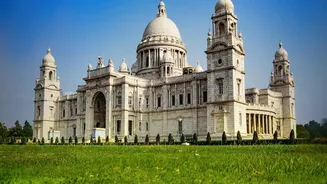
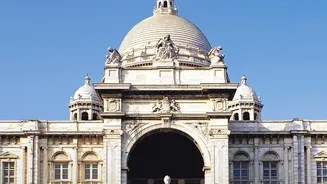
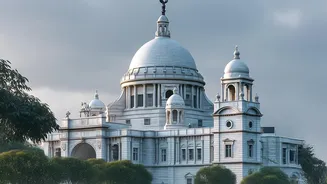
The most visible reason for the nickname is the architecture. The British built Calcutta not just as a functional capital but as a statement. Dalhousie Square and its surrounding streets are a treasure trove of colonial-era buildings that reflect European architectural styles. Grand structures in Neoclassical, Gothic, and Victorian styles were erected to house the institutions of power. The Writers' Building, with its Greco-Roman facade, served as the secretariat for the East India Company's clerks or 'writers'. The General Post Office (GPO) stands out with its towering dome and Ionic-Corinthian pillars. Even St. John's Church was modelled after St. Martin-in-the-Fields in London's Trafalgar Square. This collection of magnificent buildings created a townscape that felt strikingly European, earning it the 'London of India' moniker.
The Commercial Powerhouse
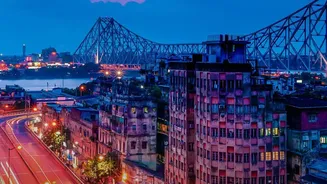
Beyond the grand facades, the district functioned as a commercial powerhouse. The Hooghly River, much like London's Thames, was a vital artery for trade, connecting the city's port to the world. Dalhousie Square was home to banks, insurance buildings, and the headquarters of major corporations, including the Eastern Railway and the Calcutta Port Trust. It was nicknamed 'Office Para' or the locality of offices, a testament to its role as the primary business hub for all of Eastern India. This concentration of commercial activity, combined with the administrative institutions, created an environment that was functionally and aesthetically similar to London's own financial district.
From Dalhousie Square to B.B.D. Bagh
After India's independence, the area underwent a significant symbolic change. Dalhousie Square was renamed B.B.D. Bagh in honour of three freedom fighters—Benoy, Badal, and Dinesh—who stormed the Writers' Building in 1930. This act reclaimed a space that was once the ultimate symbol of colonial authority. Many of the British buildings were taken over by the West Bengal state government and Indian corporations. Today, while the architecture remains a powerful link to the past, B.B.D. Bagh is a vibrant part of modern Kolkata, its streets buzzing with daily commuters, street food vendors, and the ceaseless energy of a contemporary Indian metropolis.
A Legacy Cast in Stone
While often also called the 'City of Palaces', that nickname typically refers to the grand residential mansions built by wealthy Bengali zamindars and merchants. The 'London of India' title is more specific to the central business district, where the administrative and commercial machinery of the Raj was concentrated. This area, recognised as a heritage zone, contains one of the world's most dense concentrations of British colonial architecture. It stands as a physical chronicle of a time when Calcutta was the second city of the British Empire, second only to London itself. The buildings are not just relics; they are an integral part of the city's living fabric, housing government offices and businesses that continue to shape the region's future.