




The Modern Traveller's Dilemma
India's travel landscape is rapidly changing. The introduction of high-speed trains like the Vande Bharat Express has added a new dimension to journeys once dominated by legacy trains, buses, and private cars. For any traveller—be it a pilgrim heading
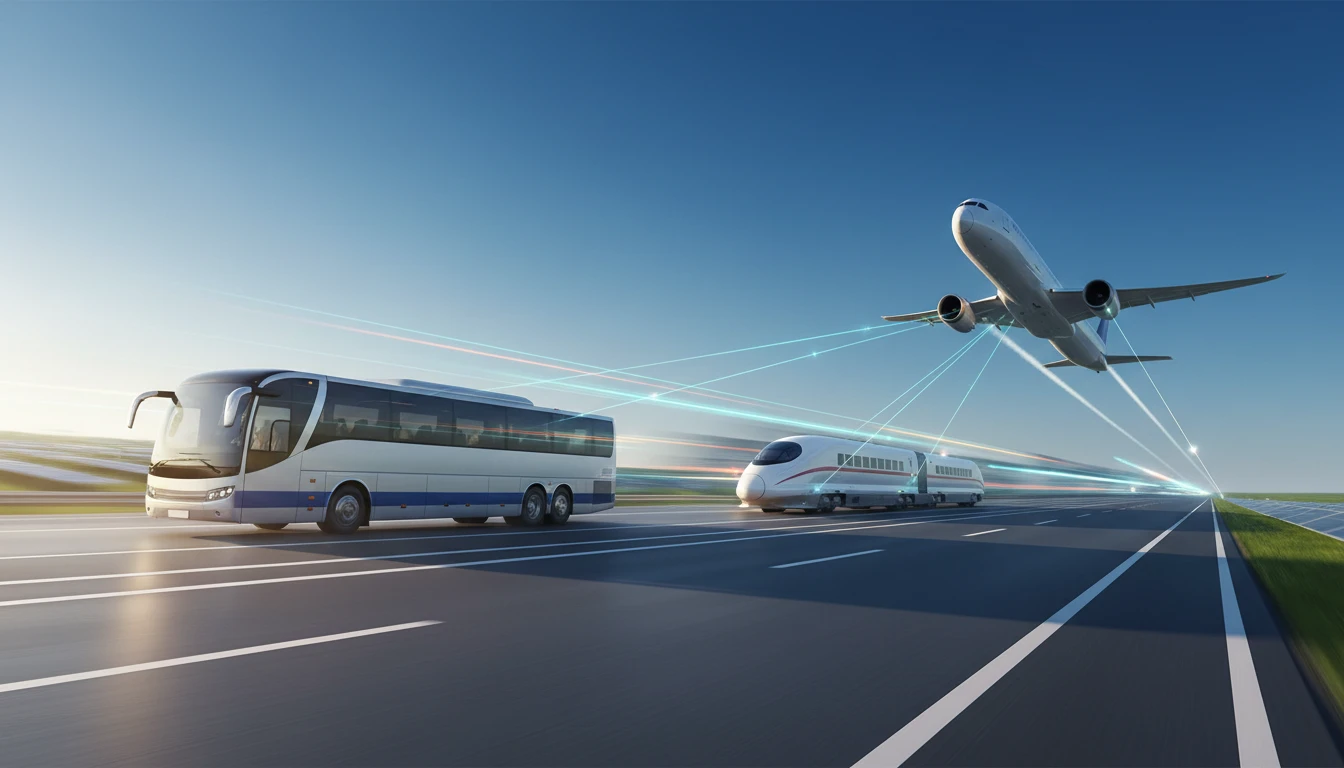
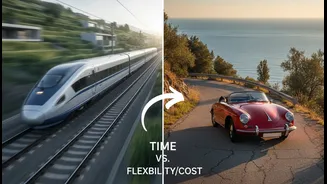
to a holy site like Shirdi or Vaishno Devi, a family on vacation, or a group on a weekend getaway—the 'best' mode of transport is no longer a straightforward choice. Factors like door-to-door travel time, the number and convenience of stops, overall comfort, and, most importantly, the total trip cost, all need to be carefully considered. A cheap ticket doesn't always mean a cheap trip, and the fastest train isn't always the fastest journey.
Comparing Time: The Vande Bharat Advantage
When it comes to sheer speed, the Vande Bharat Express often leads the pack. On a popular pilgrimage route like Delhi to Shri Mata Vaishno Devi Katra, the Vande Bharat can complete the journey in about 8 hours, whereas other mail express trains might take 10 to 12 hours. This time saving is a significant draw for weekend travellers or those on a tight schedule. However, this speed comes from having limited stops. For a journey from Mumbai to Shirdi, a Vande Bharat train might take around 5 to 6 hours. A private car, while seemingly faster on paper with a driving time of under 5 hours without breaks, must contend with city traffic at both ends and potential highway congestion, which can easily extend the total journey time. Buses are almost always the slowest option, often taking 8 or more hours for the same Mumbai-Shirdi route.
Analysing Cost: Ticket Price vs. Total Expense
At first glance, premium trains like the Vande Bharat have the highest fares. A ticket can cost significantly more than a standard AC chair car on another express train or a bus ticket. For example, a Vande Bharat ticket from Delhi to Katra can cost upwards of ₹1,500, while other trains offer sleeper class for much less. However, the total cost of the trip tells a different story. A private car for the same route could cost over ₹7,000, but when split between a family or group of four, the per-person cost becomes more comparable to train travel, with the added benefit of door-to-door service. For a solo budget traveller, a bus or a non-AC train is unbeatable on price. But for a family, the cost of taxis to and from the railway station, plus the hassle of managing luggage, can add to the total expense and stress, making a private car a more valuable proposition.
Flexibility and Comfort: Where Cars and Buses Shine
Trains operate on a fixed schedule with fixed stops. A private car offers unparalleled flexibility. Families with young children can take breaks whenever needed, and pilgrims can visit smaller temples en route. This door-to-door service eliminates the need for transfers, which is a major comfort factor. While Vande Bharat trains offer a modern, aircraft-like experience with clean interiors and a smooth ride, they are designed for speed between major points. Buses, particularly overnight Volvo services, offer a balance between cost and convenience, connecting towns that may not have direct or frequent train service. They allow travellers to cover long distances while sleeping, saving on a night's accommodation, although comfort levels can vary significantly.
Making the Right Choice for Your Trip
So, how do you decide? For Pilgrims: If the destination is a major shrine like Vaishno Devi, which has its own railway station (Katra), the Vande Bharat offers a fast and convenient option. For destinations requiring further travel from the station, a combination of a train to the nearest major city followed by a taxi might be best. For Families: The convenience of a private car is hard to beat, especially with children and luggage. The ability to stop at will, control the environment, and travel door-to-door often outweighs the higher cost. For routes like the Golden Triangle, a car is almost always more practical than juggling multiple train bookings and station transfers. For Weekend Travellers: Time is of the essence. The Vande Bharat Express is often the best choice, dramatically cutting travel time and allowing for more time at the destination. Its speed and efficiency are perfect for short, packed itineraries.