

A Treasure Map for the Artemis Era
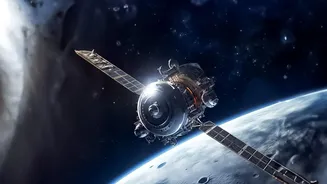
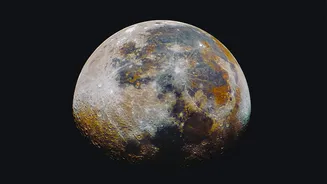
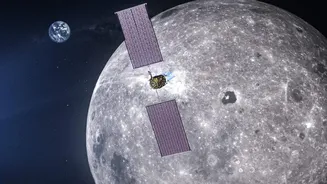
Humanity's return to the Moon is about more than just flags and footprints; it's about staying. Recent data, synthesized from a fleet of orbiters and advanced seismic models, has given scientists their most detailed map yet of water ice hidden in the Moon's
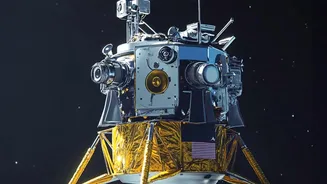
polar regions. While probes like NASA's Lunar Reconnaissance Orbiter and India's Chandrayaan-1 first confirmed the presence of water, new analyses are revealing its form, distribution, and depth with unprecedented clarity. This isn't just a scientific curiosity. For programs like NASA's Artemis, which aims to establish a sustainable human presence on the Moon, these maps are essentially treasure charts pointing to the single most valuable resource off-world: water.
Hiding in Eternal Darkness
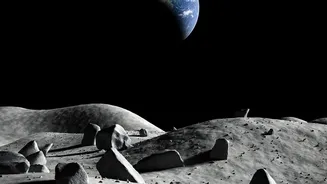
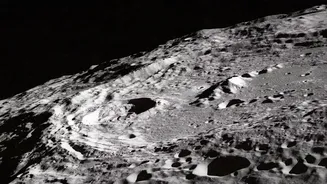
So where is all this water? It's locked away as ice in so-called "permanently shadowed regions" (PSRs) near the lunar poles. These are the floors of deep craters that, due to the Moon's slight tilt, have not seen a single ray of sunlight for potentially billions of years. Temperatures in these cosmic cold traps can plunge below -230°C, making them colder than the surface of Pluto and perfect for preserving water ice delivered by comets and asteroids over eons. The latest discoveries aren't just from orbiters looking down; geologists have also developed new methods to detect this hidden ice using seismic waves. By studying how small, natural moonquakes vibrate through the lunar soil, scientists can infer the location and quantity of buried ice deposits that orbiting instruments might miss.
From Ice to Rocket Fuel
The true magic of finding lunar water lies in a simple process called electrolysis. Using electricity, which can be generated by solar panels on nearby sunlit crater rims, water (H2O) can be split into its component parts: hydrogen and oxygen. These two elements, when cryogenically cooled into liquids, are the primary ingredients of one of the most powerful and efficient rocket propellants known. In essence, every patch of lunar ice is a potential fuel depot. Instead of launching heavy, expensive fuel from Earth, future missions could refuel on the Moon itself. This practice, known as In-Situ Resource Utilization (ISRU), is the cornerstone of making deep space exploration economically viable. It dramatically reduces the mass that needs to escape Earth's powerful gravity, slashing launch costs and opening up the solar system.
The Dawn of a Lunar Economy
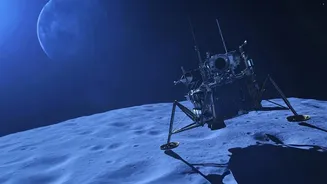
The ability to refuel on the Moon transforms it from a destination into a gateway. A lunar base equipped with mining and processing facilities could become the solar system's first interplanetary gas station. Spacecraft heading to Mars or the asteroid belt could launch from Earth with only enough fuel to get to the Moon, top up their tanks, and then continue their journey. This drastically changes the economics of space travel. Beyond fuel, the oxygen produced from water can be used for breathable air, and the water itself is essential for drinking and growing food, making long-term habitation possible. This creates a virtuous cycle: the more infrastructure we build, the easier it becomes to explore and utilize resources, laying the foundation for a true lunar economy.
The Hard Road from Discovery to Reality
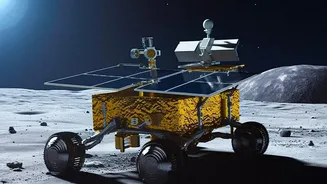
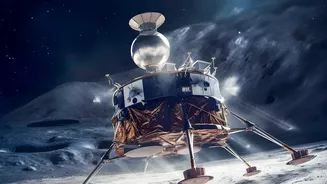
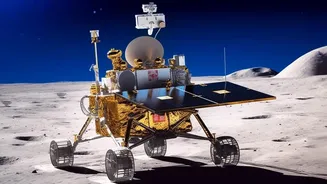
Despite the excitement, the challenges are immense. Extracting water ice is not as simple as drilling a well. It involves robotic mining inside pitch-black, cryogenically cold craters, where machinery must withstand extreme temperatures and abrasive lunar dust. The ice is not a clean, solid block but is mixed in with the lunar soil, or regolith. Engineers must design systems to either scoop up tons of this frozen soil and transport it to a processing plant, or beam energy into the ground to sublimate the ice into vapor for collection. These are complex, energy-intensive operations that have never been attempted. Furthermore, the lack of a clear international legal framework for resource extraction raises questions about mining rights and responsible stewardship of the lunar environment.