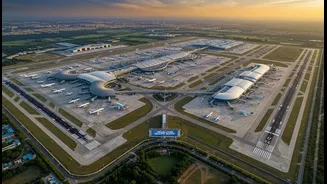









The Tale of Two Airports
The arrival of Noida International Airport (DXN), which began commercial domestic operations on June 15, 2026, fundamentally changes the travel map for the NCR and Western Uttar Pradesh. Located in Jewar, roughly 75 km from Central Delhi, its primary
advantage is proximity to Noida, Greater Noida, Ghaziabad, and cities like Agra and Mathura. This is a game-changer for residents and businesses in these areas, who previously faced a journey of two hours or more just to reach Delhi's IGI Airport. However, for those in South Delhi, Gurgaon, or West Delhi, IGI remains the more convenient option, especially with its direct metro connectivity. The first step in modern travel planning for the region is no longer just booking a flight, but choosing the right airport based on your origin or destination pin code.
A New Calculus for Business Meetings
Business travelers, in particular, need to adapt. The location of your meeting should now dictate your choice of airport. If your work is in the industrial and IT hubs of Noida or Greater Noida, flying into DXN can save you hours of travel time on the ground. Previously, a businessperson from Mumbai with a meeting in a Noida SEZ would land at IGI and then spend up to two hours in a cab crossing the city. Now, they can land at DXN and be at their meeting in under an hour. Conversely, a meeting in Gurgaon's Cyber Hub still warrants a flight into IGI. Informing your clients and colleagues of your arrival airport is now a crucial part of scheduling, preventing logistical confusion and ensuring everyone is on the same page.
Rethinking Connecting Flights
The dual-airport system introduces a new complexity for transit passengers. For now, IGI remains the undisputed hub for international travel, as DXN's international services are slated to begin later. Most importantly, the two airports are not yet seamlessly connected by rapid transit. While plans for a high-speed rail link are in motion, with a projected travel time of about two hours between the airports, this is not yet a reality. Therefore, booking a connecting flight that involves switching airports—for instance, arriving at DXN from a domestic location and then needing to catch an international flight from IGI—is a risky proposition that requires factoring in a significant buffer time for ground transport via road. For the time being, the safest strategy is to book itineraries that use a single airport for all legs of your journey.
Ground Transport is Crucial
An airport is only as good as its connectivity to the city. DXN is directly accessible via the Yamuna Expressway, and will eventually be linked to the Delhi-Mumbai Expressway. UPSRTC has also started dedicated shuttle bus services from key points in Noida and Delhi. However, metro connectivity is still under construction. The planned extension of the Noida Metro Aqua Line and a new RRTS corridor will eventually provide robust public transport links, but for now, travelers are reliant on road transport. This means you must account for potential traffic and the availability of app-based cabs or pre-booked taxis. While airlines may offer competitive fares to DXN, it's wise to factor in the potential cost and time of ground transportation before making a final decision.
The Trade-Offs and Advantages
While IGI is a mature airport with extensive flight options and amenities, new airports like DXN often offer a more streamlined experience. As a greenfield project built with modern technology, DXN promises greater efficiency, potentially shorter queues, and less congestion, especially in its initial phase. Airlines like IndiGo and Akasa Air are the launch carriers, with plans to rapidly expand domestic routes. Though initial passenger fees (UDF) at DXN are higher than at IGI to help recover construction costs, a lower tax on aviation fuel in Uttar Pradesh may lead to competitive ticket pricing on some routes. The choice between the two airports involves weighing IGI's vast network against DXN's modern efficiency and geographical convenience for a large part of the NCR.