





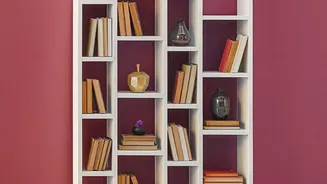
The Vertical Advantage in Small Spaces
When floor and desk space are at a premium, the only way to go is up. Floating shelves are a minimalist marvel, offering a clean, modern way to add storage and display surfaces without the bulk of traditional bookcases. By drawing the eye upward, they
create an illusion of height and spaciousness, making your compact work area feel more open and organised. This vertical strategy is the key to reclaiming your desk from clutter, dedicating it solely to the tasks at hand while moving decorative and personal items onto the wall. It’s a simple shift that fundamentally changes how you use your space, separating the functional work zone from the inspirational decor.
Choosing the Right Shelves
Before you start drilling, consider the function and style of your shelves. First, assess the load. A collection of heavy ceramic pots and books requires a sturdier shelf and more robust mounting hardware than one holding a few small succulents. Solid wood shelves offer a warm, substantial feel, while sleek metal or minimalist white shelves can blend seamlessly with a modern aesthetic. It's crucial to match the shelf and its brackets to what you plan to display. For installation, safety and stability are paramount. The most secure method is to anchor the shelf brackets directly into wall studs. Use a stud finder to locate these structural supports. If studs aren't conveniently placed, use heavy-duty drywall anchors designed to handle the combined weight of the shelf and its contents. Always use a level to ensure your shelves are perfectly horizontal.
The Best Low-Effort Plant Partners
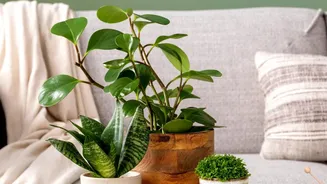
The secret to a thriving shelf garden is choosing plants that are forgiving and adaptable. You want greenery that looks great without demanding constant attention. The Snake Plant (Sansevieria) is a top contender, known for its architectural leaves and tolerance for low light and infrequent watering. Similarly, the ZZ Plant (Zamioculcas zamiifolia) is famously tough, thriving on neglect and storing water in its underground rhizomes, meaning it can go weeks between waterings. Another excellent choice is the Pothos (Epipremnum aureum), a trailing vine that looks beautiful cascading down a shelf and can adapt to various light conditions. All three of these champions are happy as long as you let their soil dry out between waterings to prevent root rot.
More Than Just a Pretty Space
Adding plants to your workspace does more than just enhance the decor; it actively improves your well-being and productivity. Studies have consistently shown that being around greenery can reduce stress, boost your mood, and create a calming atmosphere. In a work context, this translates to improved concentration, better memory retention, and bolstered creativity. Furthermore, plants are natural air purifiers. Research, including a famous study by NASA, has shown that houseplants can help remove volatile organic compounds (VOCs) from the air, contributing to a healthier indoor environment. This connection to nature, however small, provides a sense of calm and can make your workday feel less taxing.
Tips for an Artful Arrangement
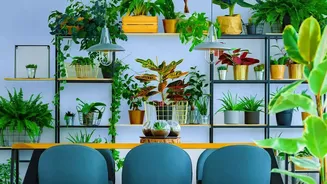
Styling your shelves is where your personality comes into play. Create visual interest by varying the height and texture of your plants. Place a trailing Pothos on one end to cascade downwards, and an upright Snake Plant on the other to provide a strong vertical line. Intersperse the plants with other objects like stacks of books, small framed art, or personal keepsakes to create a layered, curated look. Pay attention to the pots; choose planters that complement your room’s decor, whether it’s earthy terracotta, modern ceramic, or cozy woven baskets. Grouping items in threes or fives often creates a more dynamic and visually pleasing composition than rigid, symmetrical rows. Don't overcrowd the shelves; leaving some empty space allows each item to breathe and be appreciated.