




The Search for a Better Battery
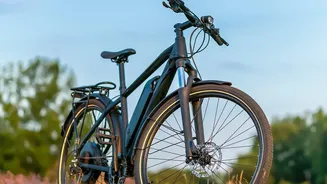
Electric bikes are transforming urban mobility, but their potential is often limited by their batteries. Most e-bikes run on lithium-ion batteries, the same technology that powers our smartphones and laptops. While effective, they have significant drawbacks.
The materials, like graphite for the anode (the negative terminal), can be expensive and their mining raises environmental concerns. Furthermore, there is a constant demand for batteries that can charge faster and last longer, a bottleneck that has slowed wider adoption of electric vehicles of all kinds. This has sent researchers on a global quest for alternatives that are cheaper, more sustainable, and higher-performing. The challenge is finding a material that is not only abundant but can also be engineered to handle the rapid flow of ions needed for quick charging and high capacity.
A Solution From the Fields
The answer, it turns out, may lie in one of the world's most abundant resources: agricultural waste. Materials like rice husks, wood pulp, coconut shells, and even crab shells are now at the center of cutting-edge battery research. In India, where agricultural stubble burning is a major environmental issue, this innovation holds particular promise. An Indian startup, Indi Energy, founded by researchers from IIT Roorkee, is already working to commercialize this technology. The concept is to take this low-value biomass, which is rich in carbon, and convert it into a high-performance material for battery anodes. This creates a win-win scenario: it provides a valuable use for waste products and offers a sustainable alternative to traditional battery components.
From Plant Waste to Power
The process is a marvel of material science. The key ingredient in much of this research is lignin, a complex polymer that makes plants rigid. Lignin and other biomass are converted into a material called 'hard carbon' through a heating process called pyrolysis. By heating the agricultural waste to very high temperatures in a low-oxygen environment, scientists can burn off everything but the carbon, leaving behind a porous, disordered structure. This unique structure is what makes it so effective. Unlike the neat, layered structure of graphite, which is not well-suited for the larger ions used in alternative batteries like sodium-ion, hard carbon's varied pores and defects provide numerous pathways and storage sites. This allows for faster ion movement, which directly translates to faster charging times and improved capacity. Researchers are refining this process, sometimes using chemical washes or pre-treatments to remove impurities and optimize the final carbon structure for even better performance.
Supercharging E-Bike Performance
The implications for e-bike users are significant. The primary advantage highlighted in much of the research is the potential for much faster charging. Studies have shown that lignin-derived hard carbon anodes can dramatically improve the 'rate capability' of a battery—its ability to perform well under high-current, fast-charging conditions. One study noted an 84% improvement in cycle retention after fast charging compared to other carbon materials, meaning the battery remains healthier for longer even when charged quickly. Another project focusing on bamboo-derived carbon reported that modifying the material's surface led to faster ion diffusion, a key element for stable fast charging. For the everyday rider, this could mean dramatically shorter wait times to get back on the road. Indi Energy claims its cells, using bio-waste anodes, can handle fast charging without the risk of thermal runaway, a dangerous overheating problem in some batteries.
The Road Ahead to Commercialization
While the laboratory results are extremely promising, there are still hurdles to overcome before farm-waste batteries become a common feature in e-bikes. The main challenges are scalability and consistency. Ensuring that the hard carbon produced from varied biomass sources has a uniform quality is critical for commercial production. The manufacturing processes must be energy-efficient and cost-effective to compete with the established graphite anode industry. However, the momentum is strong. Researchers at institutions like Virginia Tech and Germany's Max Planck Institute are pushing the science forward, and companies are already working on bringing these innovations to market. The technology is also a perfect fit for sodium-ion batteries, a promising and cheaper alternative to lithium-ion, as sodium is far more abundant than lithium.