





A Forest Floor of Stars
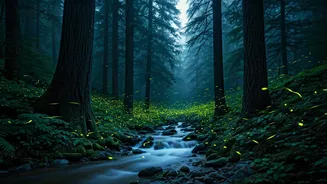
Imagine trekking through the dense, humid forests of the Western Ghats just as the first rains begin to kiss the parched earth. The air is thick with the scent of wet soil and decaying leaves. As dusk settles, a quiet anticipation builds. Then, it begins.
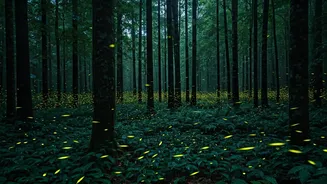
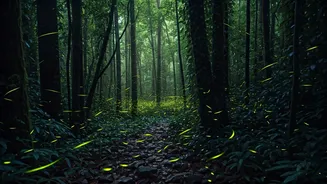
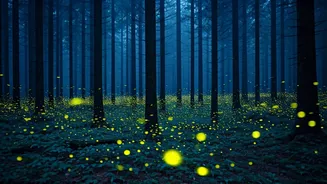
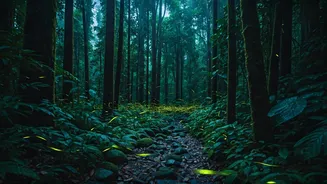
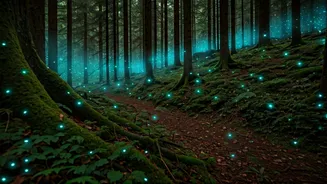
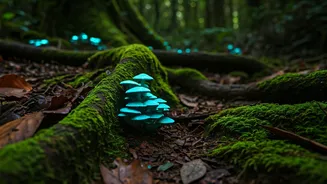
A single, brilliant green spark flickers to life in the leaf litter. It's soon joined by another, and another, until the entire forest floor is carpeted in a slow-moving, pulsating constellation of light. This isn't science fiction; it's one of nature's most enchanting displays, driven by the lifecycle of a very special insect.
Meet the Light Bearers
The stars of this show are not the common fireflies we see zipping through the air. The breathtaking ground-level glow is often created by the larvae and wingless adult females of glow-worm beetles, particularly species from the *Lamprigera* genus. These creatures, sometimes called 'starworms', can be surprisingly large, resembling trilobites more than typical beetles. They spend this phase of their lives crawling through the forest floor, using their steady, powerful glow as a beacon. The light is a complex chemical signal, a silent call to potential mates in the vast darkness of the jungle.
The Photographer's Quest
For a certain breed of nature photographer, capturing this phenomenon becomes an annual obsession. The chase is not for the faint of heart. It involves navigating slippery, leech-infested trails in the dead of night, often in remote areas with no guarantee of a good showing. The insects are unpredictable; their emergence is tied to specific conditions of temperature, humidity, and the onset of the monsoon. The technical challenges are immense. Photographers use long-exposure techniques, sometimes compositing multiple shots to convey the density and movement of the lights. It requires patience, technical skill, and a deep respect for the fragile environment. A single misplaced footstep or the flash of a torch at the wrong moment can disrupt the delicate ecosystem.
The Science of the Glow
The 'magic' has a beautiful scientific explanation: bioluminescence. Inside the insects' bodies, a chemical called luciferin reacts with an enzyme, luciferase, in the presence of oxygen and ATP (the energy molecule of life). The result is an incredibly efficient conversion of chemical energy into light, with almost no heat produced—a 'cold light'. Unlike the flashing patterns of some fireflies used for intricate dialogues, the steady glow of these ground-dwellers serves as a simpler, powerful 'here I am' signal, allowing the winged males to spot the wingless females from above.
A Fragile Spectacle
As more people learn about these glowing forests, the risk to their delicate balance grows. These insects are highly sensitive to artificial light. The glow from a single phone screen or a car's headlamp can overwhelm their natural signals, disrupting mating cycles and threatening local populations. Habitat loss and changing climate patterns also pose a significant threat. Conservationists and responsible photographers stress the importance of 'no-trace' tourism. Observing this wonder means doing so from a distance, with all lights off, allowing the forest's natural rhythm to continue undisturbed. The goal is to appreciate the magic, not to trample it.