
Understanding the GRAP Framework
The core of Delhi-NCR's pollution control strategy is the Graded Response Action Plan, or GRAP. It's an emergency response system that kicks in as the air quality worsens, moving through four distinct stages from 'Poor' to 'Severe+'. Each stage brings
progressively tougher restrictions. As of late October 2026, Stage I of GRAP is already in effect across the region after air quality dipped into the 'Poor' category. This plan is managed by the Commission for Air Quality Management (CAQM), which directs authorities in Delhi and its neighbouring states to enforce these measures uniformly. The rules are cumulative, meaning that when a higher stage is invoked, the restrictions from all previous stages remain active.
The Vehicle Entry Ban Explained
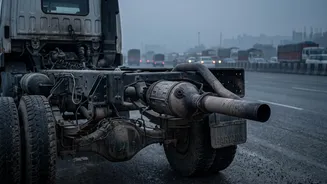
One of the most significant rules for out-of-town drivers is the restriction on specific types of vehicles. From November 1, 2026, to January 31, 2027, vehicles registered outside Delhi that do not meet the Bharat Stage VI (BS-VI) emission standard will be barred from entering the capital. This specifically targets older, more polluting vehicles. Furthermore, if the air quality deteriorates to the 'Severe' category (Stage III), a ban is imposed on BS-III petrol and BS-IV diesel four-wheelers in Delhi, Gurugram, Faridabad, Ghaziabad, Gautam Buddh Nagar, and now Sonipat as well. Exemptions are typically granted for vehicles running on CNG, electric vehicles, and those carrying essential goods or providing emergency services.
Who These Rules Apply To
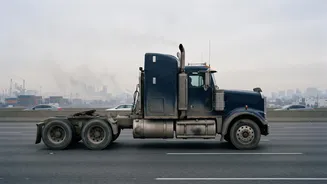
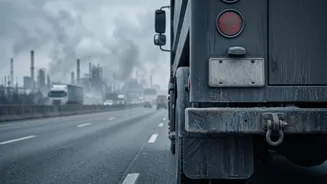
These regulations are not just for Delhi's residents. They apply to any driver entering the National Capital Region. This includes private car owners, commercial vehicle operators, and even inter-state buses coming from Haryana, Uttar Pradesh, Rajasthan, and beyond. Commercial goods vehicles like trucks and buses that are BS-IV or older are also restricted from entering Delhi starting November 1. The goal is to create a regional solution to a regional problem, acknowledging that a significant portion of vehicular traffic originates from outside the city's borders. Authorities in neighbouring cities like Gurugram are actively enforcing these rules for vehicles heading towards Delhi.
Documents You Cannot Drive Without
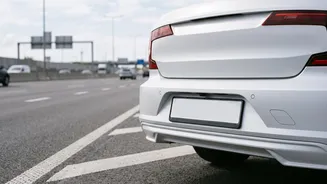
Beyond the vehicle model, there are two documents that are non-negotiable for every driver in the NCR: a valid Pollution Under Control (PUC) certificate and a High-Security Registration Plate (HSRP) with a colour-coded fuel sticker. The 'No PUC, No Fuel' rule is being strictly enforced, meaning petrol pumps can refuse to sell you fuel if your vehicle's PUC certificate has expired. This rule applies to all petrol, diesel, and CNG vehicles. Enforcement is tight, with officials conducting checks across the city and at its borders. The colour-coded stickers, which indicate the vehicle's fuel type and emission standard, help enforcement officials quickly identify non-compliant cars.
The Steep Cost of Non-Compliance
Ignoring these regulations can be a costly mistake. Under the Motor Vehicles Act, driving without a valid PUC certificate can result in a fine of up to ₹10,000. If you're caught driving a vehicle banned under the active GRAP stage, such as a BS-III petrol or BS-IV diesel car during Stage III, the penalty can be even higher, with fines reaching ₹20,000. In addition to fines, authorities have the power to impound vehicles that are found to be 'visibly polluting' or violating the age and emission norms. To discourage private vehicle use during peak pollution, parking fees are also doubled across Delhi, with the exception of lots for electric vehicles and those managed by the Delhi Metro.