





Why Your Desk Job Causes Stiffness
Sitting for prolonged periods isn't inherently bad, but remaining locked in one position for hours is what causes problems. When you sit, your body adapts: your hip flexors shorten, your glute muscles become inactive, your upper back tends to round forward,
and your head drifts in front of your shoulders. This familiar 'desk posture' can lead to a cascade of issues, including a constantly tense neck, a mid-back that loses its ability to rotate, and tight hips that contribute to lower back pain. The goal of active recovery is not to exhaust you with a workout, but to gently reintroduce the movements your body is missing during the workday.
Drill 1: Cat-Cow for Spinal Health
This classic movement is fantastic for gently waking up the spine. Start on your hands and knees with your wrists under your shoulders and your knees under your hips. On an inhale, drop your belly towards the floor, lift your chest and tailbone, and look forward (Cow Pose). On an exhale, press into your hands, round your spine up towards the ceiling, and tuck your chin to your chest (Cat Pose). Flow between these two positions for 60-90 seconds, linking your breath to the movement. This helps improve spinal flexibility and relieve tension in the back and neck.
Drill 2: Seated Thoracic Rotations
Your mid-back, or thoracic spine, is designed to rotate, but rarely gets the chance during screen time. Sit tall at the edge of your chair with your feet flat on the floor. Place your right hand on your left knee and your left hand behind you, holding the chair for support. Gently twist your upper body to the left, keeping your hips facing forward. Hold for a deep breath, then return to the center and repeat on the other side. Perform 8-10 slow, controlled rotations on each side. This drill helps to undo the stiffness from hunching and improves posture.
Drill 3: Kneeling Hip Flexor Stretch
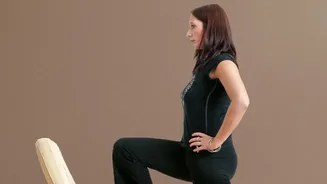
This stretch directly targets the muscles at the front of your hips that become shortened from sitting. Kneel on your right knee (placing a cushion underneath for comfort if needed) and place your left foot on the floor in front of you with your knee bent at a 90-degree angle. Gently tuck your tailbone and squeeze your right glute muscle until you feel a stretch in the front of your right hip. Avoid arching your lower back. Hold for 30-45 seconds, breathing deeply, before switching sides. This helps to release tension that can pull on your lower back.
Drill 4: Glute Bridge for Activation
Sitting all day can effectively switch off your glute muscles, which are crucial for supporting your lower back and powering movement. To wake them up, lie on your back with your knees bent, feet flat on the floor about hip-width apart, and your arms by your sides. Press through your heels and lift your hips off the floor until your body forms a straight line from your shoulders to your knees. Squeeze your glutes at the top. Hold for a moment before slowly lowering back down. Perform 12-15 repetitions to strengthen your posterior chain.
Drill 5: 90/90 Hip Switches
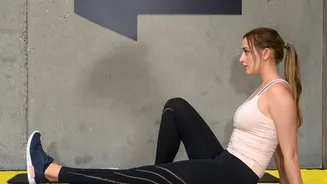
This drill is excellent for improving both internal and external rotation of the hips. Sit on the floor with both knees bent at 90 degrees. Your front leg should be in front of you with the shin parallel to your body, and your back leg should be out to the side. Keeping your chest up, try to gently lower your torso over your front shin. Then, lift your torso and smoothly switch your legs to the other side without using your hands, if possible. Move back and forth for 60-90 seconds. This helps restore the full range of motion that sitting restricts.