




The Ancient Art of the Wooden Ghani
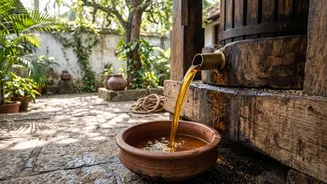
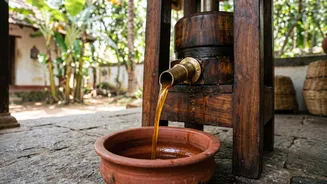
Long before industrial factories, oil was extracted using a simple, powerful technology: the ghani. In South India, this is often called a 'mara chekku'. It consists of a large wooden pestle rotating inside a wooden container. Sun-dried sesame seeds are
placed inside, and the pestle slowly grabs and presses them. This gentle, friction-based process coaxes the oil out without generating significant heat. It’s a stark contrast to modern methods that use high temperatures and chemical solvents to extract every last drop of oil. The ghani method is slower and yields less oil, but its primary advantage lies in what it preserves.
Why Heat is the Enemy of Nutrients
Modern oil extraction often involves processes that heat the oil to temperatures as high as 180°C or more. While this is efficient for mass production, it comes at a significant nutritional cost. High heat degrades the chemical structure of the oil, destroying sensitive vitamins, antioxidants, and healthy fatty acids. This process, known as thermal degradation, not only strips the oil of its beneficial compounds but can also create harmful free radicals and trans fats. Refined oils are often also bleached and deodorised, further diminishing their natural goodness, leaving behind what some consider 'empty calories' rather than a nourishing food.
Preserving a Nutritional Powerhouse
Sesame oil is naturally rich in beneficial compounds. It contains a healthy balance of polyunsaturated and monounsaturated fats, which are known to be heart-healthy. It is also a fantastic source of Vitamin E and powerful antioxidants unique to sesame, such as sesamol and sesamin. These antioxidants are crucial for fighting oxidative stress in the body. Because the wooden ghani method is a form of 'cold-pressing'—meaning it generates very little heat—these delicate nutrients remain intact in the final product. The oil retains its natural flavour, aroma, and most importantly, its full nutritional profile, just as nature intended.
The Link to Superior Absorption
The term 'biological absorption' or 'bioavailability' refers to how well your body can absorb and utilise the nutrients from the food you eat. It’s not just about what a food contains, but what your body can actually access. The nutrients in ghani-milled oil are preserved in their natural, unaltered state. They exist alongside other natural compounds and co-factors that help the body recognise and process them effectively. When oils are refined with high heat and chemicals, the structure of the fatty acids and the integrity of the vitamins are compromised. Your body may struggle to recognise these altered compounds, leading to poorer absorption. In essence, the gentle extraction of a wooden ghani ensures the nutrients are presented to your body in a form it understands, allowing for more efficient uptake.
How to Choose and Use Your Oil
When shopping for sesame oil, look for labels that say 'cold-pressed', 'wood-pressed', 'ghani-milled', or 'mara chekku'. These terms indicate that the oil was extracted without high heat. This type of sesame oil has a rich, nutty flavour and is perfect for low to medium-heat cooking, such as sautéing vegetables or making tadka for dals and chutneys. It’s also excellent as a finishing oil, drizzled over dishes right before serving to add flavour and a nutrient boost. Given its rich profile of antioxidants and anti-inflammatory properties, many also use it for the Ayurvedic practice of oil pulling to support oral health.