






What Exactly Is Slacklining?
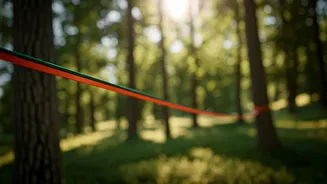
Imagine walking a tightrope, but instead of a rigid wire, you’re on a flat, bouncy strip of webbing. That’s slacklining. Unlike tightrope walking, where a balancing pole is used on a taut cable, slacklining involves balancing on a dynamic line that sways
and stretches with your movements. This requires constant micro-adjustments from your entire body to maintain equilibrium. It originated as a pastime for rock climbers in the 1980s but has since evolved into a mainstream recreational activity and sport in its own right, with styles ranging from low-to-the-ground walking lines to high-flying tricklines.
A Full-Body Workout in Disguise
Don't be fooled by its simple appearance; slacklining is a formidable workout. The primary benefit is, of course, a dramatic improvement in balance. But the physical advantages don't stop there. Staying upright on the wobbly line forces your core muscles—abs, obliques, and lower back—to work constantly, building functional strength that supports posture and protects your spine. Your legs, particularly the stabilising muscles in your hips, knees, and ankles, also get a significant workout, which can help prevent common injuries. Studies have shown that this type of balance training can improve joint stability and even reduce the likelihood of sports-related injuries.
Sharpen Your Mind, One Step at a Time
Slacklining is often described as a form of 'moving meditation'. The intense concentration required to stay on the line leaves little room for distracting thoughts, pulling you into a state of 'flow'. This active mindfulness can be a powerful tool for stress reduction. You have to focus completely on your breath and the next step, fostering a calm, deliberate state of mind. This practice in focus and patience doesn't just help you on the line; it translates into better concentration in your daily life and work. Some research even suggests activities like slacklining may lead to an increase in the plasticity of the hippocampus, the brain region responsible for memory and navigation.
Your First Steps on the Line
Getting started is simpler than you might think. For your first time, find a short, low-hung line, ideally just 20cm off the ground over a soft surface like grass. The key is to look forward at a fixed point, not down at your feet. Raise your arms out to the side for balance, like wings. Place one foot along the line and transfer your weight onto it smoothly. It's normal for your leg to shake uncontrollably at first; this is your muscles learning to make rapid adjustments. Having a friend to hold a hand or a finger can help you stabilize in the beginning. The goal isn't to walk immediately, but to practice balancing on one foot, then the other, building stability and confidence with each session.
Safety is Non-Negotiable
While fun, slacklining comes with risks. Always inspect your gear before use. When setting up between trees, ensure they are healthy and have a diameter of at least 30 centimetres. It is crucial to use tree protectors—pads that go between the line and the bark to protect both the tree and your equipment. Start with the line set low (knee-height or lower) and ensure the ground beneath is clear of rocks or hard objects. Learning to fall correctly by stepping off in a controlled manner is an important skill. Never leave a line unattended in a public space, as it can be a hazard to others.
Finding Your Tribe in India
You don't have to learn alone. Slacklining is a social sport, and a growing community exists in India. Since around 2010, enthusiastic slackliners have been building communities in major cities like Bengaluru, Delhi, Mumbai, Pune, Chennai, and Hyderabad. These groups often hold free weekend sessions in public parks, welcoming beginners to come and try the sport. Connecting with a local group is a great way to learn from experienced practitioners, get access to equipment, and share in the fun and supportive culture of the sport.