







Stability and the Learning Curve
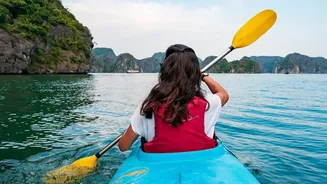
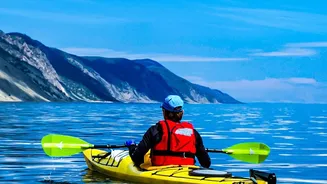
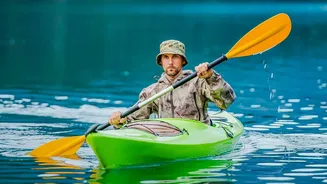
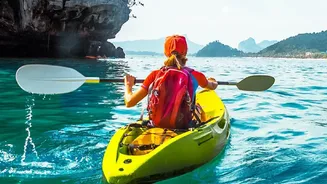
For most beginners, the primary concern is stability. Kayaks generally win for immediate confidence. Because you are seated low to the waterline, your center of gravity is much lower, making a recreational kayak feel incredibly stable and difficult to tip.
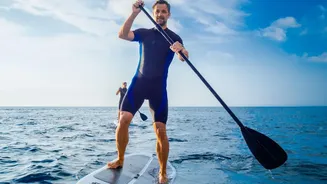
This makes it a reassuring choice if you're nervous or want to feel secure right away. Stand-up paddleboarding (SUP) requires more initial balance. However, the learning curve is quick for most people, and rental outfitters often provide wider, more stable boards for beginners. You can start on your knees to get a feel for the board before standing up. While kayaking might be easier in the first ten minutes, many find their footing on a paddleboard within a single session on calm water.
The Physical Experience and Workout
The two activities offer very different physical benefits. Kayaking is predominantly an upper-body and core workout. The rotational movement of using a double-bladed paddle engages your back, shoulders, arms, and obliques. Paddleboarding provides a more comprehensive, full-body workout. The act of balancing on the board constantly engages your leg and deep core muscles, while paddling works your upper body. If your goal is a higher-intensity workout that challenges your balance, paddleboarding is the clear winner. For a focused upper-body session that allows for more relaxed, long-distance travel, kayaking is an excellent choice.
Your Viewpoint on the Water
One of the most significant yet overlooked differences is the perspective each craft provides. In a kayak, you are seated just above the water's surface. This offers an intimate, low-profile view, allowing you to quietly glide near wildlife and into small coves. On a stand-up paddleboard, your elevated position gives you a completely different vantage point. Standing five feet above the surface allows you to see down into the water, making it easier to spot fish or submerged features. This 'top-down' view is a unique advantage of paddleboarding, especially in clear, calm conditions.
What to Expect from a Rental
Regardless of your choice, a standard rental package is quite comprehensive. Most outfitters will provide all the essential equipment you need to get on the water safely. This typically includes the kayak or paddleboard itself, a correctly sized paddle, and a personal flotation device (PFD), which is required safety gear. Many rental locations, especially those catering to beginners, also include a brief orientation. This quick lesson covers basics like how to get in or on your craft, proper paddling technique, steering, and any specific route information or safety rules for the area.
Comparing Rental Costs
The cost to rent a kayak versus a paddleboard is often very similar, making it less of a deciding factor for a one-time outing. Most rental services charge by the hour or offer half-day and full-day packages. Hourly rates for both single kayaks and paddleboards typically fall in the range of $15 to $30. Some locations might price one slightly higher than the other, but the difference is usually minimal. Tandem (two-person) kayaks will generally cost more than a single kayak or a paddleboard. It's always a good idea to check prices at your specific location in advance, but you can expect comparable affordability for either activity.
So, Which Is Right for You?
Your choice ultimately comes down to the experience you want. Choose a kayak if you prioritize stability, comfort for a longer paddle, and want an easier start. It’s ideal for covering more distance or for paddling on a slightly windy or choppy day. Choose a paddleboard if you want a full-body workout, a unique perspective on the water, and the freedom to stand, kneel, or even take a swim. It offers more versatility for a playful day on calm water and is a great way to build your balance. Both are excellent introductions to paddling, so you can’t make a wrong choice.