




A New Era in Low-Earth Orbit
For over two decades, the International Space Station (ISS) has been the sole destination for astronauts conducting long-term research in microgravity. But with the ISS scheduled for decommissioning in the early 2030s, NASA is turning to the private sector
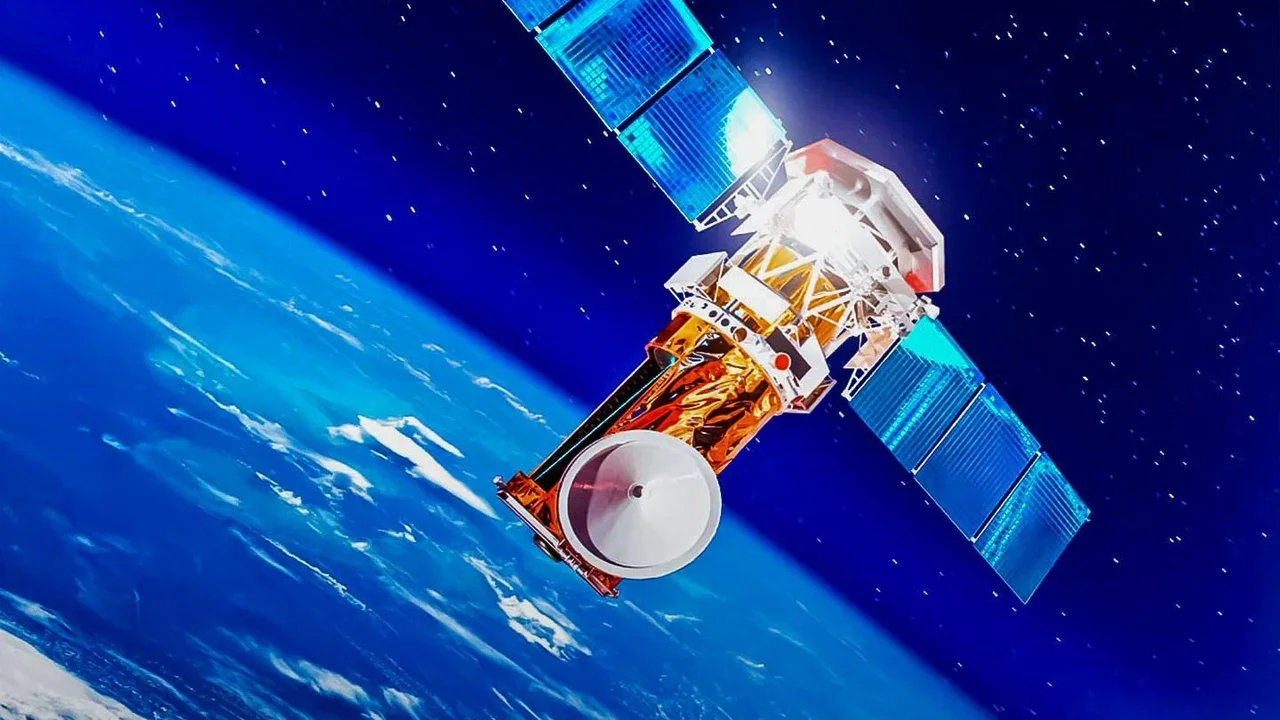
to ensure there is no gap in America's presence in space. This transition marks a fundamental shift from a government-owned and operated model to a commercial one, where NASA will be one of many customers. The goal is to create a robust low-Earth orbit economy, with multiple privately owned and operated stations offering services for research, manufacturing, and even tourism. Companies like Axiom Space, Blue Origin, Sierra Space, and Vast are leading this charge, each developing unique modules and stations to succeed the ISS.
The Key Players and Their Platforms
Several companies are at the forefront of this commercial space race. Axiom Space is building a series of modules that will first attach to the ISS before detaching to become a free-flying commercial station. Blue Origin and Sierra Space are collaborating on Orbital Reef, envisioned as a 'mixed-use business park' in space, with Sierra Space providing its Large Integrated Flexible Environment (LIFE) inflatable habitats. These soft-sided modules launch in a compact form and inflate in orbit to create large, three-story-tall structures suitable for living and working. Meanwhile, the company Vast is developing Haven-1, a single-module station planned for launch as soon as 2027, which aims to be the first standalone commercial space station. It has already drawn international interest, with France signing an agreement for a mission to Haven-1.
Unlocking Next-Generation Science
The primary purpose of these new commercial habitats is to serve as advanced laboratories in the unique environment of microgravity. The absence of gravity-driven effects like buoyancy and sedimentation allows for breakthroughs impossible on Earth. Key research areas include pharmaceutical development and disease research, such as creating more accurate tumor organoids to study cancer or developing novel drug delivery systems. Another promising field is advanced materials science. In space, it's possible to manufacture things like flawless fiber optic cables with vastly superior performance or 3D bioprint retinal implants that would deform under their own weight on Earth. These stations will feature dedicated research facilities, like the Haven-1 Lab, which offers payload slots for companies and universities to conduct experiments. Axiom Space has already managed multiple private astronaut missions to the ISS, conducting dozens of experiments in areas from human physiology to technology demonstrations.
More Than Just a Lab in the Sky
These next-generation modules are being designed as true habitats, not just sterile labs. Companies are focusing on the human element, testing everything from crew quarters and dining areas to life support systems to ensure astronauts can live and work comfortably and safely for extended periods. The designs incorporate advanced automation and logistics to reduce costs and complexity for a wide range of users. Some concepts are even exploring novel technologies to improve long-duration missions. For instance, Vast's Haven-1 plans to test a system to create artificial gravity by rotating the station, which could help mitigate the negative health effects of weightlessness. Another innovation being developed by Axiom Space is a system that can create rocket fuel from the crew's exhaled carbon dioxide, a technology with long-term applications for missions to Mars.