






Why Start with Short Sessions?
The idea of starting a new wellness habit can be daunting. We often think we need to set aside an hour for yoga or meditation to feel any benefits. However, research and anecdotal evidence show that even five minutes of focused breathing can have a significant
impact. Starting with short, manageable sessions makes it easier to build a consistent practice. The goal is not perfection, but repetition. By committing to just a few minutes a day, you can train your nervous system to relax more readily. This regular practice helps lower stress hormones, reduce anxiety, improve focus, and even lower blood pressure over time.
Setting Yourself Up for Success
Before you begin, find a comfortable position. You can sit in a chair with your feet flat on the floor, or lie on your back with your knees bent. Loosen any tight clothing. The key is to be comfortable and allow your body to relax. You don't need a special room; a quiet corner where you won't be interrupted for five minutes is perfect. Try to set aside the same time each day, perhaps before your morning chai or during a break at work, to help build the habit. Remember, the goal isn't to empty your mind completely, but to gently guide your focus back to your breath whenever your mind wanders.
Exercise 1: Simple Belly Breathing
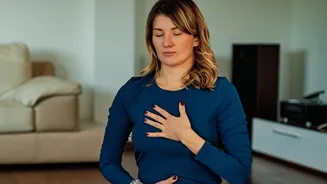
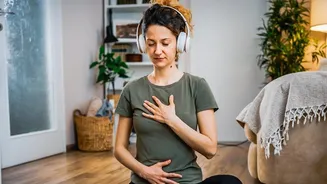
Also known as diaphragmatic breathing, this is a foundational technique that helps you use your main breathing muscle correctly. Place one hand on your upper chest and the other on your belly, just below your rib cage. Close your lips and breathe in slowly through your nose for a count of four. As you inhale, focus on letting your belly expand like a balloon, pushing your hand outwards. The hand on your chest should remain as still as possible. Then, gently exhale through your mouth for a count of six, feeling your belly fall as the air leaves your lungs. At first, this might feel unnatural if you're used to shallow chest breathing, but with practice it will become automatic.
Exercise 2: The 4-7-8 Relaxing Breath
This technique is known for its ability to calm the nervous system and is particularly helpful for reducing anxiety or preparing for sleep. To start, exhale completely through your mouth with a gentle 'whoosh' sound. Close your mouth and inhale quietly through your nose for a mental count of four. Then, hold your breath for a count of seven. Finally, exhale completely through your mouth, making that whoosh sound again, for a count of eight. The long exhale helps to activate the body's relaxation response. This completes one breath cycle. Repeat the cycle three more times for a total of four breaths.
Exercise 3: Calming Box Breathing
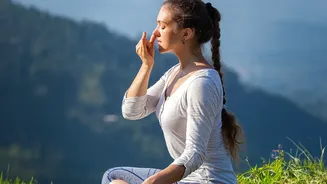
Box breathing, or square breathing, is a simple and effective technique for calming down and improving focus. It's widely used by people in high-stress professions to regulate their stress response. The pattern is easy to remember as it involves four equal parts. First, gently exhale all the air from your lungs. Then, inhale slowly through your nose to a count of four. Hold your breath for a count of four. Gently exhale through your mouth for a count of four. And finally, hold your breath again for a count of four before beginning the next cycle. Visualising a square as you breathe can help you maintain the rhythm.