






The Principle of a 'Set' Style
Both two-strand twists and Bantu knots work on a simple but effective principle: setting your hair while it dries. By manually shaping damp hair into a specific pattern and allowing it to dry completely, you encourage your natural curls to take on a more
uniform and defined shape. This process, often called a 'twist-out' or 'knot-out', is a form of protective styling that minimizes daily manipulation, which can help reduce breakage and retain length. The key to success with either method is starting with clean, moisturized hair and ensuring the style is fully dry before you take it down.
Mastering the Two-Strand Twist
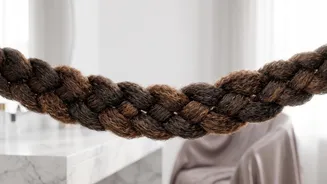
Two-strand twists are a foundational style in the natural hair community for their simplicity and beautiful results. The technique involves taking a small section of damp, moisturized hair, dividing it into two equal parts, and twisting them around each other from root to tip. For best results, apply a leave-in conditioner and a styling cream or gel to each section before twisting to ensure hydration and hold. The size of your sections will determine the size of your resulting curls; smaller sections create tighter, more defined curls, while larger sections yield looser, more voluminous waves.
The Art of the Twist-Out
The 'twist-out' is the stunning result you get after unraveling your dry two-strand twists. To reveal your defined curls, it's crucial that your twists are 100% dry, as unraveling damp hair can lead to frizz. Apply a lightweight oil to your fingertips to minimize friction and add shine as you gently separate each twist. Start from the ends and carefully unwind each twist. Once all the twists are undone, you can gently separate the curled sections further to create more volume, using your fingers or a hair pick at the roots to fluff the style into your desired shape.
The Power of Bantu Knots
Bantu knots, also known as Zulu knots, are a historic hairstyle with roots in Southern Africa's Bantu ethnic groups. This method involves sectioning the hair and wrapping each section around itself to form a small, coiled bun secured against the scalp. Like twists, Bantu knots are a protective style that tucks away the ends of your hair, helping to prevent breakage and lock in moisture. They are known for creating springy, spiral curls. The size of the knots dictates the final curl pattern: smaller knots create tighter curls, while larger knots produce looser waves.
Achieving a Flawless Knot-Out
To create Bantu knots, start with detangled, moisturized hair. Working in sections, apply a styling product for hold, then twist the hair section into a taut rope. Next, wrap the twisted rope of hair around its own base until it forms a tight coil or 'knot'. You can tuck the end under the knot or use a bobby pin to secure it. After letting the knots dry completely, carefully unwind each one. The result, a 'knot-out', is a head of deeply defined, bouncy curls. You can then use your fingers to gently separate and style the curls for added volume.
Making Your Definition Last
Once you’ve perfected your twist-out or knot-out, you’ll want it to last. The best way to preserve your curls overnight is to protect them with a satin or silk scarf, bonnet, or pillowcase. This reduces friction that can cause frizz and disrupt your curl pattern. You can also gather your hair loosely into a high ponytail on top of your head, often called a 'pineapple', before covering it. In the morning, you can gently shake your hair out and use a little oil on your fingertips to refresh any curls that need it.