







The Daily Toll of the Desk
The human body is designed for movement, yet many of us spend the majority of our workday in a chair. This prolonged sitting creates a predictable pattern of strain. Your hip flexors shorten and tighten, pulling on the lower back. Your glute muscles,
which should be powerful supporters of your posture, effectively 'switch off' from inactivity. Meanwhile, your shoulders round forward, your upper back stiffens, and your head drifts in front of your shoulders, leading to neck pain. Over time, this doesn't just cause discomfort; it can lead to muscle imbalances and reduced mobility that affect how you move even when you're away from your desk.
Your First Defence: Foam Rolling
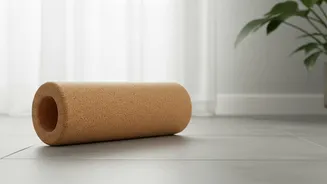
Think of foam rolling as a form of self-massage, technically known as self-myofascial release. Its purpose is to address the knots and adhesions that form in muscles that are held in a shortened or static position for too long. By applying slow, deliberate pressure, you can help increase blood flow, reduce inflammation, and improve the muscle's ability to lengthen and relax. For desk workers, this is a powerful tool to directly counteract the stiffness that builds up throughout the day. It's not about inflicting pain; it's about encouraging tight tissues to release, making it a crucial first step before you try to stretch or strengthen.
Essential Foam Rolling Moves
To get the most benefit, focus on the areas most affected by sitting. Don't roll directly on your lower back, as this can cause the spine to hyperextend. Instead, target the surrounding culprits. Start with your Thoracic Spine (Upper and Mid-Back): Lie on the floor with the foam roller under your shoulder blades, perpendicular to your spine. Support your head with your hands and lift your hips slightly. Slowly roll up and down between your mid-back and the top of your shoulders. Next, address your Glutes and Piriformis: Sit on the roller with one foot crossed over the opposite knee in a figure-four position. Gently lean into the hip of the crossed leg, rolling slowly to find tender spots. Finally, release the Hip Flexors: Lie face down and place the roller under the front of one hip. Support yourself on your forearms and slowly roll the front of your thigh. Spend about 60 to 90 seconds on each area, pausing for a few deep breaths on any particularly tight spots.
Reclaiming Your Movement with Mobility Drills
After releasing tight muscles with the foam roller, the next step is to actively move your joints through their intended range of motion. This is what mobility training is all about. While flexibility is passive (how far a muscle can be stretched), mobility is active—it's about control and strength through movement. These drills help 'wake up' the muscles that sitting has sedated and reinforce better movement patterns, essentially teaching your body how to move well again. Combining release work with active mobility creates a comprehensive solution to sitting-induced strain.
Key Mobility Exercises to Perform Daily
Integrate these simple but effective movements into your day. The Cat-Cow stretch, performed on your hands and knees, is excellent for promoting spinal flexibility and relieving back tension. To counteract shortened hips and inactive glutes, the Glute Bridge is essential. Lie on your back with your knees bent and feet flat on the floor, then lift your hips toward the ceiling, squeezing your glutes at the top. Finally, to address slumping shoulders, perform Shoulder Blade Squeezes: sit or stand tall and actively pull your shoulder blades together and down, as if tucking them into your back pockets. Hold each repetition for a few seconds to re-establish that mind-muscle connection.
Building a Sustainable Routine
The key to undoing sitting strain isn't a single, heroic gym session, but small, consistent daily actions. You don’t need hours; even five to ten minutes can make a significant difference. Try a short foam rolling session right after work to decompress from your day. Use a few mobility drills like cat-cow or shoulder rolls as a warm-up in the morning or during a mid-day break. Taking a short walk every 30-60 minutes is also highly recommended to break the cycle of static posture. The goal is to make movement a non-negotiable part of your day, interrupting long periods of stillness and giving your body the variety it needs to feel and function its best.