





Speaking Different Languages
One of the biggest hurdles in dog-cat relationships is that they communicate in fundamentally different ways. A dog's wagging tail often signals excitement and playfulness, whereas a cat's wagging or flicking tail can indicate irritation or agitation.
Similarly, a dog might use direct eye contact to show trust, but a cat often perceives a direct stare as a threat. Cats tend to be more subtle in their signals, using ear position, whisker placement, and slight body shifts to show their mood. Dogs are often more overt, using their whole body to broadcast their intentions. Recognizing these differences is the first step for an owner to become an effective translator and prevent misunderstandings that can lead to conflict.
How Context Shapes a Relationship
A pet's behavior doesn't happen in a vacuum; it’s shaped by history, personality, and environment. Age is a significant factor; introducing a kitten and a puppy is often easier as they can learn each other’s social cues from a young age. The animal that was in the home first can also influence the dynamic, as cats are often more territorial. The physical space itself is critical. A home with plenty of vertical spaces like cat trees and shelves allows a cat to retreat and observe from a safe distance, giving it a sense of control. A well-exercised dog with plenty of mental stimulation is also less likely to bother a cat out of boredom. The context of their daily lives, set by the owner, dictates whether the relationship will be stressful or serene.
The Owner's Role as Peacekeeper
Creating harmony is an active process. The most crucial part is the initial introduction, which should be slow and gradual. Experts recommend keeping the animals in separate rooms for at least a few days, allowing them to get used to each other's scent by swapping bedding or toys. The first face-to-face meetings should be brief, supervised, and with the dog on a leash, rewarding calm behavior with treats and praise. Forcing an interaction will only create negative associations. It's also vital to provide separate resources, such as food and water bowls, beds, and litter boxes, to prevent competition and territorial disputes. Your role is not to force a friendship, but to create an environment where one can develop naturally and safely.
Signs of Friendship (and Tolerance)
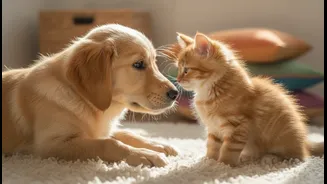
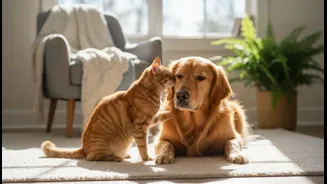
So how do you know if it's working? A successful relationship isn't always about snuggling and mutual grooming, although those are wonderful signs of a strong bond. Often, the first sign of progress is simply peaceful coexistence. If your pets can share a room without tension, or even ignore each other, it's a significant win. Positive signs can include sleeping in the same room, even at a distance, and engaging in gentle, interactive play. A cat that slow-blinks at a dog is showing trust. A dog that performs a 'play bow' is extending a clear invitation. It's important to accept that some pets may only ever reach a state of mutual tolerance, and that’s perfectly fine as long as both animals feel safe and stress-free in their home.