






When and Where to Watch
The best time to watch the Hunter's Moon will be on the evenings of Sunday, October 25, and Monday, October 26, 2026. While the moon officially reaches its peak fullness early on October 26, the experience of watching it rise is most dramatic around sunset.
In most Indian cities, the moon will begin to clear the eastern horizon shortly after sunset, between 5:30 and 6:00 PM. For the most impactful view, find a location with an unobstructed view of the eastern horizon. This could be a rooftop, a park, or a beach. The key is to get away from the glare of tall buildings and bright city lights which can wash out the night sky.
A Moon of Many Names
This celestial event is known globally as the Hunter's Moon. The name comes from Native American and European traditions, marking the time when the bright moonlight helped hunters track and stock up on game for the coming winter after the harvest had cleared the fields. In India, however, this full moon holds a special cultural significance as Sharad Purnima. It is celebrated as the full moon of the Ashwin month, marking the end of the monsoon and the harvest festival in many parts of the country. It is believed that on this night, the moon is especially bright, shining with all sixteen of its 'kalas' or phases, symbolising perfection.
The Magic of the Moon Illusion
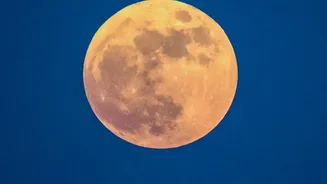
You don't need any equipment because the most breathtaking part of the experience is seeing the moon with your own eyes, especially as it rises. When the moon is low on the horizon, it often appears much larger and takes on a beautiful orange or golden hue. This phenomenon is known as the 'moon illusion'. While scientists still debate the exact cause, it's an optical effect that makes the moon seem enormous when viewed next to earthly objects like trees or buildings for comparison. The colour change is due to Earth's atmosphere, which scatters blue light and allows more red light to reach your eyes, similar to a sunset.
Simple Tips for a Perfect View
To make the most of your moon-gazing, a little preparation goes a long way. First, try to escape light pollution by moving away from the city centre. Even a short drive to a less developed area can make a significant difference. Second, give your eyes time to adjust to the darkness. It can take up to 20 minutes for your vision to fully adapt to low-light conditions. Third, be patient and comfortable. Bring a blanket or a chair, and perhaps a warm drink. Finally, check the weather forecast. Cloud cover can obviously spoil the view, so have a look at the prediction for the evenings of October 25 and 26.
Capturing the Moment with Your Phone
While professional cameras yield the best results, you can still get a decent shot with your smartphone. Start by using a tripod or resting your phone on a stable surface to avoid blurry images. Instead of just pointing and shooting, tap on the moon on your screen to focus. A brightness slider will often appear; lower the exposure to prevent the moon from looking like a white blob. Avoid using digital zoom, as it will reduce image quality. Instead, try to frame the moon with an interesting foreground object, like a tree silhouette or a building, to create a more atmospheric photo. Experiment with your phone's 'pro' or 'manual' mode if it has one, lowering the ISO to around 100 to reduce graininess.