






Hack 1: Prioritise Compound Movements
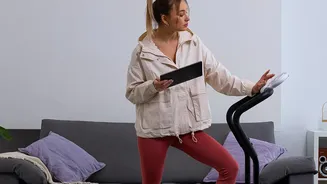
The secret to an efficient workout is to do more with less. Compound exercises are movements that work multiple muscle groups across several joints at the same time. Instead of isolating one small muscle, you engage your entire body, which builds functional
strength, improves coordination, and burns more calories in a shorter period. Think about foundational movements like squats, push-ups, and lunges. A squat, for example, doesn't just work your thighs; it engages your glutes, hamstrings, and core. This multi-muscle activation is what delivers maximum results when both time and space are limited.
Hack 2: Think Vertically, Not Horizontally
When floor space is at a premium, focus on exercises that use vertical space. These are movements you can do in one spot without needing to travel across the room. Explosive vertical movements like jumping jacks, high knees, and burpees are perfect examples. They elevate your heart rate quickly without requiring a large footprint. Even static holds can be modified for verticality. A wall sit, for instance, uses a small patch of wall to deliver a powerful burn to your lower body. By focusing on up-and-down movements, you can get a full-body cardio and strength workout in a space no bigger than a yoga mat.
Hack 3: Work With Time, Not Reps
High-Intensity Interval Training (HIIT) is a game-changer for at-home fitness. The principle is simple: short bursts of all-out effort followed by brief recovery periods. This method is incredibly effective for improving cardiovascular health and burning calories, both during and after the workout. A classic example is the Tabata protocol: 20 seconds of intense work, followed by 10 seconds of rest, repeated for eight rounds (a total of four minutes). You can apply this to any exercise—squat jumps, mountain climbers, or push-ups. By focusing on timed intervals, you ensure you're working at a high intensity, which is key for getting results without equipment.
Hack 4: Your Body Is the Only Machine You Need
Bodyweight training is about creating tension and resistance using your own mass. Foundational exercises form the core of any no-equipment routine. Planks and their variations are phenomenal for building core stability, which protects your back and improves posture. Glute bridges activate your entire posterior chain without you having to stand up. Push-ups, which can be modified by performing them on your knees or against a wall, are one of the most effective upper-body exercises you can do. These movements teach you to control and stabilize your body, building a foundation of strength that translates into every other physical activity.
Hack 5: Build a Simple and Consistent Routine
The best workout is the one you actually do. Consistency trumps intensity every time. Start by creating a simple, repeatable plan. For example, you could structure your week with three full-body workouts. A session might look like this: a two-minute warm-up of light cardio like jogging in place, followed by a 15-minute HIIT circuit combining squats, push-ups, lunges, and planks. You could perform each exercise for 40 seconds with 20 seconds of rest, completing three rounds. Aim for at least 150 minutes of moderate activity per week, which can be broken down into manageable sessions. The key is to create a schedule that fits your life and feels achievable, so it becomes a habit rather than a chore.