




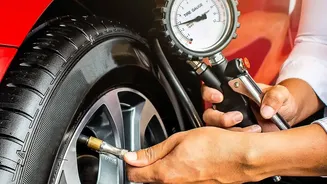


Tyres: Your First Line of Defence
The single most important component for a monsoon drive is your set of tyres. They are your car's only contact with the slippery, rain-soaked tarmac. On the winding, climbing roads of the Ghats, good grip is non-negotiable. Before you go, check the tread
depth. A one-rupee coin is a handy tool for this; if the head of the Ashoka pillar is visible when you insert it into the tread, it’s time for a new set of tyres. For wet conditions, a tread depth of at least 3mm is advisable for better water dispersal and to avoid hydroplaning. Also, ensure all five tyres—including the spare—are properly inflated.
Brakes: Ready for Wet Descents
Ghat roads involve steep descents where you rely heavily on your brakes. Wet roads significantly increase your car's stopping distance. Before your trip, have your brake pads, discs, and brake fluid checked by a professional. If you hear any squealing or grinding, or if the brake pedal feels spongy, get it inspected immediately. Remember that on long downhill stretches, it's better to use engine braking—shifting to a lower gear—to control your speed and prevent your brakes from overheating. Never coast in neutral.
Wipers and Visibility: See and Be Seen
Heavy monsoon downpours in the Ghats can reduce visibility to just a few meters. Your wipers are your best friend in this situation. The summer heat can crack and harden the rubber blades, making them useless. If your wipers leave streaks or make a squeaking sound, replace them. It's a small, inexpensive fix that makes a world of difference. Also, top up your windshield washer fluid. Equally important is ensuring other drivers can see you. Test all your lights: headlights (low and high beams), tail-lights, brake lights, and indicators. Using low-beam headlights during heavy rain is a must for visibility.
Electrics and Battery: Keep Them Dry
Water and electricity are a dangerous mix. Modern cars have complex electrical systems that are vulnerable during the monsoon. Check for any frayed or exposed wiring, especially if you have had aftermarket accessories fitted. The increased use of wipers, lights, and the defogger puts extra strain on your battery. If your battery is more than a few years old or has shown signs of weakness, get it tested to avoid getting stranded. Also, check that your car's drainage channels, especially below the windshield, are clear of leaves and debris to prevent water from seeping into the cabin and damaging electrical components.
Defogger and AC: For a Clear View
The high humidity of the monsoon means your car's windows will fog up from the inside very quickly. This is particularly dangerous on hairpin bends. Before you set off, test both your air conditioning and your front and rear defoggers. The AC helps to dehumidify the air inside the cabin, which is the most effective way to prevent fogging. Running the AC with the defogger on will clear up a foggy windscreen in seconds, ensuring your view of the road remains unobstructed.
Emergency Kit: Prepare for the Unexpected
Despite all preparations, things can go wrong. The Ghats are prone to landslides and long traffic backups during heavy rains. A well-stocked emergency kit is crucial. Your kit should include a powerful flashlight, a first-aid kit, a tow rope, and jumper cables. Given the location, packing extra water, non-perishable snacks, a raincoat, and a fully charged power bank is also a wise move. A basic tool kit and ensuring your spare tyre is in good condition can turn a potential trip-ending disaster into a manageable inconvenience.