




The Universe's Dusty Veil
Imagine trying to take a photo on a foggy day. The light scatters, and distant objects become blurry or disappear entirely. In space, the 'fog' is cosmic dust. These tiny particles, mostly composed of silicates, carbon, and ice, are smaller than grains
of sand. They are born in the atmospheres of dying stars and blasted out by supernova explosions. While seemingly insignificant, these particles pervade our galaxy and others, forming immense clouds that absorb and scatter visible light. For decades, this was a major frustration for astronomers, as these dust clouds effectively hide some of the most interesting regions of the cosmos, such as the chaotic centers of galaxies and the stellar nurseries where new suns and planets are born. They create dark patches in the sky that once led astronomers to believe they were looking at 'holes in heaven'.
A Different Kind of Light
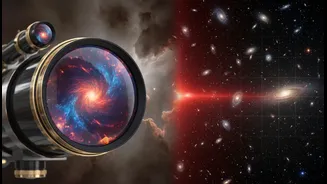
The solution to seeing through this cosmic fog lies in observing a different kind of light, one that our eyes cannot see. Light exists across a vast electromagnetic spectrum, from high-energy gamma rays and X-rays to low-energy radio waves. Visible light is just a tiny sliver of this spectrum. Infrared light has a longer wavelength than visible light, which allows it to pass through clouds of cosmic dust more easily. Think of it like sound waves. The low-frequency thrum of bass music can pass through walls, while higher-frequency sounds are blocked. Similarly, the longer wavelengths of infrared light can slip past dust particles that would block or scatter the shorter wavelengths of visible light. This unique property makes infrared astronomy an essential tool for peering into regions of space that are otherwise completely obscured.
The Tools for the Job
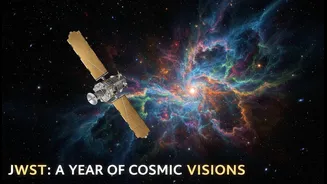
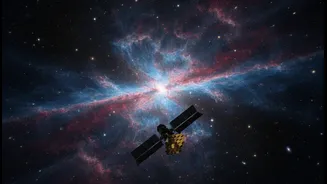
To capture this elusive light, astronomers rely on highly specialized and sophisticated technology. The undisputed champion of infrared astronomy is the James Webb Space Telescope (JWST), an international partnership between NASA, the European Space Agency (ESA), and the Canadian Space Agency (CSA). Launched in 2021, JWST is the largest telescope ever sent into space, designed specifically to detect faint infrared signals from the earliest days of the universe. To do this, its instruments must be kept incredibly cold—below -223°C—so its own heat doesn't interfere with the faint heat signatures from distant stars. Before Webb, telescopes like the Spitzer Space Telescope and the Infrared Astronomical Satellite (IRAS) paved the way, mapping the infrared sky and making groundbreaking discoveries. These incredible machines are the product of decades of innovation and massive investment, representing the business of pushing scientific frontiers.
Seeing the Unseen
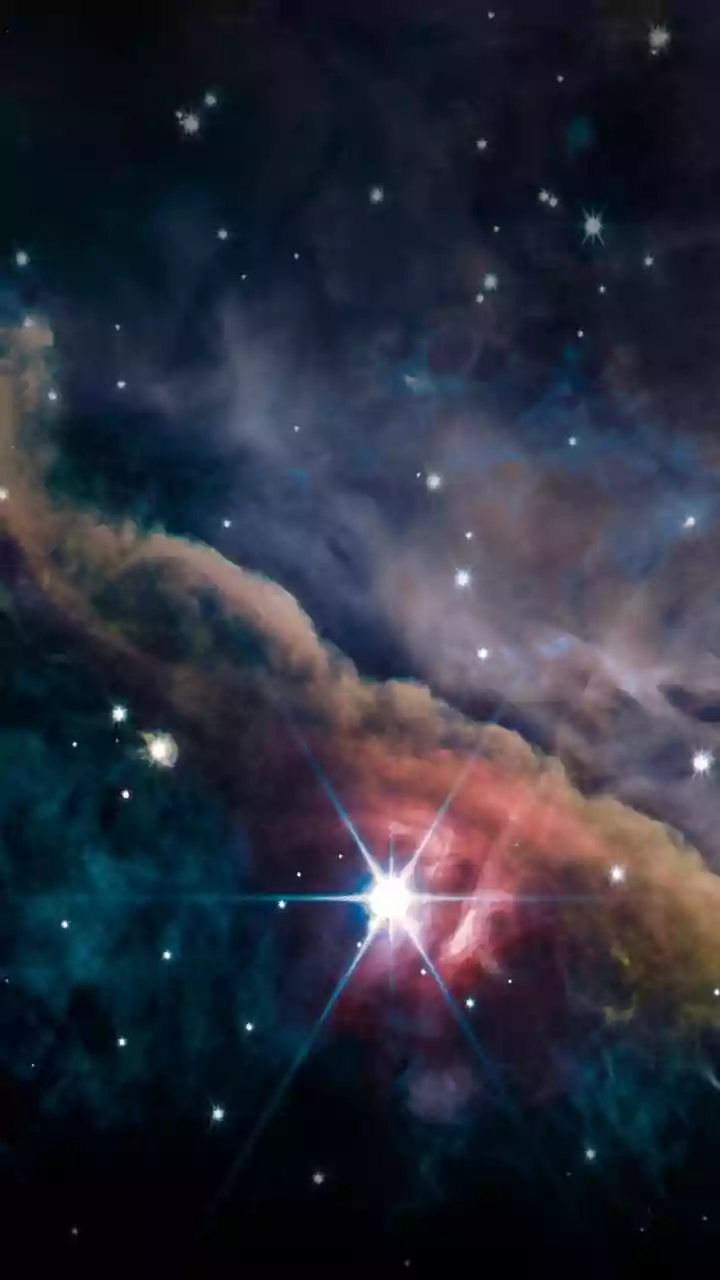
The results from these infrared observatories are nothing short of spectacular. Perhaps the most famous example is the Pillars of Creation, a part of the Eagle Nebula. In visible light, as seen by the Hubble Space Telescope, the pillars are dark, opaque towers of gas and dust. But when the James Webb Space Telescope turned its infrared gaze on them, the pillars became semi-transparent, revealing countless newly formed stars glowing red and orange within and behind the dust. This new view allows astronomers to study the process of star formation in unprecedented detail, watching as knots of gas and dust collapse under gravity to ignite into new suns. These infrared images not only possess a stunning, ethereal beauty but also provide invaluable scientific data, transforming our understanding of how stars are born.
The Beauty of New Knowledge
Beyond creating beautiful portraits of cosmic structures, infrared astronomy answers fundamental questions about our universe. It allows scientists to study the glowing heat of cool objects that don't shine in visible light, such as brown dwarfs (failed stars) and planets orbiting other stars, known as exoplanets. By analyzing the infrared light passing through an exoplanet's atmosphere, scientists can even determine its chemical composition, searching for signs of water and other molecules that could indicate habitability. Furthermore, because the universe is expanding, light from the very first stars and galaxies has been stretched over billions of years into infrared wavelengths. This means telescopes like JWST are essentially time machines, allowing us to see the cosmos not as it is today, but as it was over 13 billion years ago, providing a glimpse into the dawn of cosmic history.