




Anatomy of an Ecological Disaster
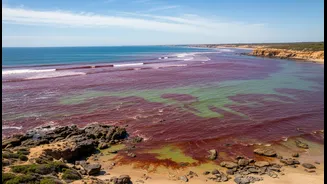
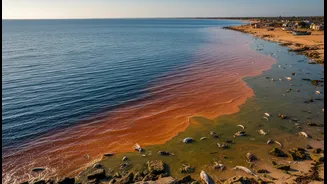
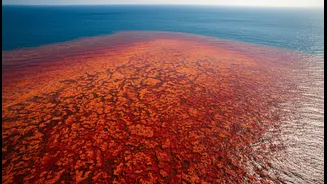
Since March 2025, a harmful algal bloom (HAB) has devastated over 20,000 square kilometres of ocean, impacting roughly a third of South Australia's coastline. The culprit is a microscopic alga named Karenia cristata, a species never before seen in Australian
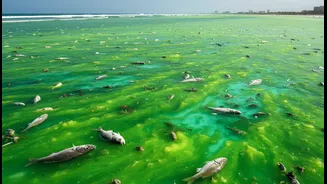
waters. This isn't just a standard 'red tide'. Recent studies have revealed Karenia cristata is terrifyingly potent, with researchers describing it as potentially the most toxic algal species ever tested. Its neurotoxins have been catastrophic, killing an estimated one million marine animals, including fish, dolphins, and vulnerable leafy seadragons, across more than 500 different species. The event’s sheer duration and toxicity are what make it truly unprecedented, marking a grim new chapter in Australia's marine history.
A Blind Spot From Space
This disaster has exposed a critical weakness in our primary method of ocean surveillance. For decades, scientists have relied on satellites to monitor ocean health by measuring chlorophyll-a, the green pigment in phytoplankton. This gives a broad-stroke view of where algae is growing, but it comes with a massive limitation: it cannot distinguish between species. A satellite can detect a massive bloom, but it can't tell if it’s a harmless surge of food for the ecosystem or a hyper-toxic disaster like Karenia cristata in the making. As official government updates on the South Australian situation clarify, satellite imagery alone does not confirm the presence of Karenia; only direct water sampling can do that. This gap between seeing a bloom and understanding its threat creates a dangerous delay in a crisis where every hour counts.
The High Cost of Vague Data
The inability to rapidly identify the specific species from the outset had profound consequences. While a massive bloom was visible, the extreme nature of its toxicity was not immediately understood. This monitoring gap meant that the response was playing catch-up to a disaster that was already spiralling out of control. The ecological toll has been immense, but the economic and social impacts have also been severe, hitting the state's fishing, aquaculture, and tourism industries hard. Fishing restrictions were imposed to allow stocks to recover, and public health warnings were issued regarding contact with sea foam containing the toxins. The event demonstrates that in the age of climate change—where marine heatwaves and nutrient-rich runoff are making HABs more frequent and severe—simply knowing the quantity of algae is no longer enough. Knowing the exact species is the difference between a routine alert and an emergency evacuation.
A Race for a Clearer Picture
The South Australian bloom has served as an unavoidable wake-up call, forcing a rethink of ocean monitoring strategy. In response to the crisis, the state government is establishing a new Office for Algal Bloom Research and expanding investment in real-time water quality monitoring, forecasting, and early detection technologies. This is a direct acknowledgment that the old methods are insufficient for the new threats facing marine ecosystems. The scientific community is now grappling with how to integrate more sophisticated methods—like advanced sensor technology, AI-driven analysis, and rapid genetic testing of water samples—with broad satellite coverage. The goal is to move from a system that simply sees 'green' to one that can identify the specific organisms within it, providing the crucial intelligence needed to protect both marine life and human communities from future toxic events.