





Beyond the Birthday Candle Count
For decades, we’ve tracked health using relatively simple numbers: chronological age, weight, blood pressure, and cholesterol. But we all know people who seem younger or older than their years. Scientists have long called this concept 'biological age'—the
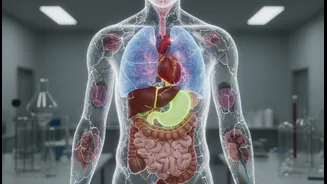
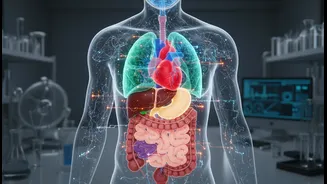
functional age of your body versus the number of birthdays you've celebrated. Now, research is taking this idea a step further. It turns out, there isn't just one biological age for your whole body. Groundbreaking new studies show that individual organs can age at different rates. Your brain, heart, lungs, and kidneys could all be on separate aging trajectories, a phenomenon known as differential organ aging. This adds a fascinating but complex new dimension to understanding our health and longevity.
How Do You Measure an Organ’s Age?
This isn't science fiction; it's based on proteomics, the large-scale study of proteins. As organs function, they shed specific proteins into our bloodstream. Researchers have identified which proteins are unique to certain organs like the heart, brain, or liver. By analyzing the levels of thousands of these proteins in a blood sample, and using powerful machine learning algorithms, scientists can now estimate the biological age of about 11 different organ systems. An 'age gap' is then calculated, showing whether an organ is 'older' or 'younger' than would be expected for a person of that chronological age.
What a Faster-Aging Organ Means
This new information is more than a novelty; it has profound implications for predicting future health risks. Studies led by researchers at institutions like Stanford University and University College London have found that an organ aging significantly faster than a person's chronological age is a powerful predictor of disease. For example, individuals with an accelerated 'heart age' were found to have a 250% increased risk of heart failure. Similarly, a rapidly aging brain was a strong predictor of Alzheimer's disease progression. Research shows about one in five healthy adults over 50 has at least one organ aging significantly faster than average, putting them at a heightened risk for disease in that specific organ within the next 15 years.
A Tool for Prevention or New Anxiety?
The potential upside is enormous. Instead of waiting for symptoms to appear, doctors could one day use organ age tests as an early warning system. If your kidneys show accelerated aging, a doctor could recommend targeted lifestyle changes or monitoring long before a disease manifests. This represents a shift from reactive 'sick care' to proactive healthcare. However, this new layer of data also brings complexity. What do you do with the knowledge that your lungs are 'older' than you are? While the information could empower preventive action, it could also create a new wave of health anxiety. For now, these tests are primarily research tools and not yet standard in clinical practice, but their development is advancing quickly.
The Future of Your Health Report
Imagine a future where your annual check-up includes a dashboard of your organ ages alongside your cholesterol levels. This concept is moving closer to reality. Research has shown that these organ ages are not set in stone; they can be influenced by lifestyle factors. Things like diet, exercise, and alcohol consumption can impact how quickly or slowly specific organs age. While having multiple 'old' organs is linked to a higher risk of mortality, some studies suggest having a youthful brain and immune system is uniquely associated with a longer life. This intricate new understanding of health moves us beyond simple trackers and into an era of truly personalized, but undoubtedly more complex, health management.