





Decode the 'Red Alert' Before You Start
First, understand what a 'red alert' from the India Meteorological Department (IMD) means. It is the highest level of warning, issued when extremely heavy rainfall (over 204.5 mm in 24 hours) is forecast. This signifies a serious threat to life and property
from flooding, landslides, and disruption of essential services. Before even touching your car keys, check the latest advisories from the IMD and local disaster management authorities. If officials advise against travel, the safest action is to stay put. The primary rule of a red alert is to avoid travel unless absolutely essential.
Your Vehicle: The First Line of Defence
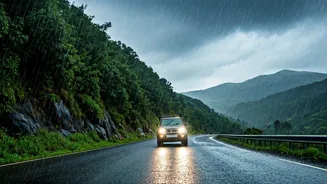
If you must drive, a thorough vehicle check is non-negotiable. Pay close attention to your tyres, brakes, and wipers. Good tyre tread is critical for grip on slippery, winding roads. Braking distance increases significantly on wet surfaces, so ensure your brakes are in optimal condition. Wipers are often overlooked but are vital for visibility during a downpour; even new wipers can struggle in a cloudburst, so ensure yours are in top shape. Also, check that all your lights—headlights, taillights, and fog lamps—are functioning perfectly. Visibility is severely reduced in heavy rain, and being seen is as important as seeing.
The Monsoon Emergency Kit
Traffic jams and road blockages are common during heavy rains, and a short trip can turn into a long ordeal. Pack an emergency kit to handle unforeseen delays. This should include drinking water and non-perishable snacks like biscuits or energy bars. A powerful, waterproof torch with extra batteries is crucial, as your phone's battery may run out. A portable power bank is also a wise addition for keeping your communication lines open. Your kit should also contain a first-aid box with essentials like antiseptic, bandages, and basic pain relievers. A tow rope, jumper cables, and a reflective warning triangle are also highly recommended.
On The Road: A New Set of Rules
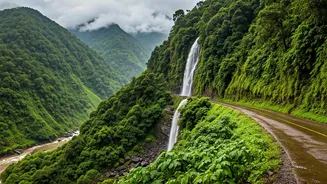
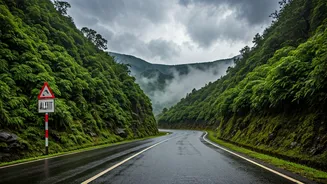
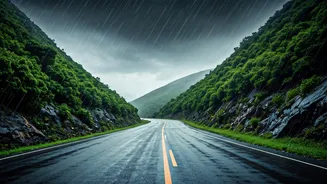
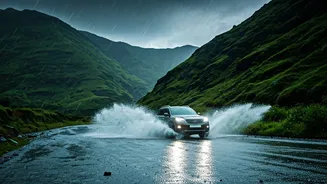
Driving in a ghat section during a red alert requires a complete change in driving style. Drastically reduce your speed. This gives you more time to react to hazards and helps prevent aquaplaning on waterlogged patches. Maintain a much larger distance than usual from the vehicle in front of you. Use low gears when ascending or descending steep slopes to maintain better control and reduce strain on your brakes. Be extremely vigilant for signs of landslides, like falling rocks or muddy water flowing across the road. Never attempt to drive through a waterlogged underpass or a road with flowing water if you cannot gauge its depth. It only takes two feet of rushing water to carry away most vehicles, including SUVs.
If You Get Stranded: Staying Safe
If your car gets stuck in floodwater, do not panic. Do not open the doors, as this will allow water to rush in quickly. Try to roll down a window and exit through it. If you have power windows that have failed, a hammer or a dedicated rescue tool can be used to break a side window to escape. Once out, if it is safe to do so, move to higher ground immediately. Never attempt to wade through fast-moving floodwater, as it can hide dangers like open manholes, debris, or even downed power lines. If you cannot leave the vehicle safely, climb onto the roof to stay visible and await rescue. Keep emergency contact numbers for local police and disaster response teams handy.