
Putting Astronaut Safety First
In any human spaceflight mission, nothing is more important than the safety of the crew. ISRO has recently been focused on perfecting the systems designed to protect its astronauts, or 'Vyomanauts', during the most dangerous phases of flight. Recent tests
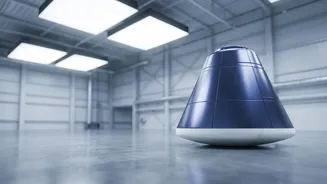
have focused on the Crew Escape System and the Crew Module. A series of qualification tests in July 2026 validated key functions that happen after the capsule splashes down in the ocean. These trials are not just routine checks; they are high-stakes demonstrations proving that every emergency scenario has been considered and every safety measure is in place before astronauts are strapped into the capsule. Each successful test is a significant milestone, building confidence towards the final launch.
Simulating Splashdown and Separation
Three recently completed tests highlight ISRO's meticulous approach. The first was a test of the Crew Module Uprighting System (CMUS). After parachuting into the sea, the capsule might land upside down, which could be dangerous for the crew. The CMUS uses gas-inflated balloons to automatically flip the module into the correct, upright position. Another test verified the clean separation of the umbilical cords that connect the Crew Module to its Service Module. These connections provide power and life support, and they must disconnect perfectly before re-entry. The third test confirmed the structural strength of the module when its apex cover is jettisoned to deploy the parachutes. These ground-based trials push the hardware harder than it would ever experience in an actual flight, ensuring its reliability.
The Master Plan: A Nation in Space
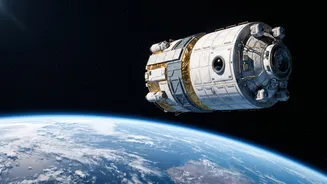
The Gaganyaan programme is India's ambitious endeavour to become the fourth country in the world—after Russia, the United States, and China—to have an independent capability to send humans into space. The mission plan involves launching a three-member crew into a Low Earth Orbit of 400 kilometres. The astronauts will spend several days in orbit before returning to Earth, splashing down in the Indian Ocean. This national project involves a massive collaboration between ISRO, the Indian Air Force, the Navy, and various research and development organisations across the country. The mission's success will not only be a technological triumph but also a profound moment of national pride, cementing India's status as a major spacefaring power.
Meet the Vyomanauts and Vyommitra
At the heart of this mission are the four astronaut-designates, all distinguished test pilots from the Indian Air Force: Group Captains Prasanth Balakrishnan Nair, Ajit Krishnan, Angad Pratap, and Wing Commander Shubhanshu Shukla. They have undergone extensive training in both Russia and India, preparing for the rigours of space travel. But before they fly, a humanoid robot named Vyommitra will pave the way. Vyommitra, whose name translates to 'space friend', will be aboard the first uncrewed Gaganyaan test flights. This robot will simulate human functions, monitor the cabin environment, and test life-support systems, ensuring everything is perfectly safe for the eventual human crew.
The Road Ahead to Launch
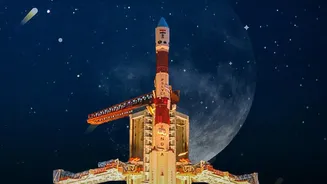
With these safety tests cleared, ISRO is now focused on the next phase: a series of uncrewed test flights. The first of these, known as G1, is expected to launch in the coming months. This uncrewed flight, carrying Vyommitra, will serve as a full dress rehearsal for the real thing, testing the launch vehicle, orbital module, and re-entry procedures from start to finish. Following the successful completion of at least two uncrewed missions, ISRO will proceed with the first crewed Gaganyaan flight. While the timeline has been adjusted to ensure absolute safety, the current target for launching India's first astronauts into space is set for 2027. The journey has been long, but each milestone brings India closer to its historic moment among the stars.