




The Purpose of a Standing Twist
The standing torso twist is a fundamental exercise known for its ability to improve flexibility, posture, and core strength. Primarily, it targets the muscles of your core, including the obliques on the sides of your abdomen, and the smaller muscles that
support your spine. The goal of the movement is to rotate the upper body while the lower body remains stable. This rotational movement helps to gently stretch the spine, increase mobility, and release tension that can build up from long periods of sitting or performing repetitive forward-and-back motions. When done correctly, it's an excellent way to warm up the body, improve balance, and even aid digestion by gently compressing the abdominal organs.
Why Your Hips Should Stay Put
The instruction to keep your hips facing forward is not arbitrary; it is rooted in human anatomy. The primary purpose of this cue is to isolate the twist in the correct part of your spine: the thoracic spine, which is your mid and upper back. This section of the spine is designed for rotation. In contrast, your lumbar spine (the lower back) has very limited rotational capacity. When you allow your hips to swing along with your torso, the movement often originates from the lower back and pelvis instead of the upper back. This can place undue stress on the sensitive sacroiliac (SI) joints, where your spine connects to your pelvis, potentially leading to discomfort or injury. By anchoring your hips, you force the intended muscles to do the work and encourage mobility where it is needed most.
The Anatomy of a Safe Twist
Think of your spine in two main sections for twisting. The thoracic spine, comprising 12 vertebrae, is built for mobility and rotation. Its structure allows the vertebrae to glide against each other. The lumbar spine, with its five larger vertebrae, is built for stability and bearing weight; it moves best in forward and backward bending motions. Forcing rotation in the lumbar region is like trying to turn a hinge sideways—it is not what it was designed for. By keeping your hips square and stationary, you create a stable foundation. This stability prevents the lumbar spine and pelvis from being pulled into the rotation, ensuring the twist happens in the more mobile thoracic region. This targeted approach not only makes the exercise safer but also far more effective at improving upper-body mobility.
How to Execute the Twist Correctly
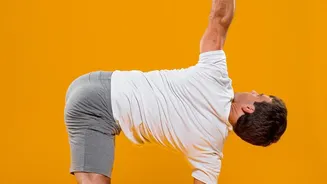
To perform a standing torso twist with proper form, begin by standing with your feet hip-width apart and a slight bend in your knees. Engage your core muscles as if you are bracing for a light punch to the stomach; this will help stabilize your lower body. You can place your hands on your hips to monitor their position, or extend your arms out to the sides or cross them over your chest. Inhale to lengthen your spine, imagining a string pulling the crown of your head upward. As you exhale, slowly and intentionally rotate your upper body to one side, leading with your rib cage, not your arms. Keep your hips and legs completely still, facing forward throughout the movement. Twist only as far as you can without letting your hips move. Inhale to return to the centre, and exhale to twist to the other side.
Common Mistakes to Avoid
The most frequent error is allowing the hips to sway or pivot with the twist. Often, the hip on the opposite side of the twist will jut forward. To correct this, consciously press down through both feet and keep your pelvis level. Another common mistake is using momentum by swinging the arms, rather than using muscular control. This reduces the effectiveness of the exercise and increases the risk of strain. The movement should be slow and deliberate. Also, be mindful not to hold your breath. A steady breathing pattern—exhaling on the twist and inhaling back to centre—will help facilitate the movement and keep your muscles relaxed.
Are There Twists Where Hips Do Move?
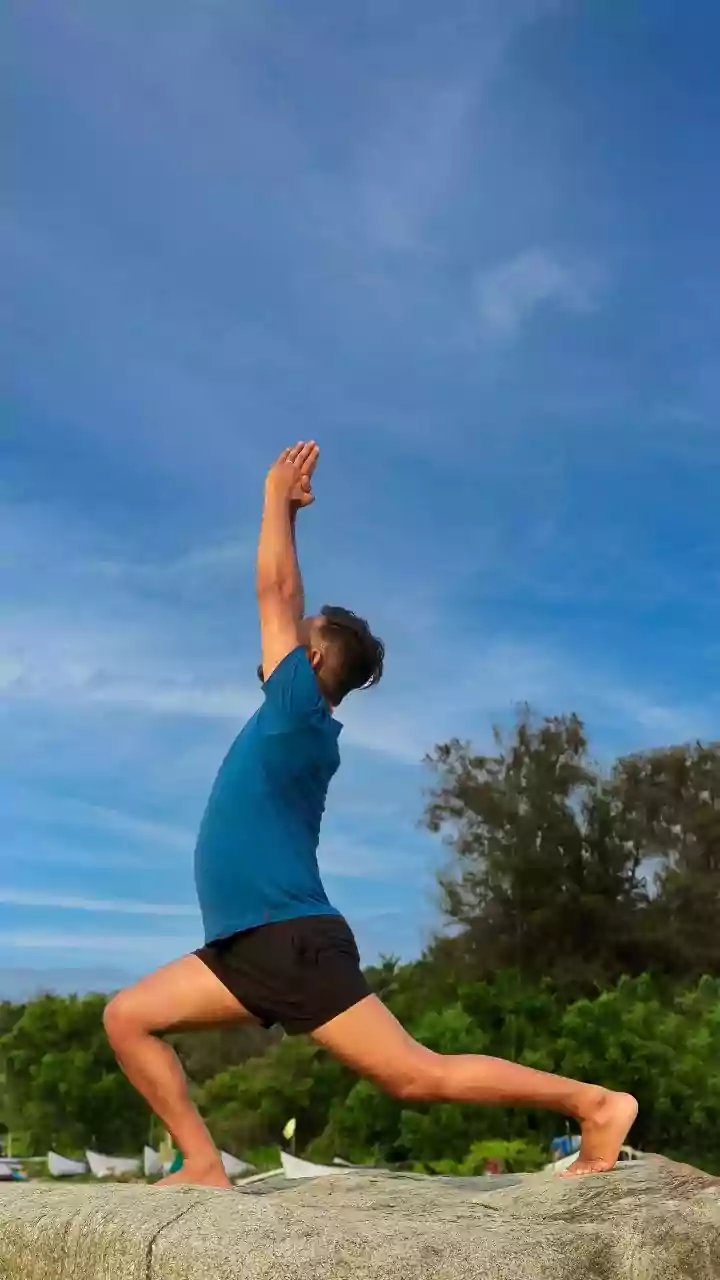
It is important to note that not all twists require static hips. In certain dynamic movements, like a lunge with a twist, or specific yoga poses like Revolved Triangle Pose (Parivrtta Trikonasana), the pelvis is intended to rotate along with the spine to achieve the full expression of the posture. These are different exercises with different goals. The key is to understand the intention behind the specific movement you are performing. For the classic standing torso twist, which is focused on core stability and thoracic mobility, keeping the hips locked in a forward-facing position is the gold standard for safety and effectiveness.