




Why Your Desk Job Is Making You Stiff
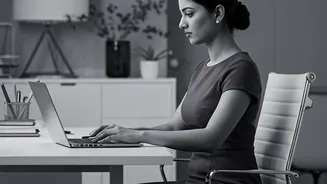
The human body is designed to move. When you sit for prolonged periods, several negative effects begin to take hold. First, your blood circulation slows down, especially in your legs. This can lead to feelings of fatigue, sluggishness, and even swelling
as your body struggles to circulate blood and oxygen efficiently. Muscles that are not used regularly also become weak and prone to stiffness. Your hip flexors shorten, your gluteal muscles become less active, and the muscles supporting your spine can weaken, often leading to poor posture and lower back pain. This sedentary state is linked not only to aches and pains but also to more serious long-term health risks.
The Power of Small, Frequent Movements
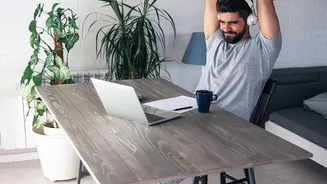
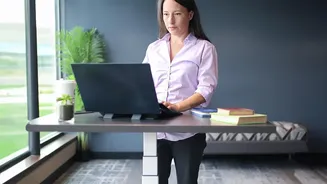
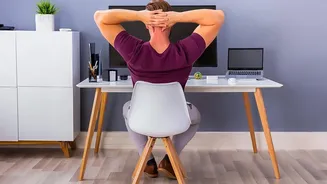
You don't need to run a marathon on your lunch break to counteract these effects. The key is consistent, gentle movement throughout the day. Experts increasingly recommend 'movement snacks' or microbreaks every 30 to 60 minutes. Taking just a minute or two to stand up and stretch can make a significant difference. These small actions wake up your muscles, reset your posture, and, most importantly, kickstart your circulation. By simply standing, you re-engage your venous system, and adding a few simple stretches delivers fresh oxygen to your muscles and brain, helping to fight off both physical stiffness and mental fog.
Five Simple Stretches for Your Workday
Think of these not as a formal exercise routine, but as quick, restorative moments you can perform right at your desk. Hold each stretch for about 20 to 30 seconds and remember to breathe. 1. Calf Raises: While standing, simply lift your heels off the ground, hold for a moment, and then lower them back down. This is excellent for boosting circulation in your lower legs. 2. Standing Quad Stretch: Holding onto your desk for balance, grab your left foot and gently pull your heel toward your glute, feeling a stretch in the front of your thigh. Repeat on the other side. 3. Torso Twist: Stand with your feet shoulder-width apart and gently twist your upper body from side to side. This helps to mobilize your spine and relieve back tension. 4. Chest Opener: Clasp your hands behind your back, straighten your arms, and gently lift them, puffing out your chest. This counteracts the hunching posture we adopt over a keyboard. 5. Standing Back Bend: Place your hands on your lower back for support and gently arch your spine, looking up toward the ceiling. This provides a gentle extension for your back, reversing the effects of sitting.
How to Build a Stretching Habit
Knowing what to do is half the battle; remembering to do it is the other half. The most effective way to build this habit is to link it to an existing part of your routine. Try standing up to stretch every time you finish a phone call or send a long email. Alternatively, set a recurring timer on your phone or computer for every 30 or 45 minutes as a non-negotiable reminder to stand up. The goal is to make these movements as automatic as checking your inbox. Don't feel pressured to do all the stretches every time. Even just 30 seconds of standing or a quick calf raise is better than nothing. The consistency of these small breaks is more important than their duration.