



Choosing the Perfect Saree
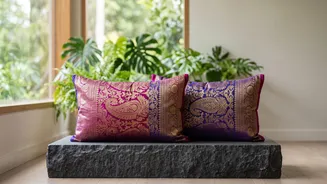
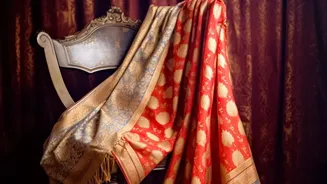
The first step is selecting the right saree for your project. Look through your collection for sarees that you no longer wear but still adore for their colour, texture, or pattern. A Banarasi, Kanjeevaram, or any silk with a rich pallu and intricate borders
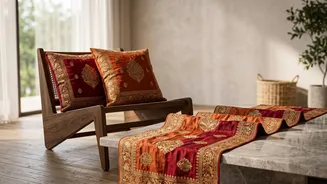
is an ideal candidate. Inspect the fabric carefully. While small tears or faded spots in the body can be worked around, ensure that large sections are still strong and usable. The most visually stunning parts, like the pallu and zari borders, can become the focal point of your new creations, making them look like designer pieces.
Gathering Your Tools
You do not need a professional setup for this project, just a few essential tools. To begin, you will need: your chosen silk saree, a sturdy lining fabric like cotton to give the silk structure, sharp fabric scissors, a measuring tape, pins, and thread that matches your saree. A sewing machine will make the process faster, but you can certainly achieve beautiful results by hand-stitching. For the cushion covers, you will also need zippers or buttons for the closure and cushion inserts. For the table runner, consider adding decorative tassels or beads for a polished finish.
Creating Elegant Cushion Covers
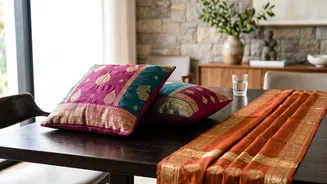
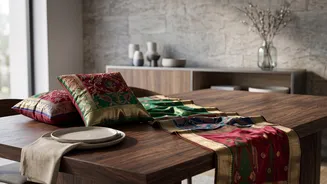
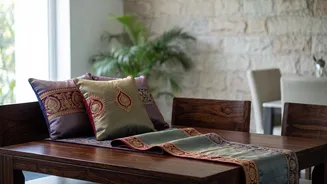
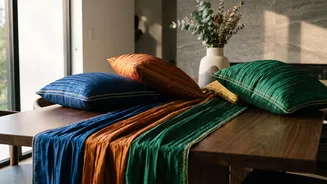
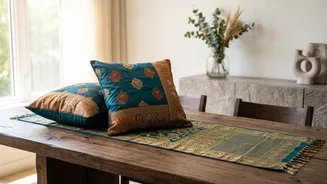
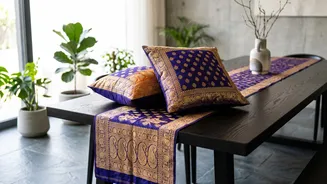
Transforming a saree into a cushion cover is surprisingly straightforward. First, measure your cushion insert and add about an inch on all sides for seam allowance. Cut two pieces of the saree fabric and two pieces of the lining fabric to this size. Place the lining against the wrong side of each silk piece and pin them together. Now, place the two fabric squares with their right sides facing each other. Sew around three sides, leaving one side open. For the opening, you can either sew in a zipper for a clean closure or create an envelope-style cover by overlapping the fabric on the back. Once sewn, turn the cover right side out, press the seams gently, and insert your cushion.
Designing a Stunning Table Runner
A table runner made from a silk saree can instantly elevate your dining space. Measure your table's length and decide how long you want the runner to be, including any overhang. The width is typically between 12 to 15 inches. The saree's border often works perfectly for this. Cut one piece from your saree and a matching piece from your lining fabric. Place the two pieces with their right sides together and sew along the edges, leaving a small gap of a few inches on one side. Use this gap to turn the runner right side out. Carefully push out the corners, then press the entire runner with an iron on a low heat setting. Topstitch around the entire border for a crisp, professional finish and to close the gap. Attach tassels to the narrow ends for an extra festive flair.
Tips for Working with Silk
Silk is a luxurious fabric but can be slippery and delicate to handle. To make the process smoother, always use very sharp scissors or a rotary cutter for clean cuts. Use fine, sharp pins—often called 'silk pins'—to hold the fabric without snagging it. When sewing, choose a fine, new needle (size 60/8 or 70/10) to prevent pulling the threads. Sew slowly and avoid pulling or stretching the fabric as you guide it through the machine. It is also wise to finish your seams properly with a zig-zag stitch or a serger to prevent the silk from fraying over time. When pressing, use a low heat setting and a pressing cloth to protect the fabric's sheen.