


The Red Planet's Persistent Problem
Power is the lifeblood of any off-world settlement, and for the foreseeable future on Mars, that power will come from the sun. Yet, the Red Planet has a built-in defense against solar energy: dust. Martian dust is a uniquely challenging substance. It
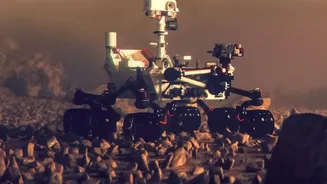
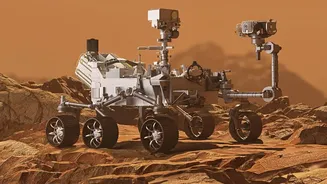
is incredibly fine, electrostatically charged so it clings to surfaces, and gets whipped into the atmosphere with astonishing efficiency. While small dust devils are common, the real threat comes from regional and even planet-encircling dust storms. These massive weather events can rage for weeks, plunging vast areas into darkness and drastically reducing the sunlight that reaches the surface. NASA's Opportunity rover, for instance, met its end in 2018 when a global dust storm blocked so much sunlight that its solar panels could no longer recharge its batteries. Any future human habitat will face the same existential threat; a prolonged loss of power due to dust could be catastrophic.
An Orbiting Weather Watch
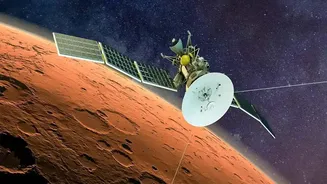
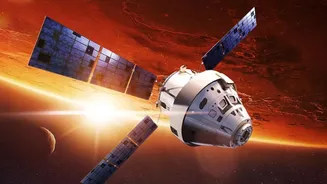
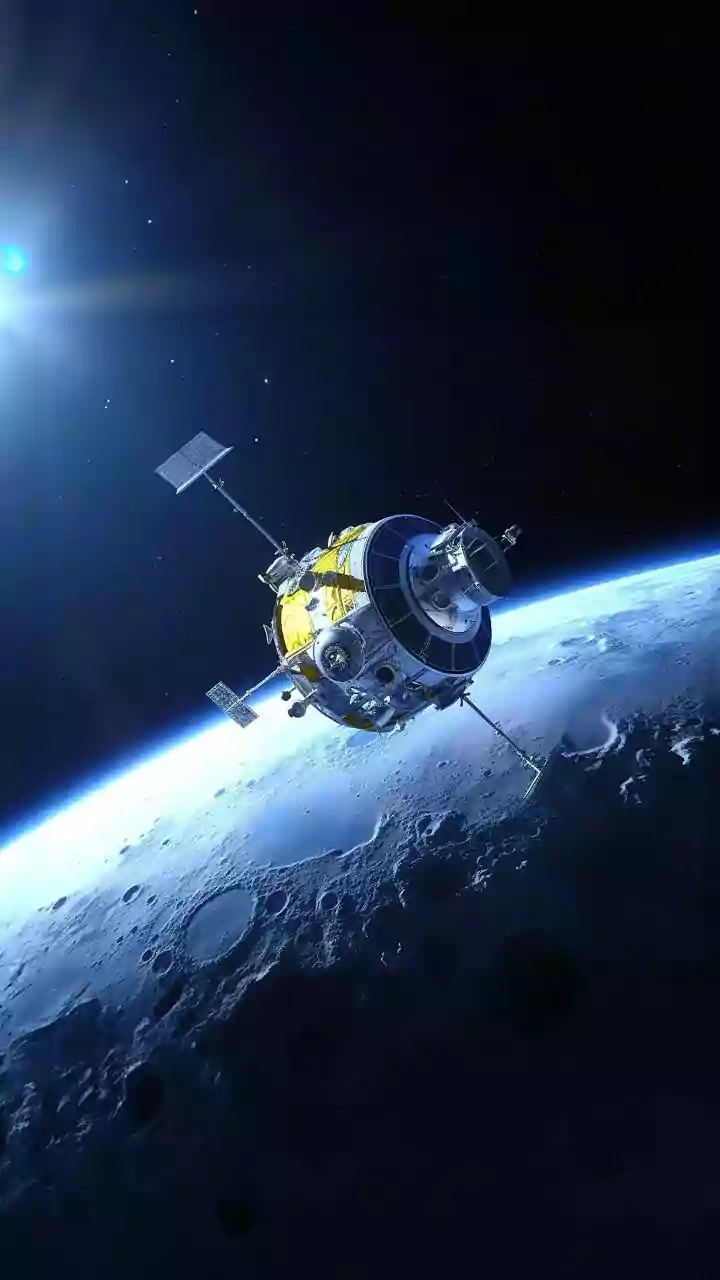
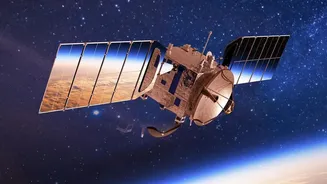
Understanding this threat is the first step to mitigating it, and that's where a fleet of orbital sentinels comes in. For years, spacecraft like NASA's Mars Reconnaissance Orbiter (MRO) have been our eyes in the Martian sky. Using a suite of sophisticated instruments, these orbiters act as a planetary weather service. The Mars Color Imager (MARCI) creates daily global maps, allowing scientists to spot the birth of storms and track their movement across the planet. Meanwhile, instruments like the Mars Climate Sounder (MCS) measure temperature profiles and the concentration of dust and ice in the thin atmosphere. This gives scientists a three-dimensional view of the weather, showing not just where the dust is on the surface, but how it's behaving at different altitudes. Together, these tools provide an unprecedented, multi-decade dataset on the behavior of Martian dust.
From Raw Data To Actionable Models
Collecting data is only half the battle. The crucial next step is turning those terabytes of observations into predictive power. Scientists feed the information on temperature, pressure, and dust opacity into complex computer simulations called Global Climate Models (GCMs). These are fundamentally similar to the models used to forecast weather on Earth, but they are specifically tuned for the unique physics of Mars's thin, dusty atmosphere. By comparing the models' predictions with real-world observations from the orbiters, scientists can continuously refine them. The ultimate goal is to create a reliable forecasting system that can predict not just when the dust storm season will start, but where a storm is likely to form and whether it has the potential to grow into a regional or global event. This is the Martian equivalent of a hurricane forecast, providing critical advance warning for assets on the ground.
Engineering A Dust-Proof Future
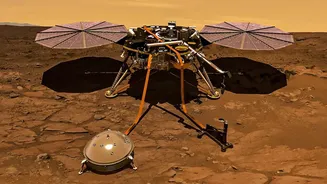
This forecasting ability is the key to 'guarding' future solar arrays. Engineers use this information in several critical ways. First, the long-term dust data helps in site selection. Mission planners can analyze decades of storm-track data to choose locations for a human base that are statistically less prone to severe dust activity. Second, the models inform hardware design. Knowing the expected duration and severity of dust storms allows engineers to calculate how much battery storage a base will need to survive when solar panels are underperforming. It also influences the design of the arrays themselves. This could mean building arrays on taller stilts to keep them above the worst of the saltating, or blowing, dust, or developing advanced cleaning technologies. NASA has already developed an Electrodynamic Dust Shield (EDS) that uses an electric field to actively repel dust particles, a technology that could one day make manual cleaning obsolete. Forecasts would tell mission controllers when to activate such systems for maximum efficiency. In essence, the data from orbit allows engineers to build for the reality of Mars, not just the ideal.