


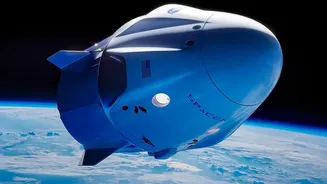
The Final Frontier for India
The ultimate goal of the Gaganyaan programme is to launch a crew of three astronauts into a Low Earth Orbit of 400 kilometres for a mission lasting up to three days and bring them safely back to Earth. Success will make India the fourth country in the world,
after the United States, Russia, and China, to have an independent human spaceflight capability. But getting there requires painstaking preparation. Human spaceflight is exponentially more complex than launching satellites. Every system must be human-rated, meaning it needs redundancies and failsafes to protect astronaut lives above all else. Before astronauts climb aboard, a series of dress rehearsals must prove every component is ready for the ultimate test.
Testing the Safety Net: Parachutes and Aborts
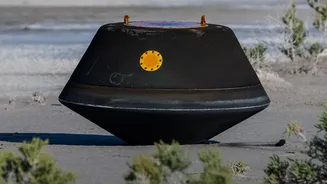
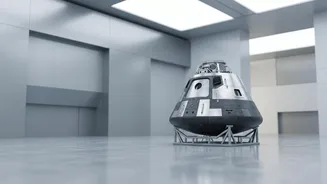
Two of the most critical test categories involve proving the systems that save astronauts' lives when things go wrong. The first is the deceleration system. After re-entering the atmosphere, the crew module must slow down for a safe splashdown in the ocean. To validate this, ISRO has been conducting Integrated Air Drop Tests (IADT). In these tests, a dummy crew module weighing nearly five tonnes is dropped from a Chinook helicopter to test the precise, automated deployment sequence of several parachutes, including massive 25-metre main parachutes. The other crucial element is the Crew Escape System (CES). This is designed to pull the crew module away from the rocket in case of an emergency on the launchpad or during ascent. ISRO has validated this system through Test Vehicle (TV) missions, like the successful TV-D1 mission. In this test, a liquid-propelled rocket flew to a specific altitude, where an in-flight abort was deliberately triggered, firing the escape motors to pull the capsule to safety.
The Full Dress Rehearsal: G1 and G2 Missions
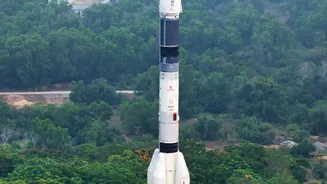
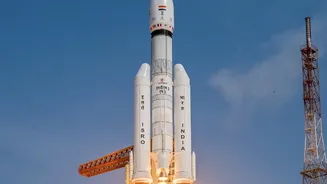
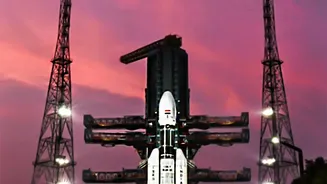
The culmination of these component tests will be the full-scale uncrewed orbital flights. The first of these, the Gaganyaan-1 (G1) mission, is slated for late 2026. This mission will see a human-rated LVM3 rocket launch an uncrewed Gaganyaan spacecraft into orbit. This flight will test the performance of all major systems in an end-to-end mission profile, from launch and orbital manoeuvres to re-entry and recovery. It will also validate critical life support and environmental control systems. Onboard will be Vyommitra, a humanoid robot developed by ISRO that can mimic some crew activities and monitor the spacecraft's instrument panels, providing invaluable data on the conditions inside the capsule. This will be followed by at least one more uncrewed mission, G2, to further refine systems and build confidence before the first crewed flight, which is targeted for 2027.
What These Milestones Signify
Each successful test is more than just a technical checkbox; it's a critical step in building the confidence required for human spaceflight. The meticulous, phased approach demonstrates ISRO's commitment to safety, a principle that is non-negotiable in crewed missions. These uncrewed flights are where ISRO learns, adapts, and perfects its systems in real-world conditions without risking human lives. They prove the reliability of the human-rated LVM3 rocket, the precision of the crew escape and recovery systems, and the functionality of the life support hardware. Furthermore, these missions are a powerful statement of India's growing technological prowess. They involve immense collaboration between ISRO, DRDO, the Indian Air Force, and various industries, showcasing a maturing domestic space ecosystem. Each successful launch and recovery builds momentum and brings the nation closer to its historic goal.