

In the vast darkness of space, mysterious objects called brown dwarfs drift alone. Part-star, part-planet, they have long puzzled scientists. Now, NASA's new SPHEREx telescope is rewriting our understanding of their wild, cloudy weather.
Cosmic Misfits: Neither Star nor Planet
Brown dwarfs are
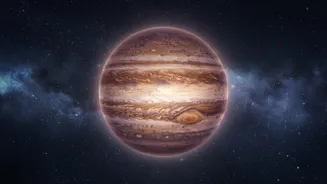
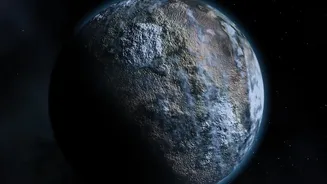
one of the universe's most fascinating oddities. They form like stars, from the collapse of massive clouds of gas and dust. But they never accumulate quite enough mass—about 75 times that of Jupiter—to ignite the nuclear fusion that makes stars shine. This has earned them the nickname 'failed stars'. Yet, they're also much more massive than gas giants like Jupiter, so they can't simply be called 'super-planets'. Instead, they exist in a unique category of their own, glowing dimly from the residual heat of their formation before slowly fading over billions of years. Unlike planets, most brown dwarfs are solitary wanderers, not tethered to a host star, making them perfect natural laboratories for studying atmospheric physics without outside interference.
The Old Weather Forecast
For years, our understanding of brown dwarf atmospheres came from a few dozen detailed observations combined with theoretical models. Scientists believed that as these objects cooled over time, their atmospheres would undergo predictable changes. Early models suggested that hotter brown dwarfs would have clouds made of silicates—essentially tiny grains of rock and sand. As they cooled, these clouds were expected to sink deeper into the atmosphere, allowing gases like methane to become more prominent in a relatively uniform transition. This process was thought to be broadly similar across all brown dwarfs of a similar temperature, much like following a standard recipe. Researchers expected to see large-scale storms, perhaps similar to Jupiter's Great Red Spot, but the overall evolution was considered a somewhat orderly process driven primarily by temperature.
A New Eye on the Sky: SPHEREx
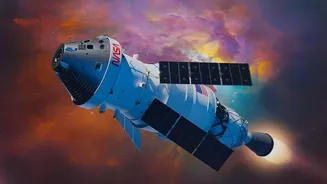
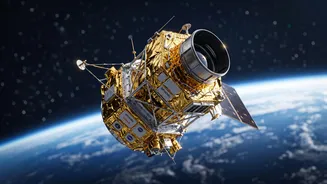
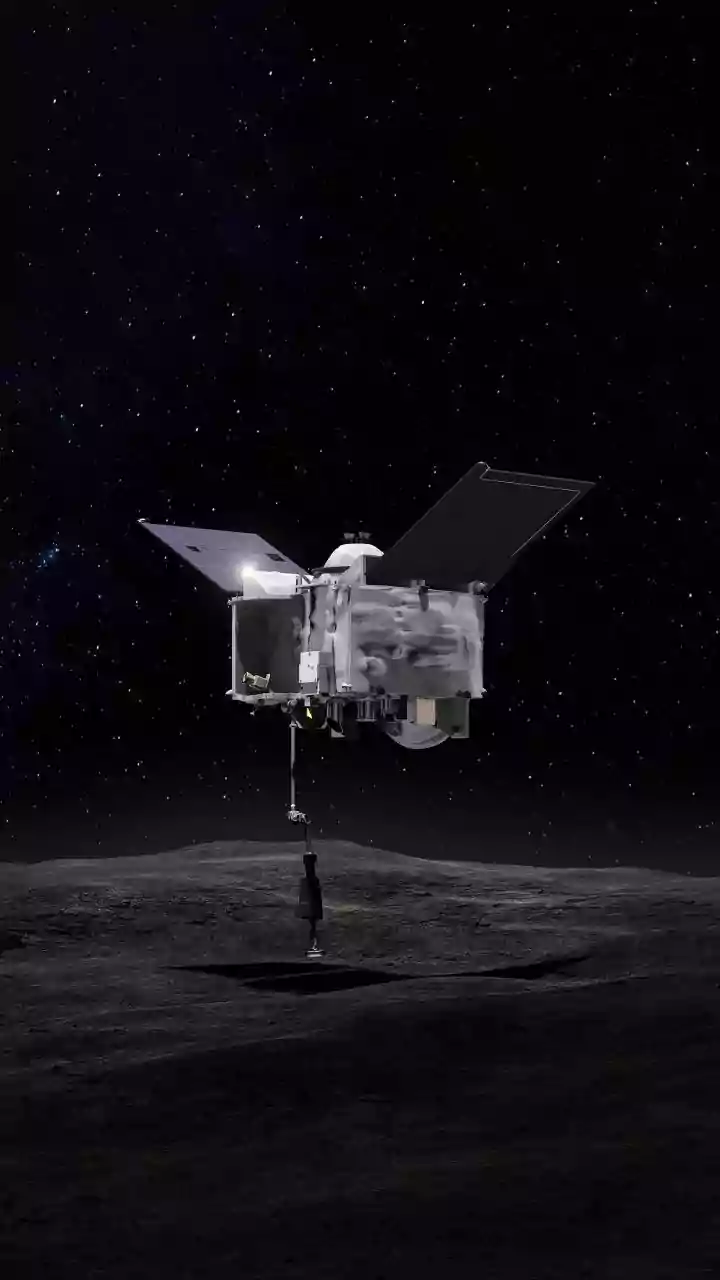
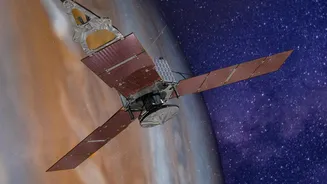
Launched in March 2025, NASA’s SPHEREx telescope is a game-changer. Its name stands for Spectro-Photometer for the History of the Universe, Epoch of Reionization, and Ices Explorer. Its primary mission is to map the entire sky in 102 different colours of infrared light, creating a massive 3D map of hundreds of millions of galaxies to study the origins of the universe. However, this powerful survey capability also makes it exceptionally good at finding and studying the dim, cool glow of brown dwarfs. While other powerful observatories like the James Webb Space Telescope have studied brown dwarfs, SPHEREx's ability to scan the whole sky in a wide range of infrared light allows it to analyze thousands of them, providing a much larger and more diverse sample than ever before.
A Menagerie of Mysterious Atmospheres
Recent findings from SPHEREx, based on an initial analysis of 37 nearby brown dwarfs, have thrown a wrench in the old models. The data shows that brown dwarf atmospheres are far more varied and complex than predicted. Even among brown dwarfs with the exact same temperature, their chemical makeups can look completely different. While SPHEREx confirmed the presence of molecules like water, methane, carbon dioxide, and carbon monoxide, it found that the transition from cloudy to clear, methane-rich atmospheres is not a smooth, predictable process. The current 'state_of_the_art' models simply cannot account for the diversity SPHEREx is seeing, struggling to match the data, especially around the temperatures where clouds are expected to break up. No two brown dwarfs are exactly alike, suggesting that other factors besides temperature, such as age, formation history, or rotation speed, play a much larger role than previously understood.
Why This Cosmic Weather Report Matters
Studying the weather on these lonely wanderers might seem abstract, but it has profound implications. Brown dwarfs serve as a vital bridge between the smallest stars and the largest planets. Their atmospheres are very similar to those of many giant exoplanets discovered orbiting other stars. It's often difficult to study exoplanet atmospheres because the blinding light of their parent star washes them out. Because brown dwarfs are isolated, they provide a clearer view into the atmospheric physics of giant, gaseous worlds. By understanding what drives the cloud patterns and chemical diversity on brown dwarfs, scientists can build much better models to interpret observations of exoplanets. This, in turn, helps in the grander search for understanding planetary systems beyond our own and the conditions that might make them habitable.