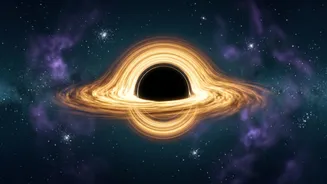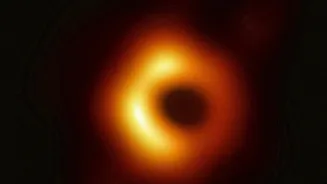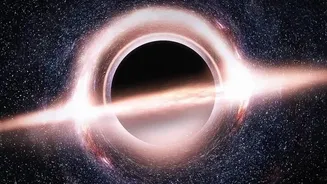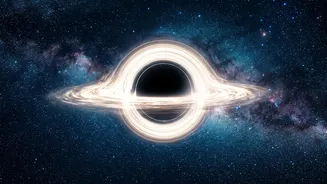




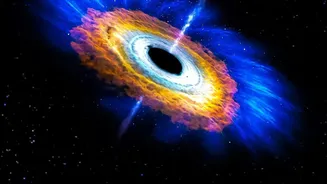
Ever dreamed of exploring the cosmos? A groundbreaking project now lets you hunt for one of the universe's greatest mysteries—hidden black holes—right from your computer. Here’s how you can become a cosmic detective and help solve a galactic puzzle.
A Cosmic Detective on Your Laptop
Astronomers
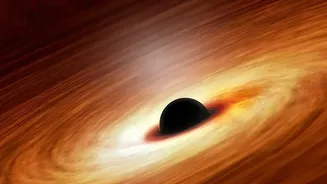
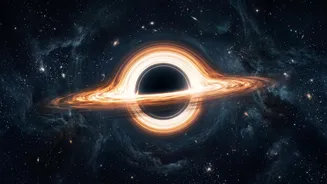
estimate there could be as many as 10 million to 100 million stellar-mass black holes in our Milky Way galaxy alone, yet they have only confidently identified around 70 so far. The rest are 'quiet'—not actively feeding on nearby material and therefore not emitting the tell-tale X-rays that give them away. To close this massive gap, a team of UK astronomers from the University of Southampton and the Open University launched 'Black Hole Hunters', a citizen science project hosted on the Zooniverse platform. The project invites anyone with a computer and an internet connection to help sift through vast amounts of telescope data to find these invisible giants. No prior experience in physics or astronomy is needed, just a keen eye for patterns.
Why Your Eyes Are Better Than an Algorithm
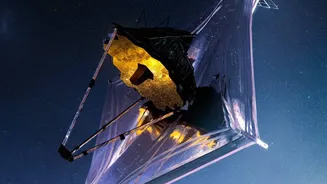
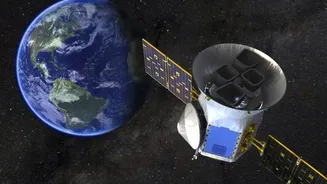
Finding these hidden black holes is an enormous task. The project currently uses data from NASA's Transiting Exoplanet Survey Satellite (TESS), which monitors the brightness of millions of stars. While artificial intelligence helps narrow down the search to about one million promising candidates, this is still too much data for a small team of professional scientists to analyze. This is where human perception excels. Volunteers are asked to look at graphs showing a star's brightness over time, known as light curves. While computers can get confused by other stellar phenomena, the human brain is exceptionally good at spotting the specific, subtle patterns that signal a black hole. Your contribution directly helps researchers decide where to point powerful telescopes next, saving valuable time and resources.
How to Become a Black Hole Hunter
Getting started is simple. Volunteers can visit the Black Hole Hunters project on the Zooniverse website. The platform provides a short tutorial showing examples of what to look for. The entire process is web-based, requiring no special software. You'll be presented with light curves and asked to identify whether they contain the unique signature the team is looking for. Since its launch, the project has attracted tens of thousands of volunteers who have made millions of classifications, but there is still a massive amount of data to review. The project is available in multiple languages, including Hindi, making it accessible to a global audience.
The Science of Self-Lensing
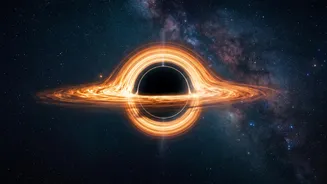
So, what exactly are you searching for? The project looks for black holes in binary systems, where a black hole orbits a normal star. These black holes are invisible, but their immense gravity gives them away. According to Einstein's theory of general relativity, a massive object can bend and focus light. When a black hole passes between its companion star and Earth, its gravity acts like a magnifying glass, briefly making the star appear brighter. This effect is called 'gravitational self-lensing'. On a light curve graph, this event appears as a distinct, sharp peak in brightness. By identifying these repeating peaks, volunteers can pinpoint star systems that may be hiding a black hole.
The Power of Citizen Science in India
The Black Hole Hunters project is part of a growing movement of 'citizen science' that is transforming astronomical research. In India, projects like RAD@home, the country's first citizen science astronomy platform, have already led to significant discoveries, such as a rare 'bow-and-arrow' shaped galaxy found by a volunteer. RAD@home, established in 2013, trains undergraduate students and enthusiasts to analyze data from telescopes like the Giant Metrewave Radio Telescope (GMRT) near Pune, focusing on black hole and galaxy co evolution. Other initiatives from the Pune Knowledge Cluster and the Inter University Centre for Astronomy and Astrophysics (IUCAA) also invite the public to participate in real research, proving that anyone with curiosity can contribute to our understanding of the universe.