








A Tale of Two Benchmarks
For decades, the global financial system ran on a benchmark called LIBOR, the London Interbank Offered Rate. It was the foundation for calculating interest on trillions of dollars' worth of financial products, including many variable-rate education loans
for studying abroad. Think of it as a wholesale price for money that lenders used as a starting point. However, after a major manipulation scandal and findings that it was no longer based on a robust market, global regulators decided to phase it out. Its main replacement, particularly for US dollar-denominated finance, is the Secured Overnight Financing Rate, or SOFR. This transition, which has been unfolding over the past few years, is now directly impacting new loans being issued.
Why This Global Shift Matters in India
The connection between a global benchmark and a student loan in India might seem distant, but it's direct. When Indian students take loans from banks or Non-Banking Financial Companies (NBFCs) to fund education in the US, UK, or Europe, those lenders are often operating in a global financial environment. Many peg their variable interest rates to these international benchmarks. A change in the US Federal Reserve's rates, for instance, can influence the RBI to adjust its own rates to manage capital flows, which in turn affects borrowing costs in India. The shift from LIBOR to SOFR is a structural change to this system. While designed to be more stable and transparent, the two rates behave differently, creating a new variable for lenders and borrowers to navigate.
The Impact on Your Loan's Interest Rate
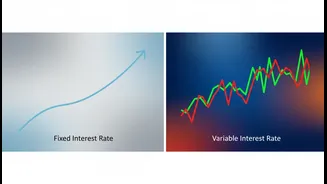
The primary complication arises from how variable interest rates are calculated. Your loan's rate is typically the benchmark rate (like SOFR) plus a 'margin' or 'spread' charged by the lender. While the switch from LIBOR to SOFR was designed to be as neutral as possible, SOFR is a secured, overnight rate, whereas LIBOR was an unsecured, forward-looking term rate. This means SOFR doesn't include a built-in risk premium for bank credit, making it less volatile in some ways but also less responsive to market stress. The key takeaway for students is that the predictability of their loan's interest rate may change. A variable-rate loan linked to SOFR could see its repayments fluctuate differently than one based on the old LIBOR system, making long-term cost estimation trickier.
Navigating the Autumn Loan Application
For students applying for loans for the autumn 2026 intake, this financial plumbing has practical consequences. The process, which already involves extensive documentation and tight deadlines for visa applications, now requires an extra layer of due diligence. When comparing loan offers, it's no longer enough to just look at the headline interest rate. It is crucial to ask lenders specific questions: Is the loan on a fixed or variable rate? If variable, what is the exact benchmark being used? What is the margin being charged above the benchmark? How often is the rate reset? Understanding these details is vital for accurately comparing offers from different lenders, including public sector banks, which can take weeks to process applications, and the faster but sometimes more complex NBFCs.
What You Can Do to Prepare
In this shifting environment, being proactive is your best strategy. Start your loan research early, ideally as soon as you begin shortlisting universities. This gives you time to understand the products offered by at least three to four different lenders. Create a detailed budget for your total cost of attendance, not just tuition, to know exactly how much you need to borrow. When you get a loan sanction letter, read the fine print about the interest rate structure carefully. If the terms are confusing, ask for a clear explanation. While you can't control global benchmarks, you can control how well-informed you are. Choosing a loan is a long-term commitment, and clarity on these new technical details can save you from financial stress down the road.