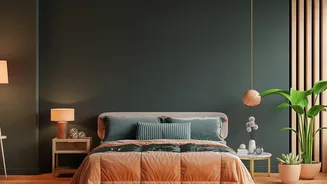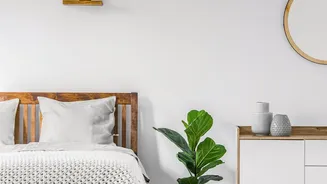





Decorating a small room on a budget presents a classic challenge: how do you add personality and style without creating clutter or breaking the bank? The answer could be simpler and more elegant than you think: origami wall art.
Why Origami Is Perfect for Modern Decor
The ancient Japanese art
of paper folding is about more than just creating cranes; it’s a versatile and sophisticated design tool. With its clean lines and geometric forms, origami adds texture, colour, and a three-dimensional element to a blank wall without overwhelming the space. Because it is lightweight and has a zero-footprint, it’s an ideal solution for apartments, dorm rooms, or any area where floor space is precious. Furthermore, the practice of folding paper is a mindful and relaxing activity, offering a therapeutic break from a chaotic world and allowing you to create something beautiful with your own hands.
Your Simple and Affordable Toolkit
Getting started with origami wall art is incredibly accessible and budget-friendly. You likely have most of what you need at home already. The primary material is paper, and you have a world of options. Standard origami paper, called 'kami', is inexpensive, thin, easy to fold, and comes in countless colours. For sturdier, more sculptural pieces, you might try 'Tant' paper, which has a slight texture and holds creases exceptionally well. You can also experiment with scrapbook paper, gift wrap, or even colourful pages from magazines for a unique look. Beyond paper, you’ll only need a ruler for crisp edges, scissors, and a simple adhesive like glue sticks or double-sided tape for mounting.
Beginner-Friendly Patterns with Big Impact
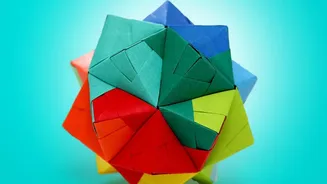
You don’t need to be an origami master to create stunning wall art. Many simple, modular patterns look incredibly effective when grouped. One popular and easy design involves folding a square into a 'pinwheel' or 'diamond' tile. By folding each corner of a square into the centre twice, you create a compact, geometric unit. Another option is creating simple butterfly shapes or classic fan folds. The key is repetition. Creating dozens of these simple units in a coordinated colour palette allows you to build a large, impactful piece from small, manageable parts. Search for tutorials on 'modular origami' or 'geometric origami tiles' to find endless inspiration.
Designing and Displaying Your Creation
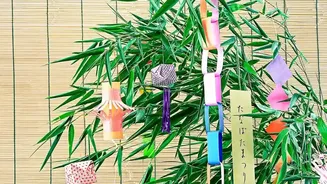
Once you have a collection of folded pieces, the fun of arranging them begins. A popular method is to create a geometric mural by attaching multiple pieces directly to the wall. You can form a grid, a honeycomb pattern with hexagons, or an ombre cascade of colours. For a more polished look, arrange and glue your origami tiles onto a piece of foam board or stiff cardboard, which can then be framed in a shadow box or hung as a single panel. This method protects the delicate paper and gives the art a professional finish. Another idea is to create a mobile by hanging folded pieces from a small branch or dowel, adding gentle movement and a whimsical touch to a corner of the room.