







More Than a Splashdown
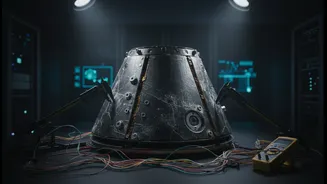
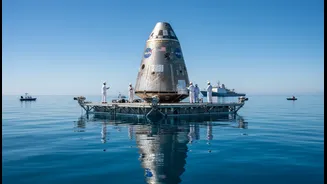
The mission after the mission begins at sea. Once the Orion capsule splashes down in the Pacific Ocean, a highly coordinated recovery operation swings into action. Led by NASA and the U.S. Navy, teams work to safely retrieve the spacecraft and its crew.
This process isn't just about hauling a capsule onto a ship; it is a masterclass in large-scale project management, marine logistics, and handling a vehicle that has just returned from the vacuum of space. For young professionals in India, this phase highlights skills that are transferable to managing complex industrial projects, maritime operations, and disaster response. The same precision required to recover a space capsule is valued in India's growing shipping, offshore energy, and infrastructure sectors.
The Heat Shield’s Story
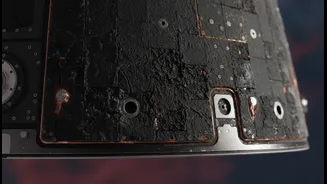
The most scrutinized component of the returned capsule will be its 16.5-foot-wide heat shield. This shield protects the capsule from temperatures reaching nearly 2,800 degrees Celsius during reentry. After the Artemis I flight, engineers discovered unexpected charring and erosion of the heat shield material. A thorough investigation followed, involving detailed sampling and advanced testing to understand the issue. For Artemis II, engineers will meticulously inspect the shield again. This process is a deep dive into materials science and a technique called non-destructive testing (NDT). NDT methods, such as ultrasonic and radiographic testing, allow engineers to find hidden flaws without damaging the component. These skills are not just for spacecraft; they are critical in India’s automotive, aviation, and manufacturing industries to ensure the safety and reliability of everything from car engines to aircraft wings.
A Treasure Trove of Data
Modern spacecraft are immense data-gathering machines. Throughout its journey, the Orion capsule records petabytes of information on every system, from navigation and life support to the performance of individual components. After the flight, engineers begin the painstaking process of downloading and analyzing this data. This is where data scientists and software engineers become the stars of the show. They create models, look for anomalies, and compare real-world performance against pre-flight simulations. For the tech-savvy youth in cities like Bengaluru and Hyderabad, this part of the mission is highly relatable. The skills required—data analytics, machine learning, and complex systems modelling—are precisely the talents that are driving India's digital economy and are in high demand across the IT sector and beyond.
From NASA to ISRO
The intense post-flight analysis of Artemis II is not happening in a vacuum. It provides a blueprint for excellence that has direct relevance to India's own ambitious space program. ISRO's Gaganyaan mission, which aims to send Indian astronauts into orbit, relies on the very same disciplines. Developing a human-rated launch vehicle, a reliable crew escape system, and advanced life support requires world-class expertise in systems engineering, materials science, avionics, and quality assurance. Furthermore, the rise of private Indian space-tech startups like Skyroot Aerospace and Agnikul Cosmos means that these skills are no longer just for government agencies. There is a burgeoning domestic ecosystem hungry for engineers and technicians who understand the rigors of building and testing hardware for space.
Your Career Launchpad
So, how can you get involved? The path to a career in aerospace starts with a strong foundation in STEM subjects. Degrees in mechanical, electrical, or aerospace engineering, materials science, or computer science are excellent starting points. But technical knowledge is only part of the equation. These roles also demand strong analytical and problem-solving abilities, attention to detail, and creativity. Look for internships, participate in university-level design competitions, and follow the work of ISRO and private players. The journey to space, whether for NASA or ISRO, is built by thousands of brilliant people on the ground. By studying the lessons from missions like Artemis II, you can better prepare yourself to be one of them.