






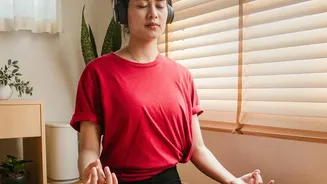
In our fast-paced world, feeling drained is all too common. But what if you could fight fatigue in just five minutes? Mindful breathing offers a powerful, quick, and accessible way to reset your nervous system and boost your energy.
The Science of Beating Fatigue with Breath
Exhaustion isn't just
physical; it's often a sign that your nervous system is overwhelmed. When we're stressed, our breathing becomes shallow, reducing oxygen flow and leaving us feeling foggy and tired. Mindful breathing works by intentionally changing your breathing pattern. This simple act can increase oxygen supply to the brain, activate the body's 'rest and digest' response, and calm the 'fight or flight' mode that drains our energy reserves. By consciously controlling your breath, you send a powerful signal to your body to relax, refocus, and recharge.
Energising Bellows Breath (Bhastrika)
Think of this technique as a natural shot of espresso. Bellows Breath, or Bhastrika, is a traditional yogic practice designed to invigorate the body and clear mental fog. It involves forceful inhalations and exhalations that mimic the action of a bellows, stoking your internal fire and providing an immediate energy lift. This practice rapidly increases oxygen in the blood, making you feel more alert.
How to do it: Sit comfortably with a straight spine. Take a powerful, deep breath in through your nose, then immediately exhale forcefully through your nose. Both the inhale and exhale should be active and create an audible sound. Start with a round of 10-15 breaths, then return to normal breathing and notice how you feel. Because it's so stimulating, it's best practiced in the morning or during an afternoon slump.
Box Breathing for Sustained Focus
When fatigue makes it hard to concentrate, Box Breathing (or Sama Vritti) can restore mental clarity. This technique is so effective at promoting calm under pressure that it's used by Navy SEALs and athletes. By creating a predictable, even rhythm, it helps regulate the nervous system, reducing the jittery effects of stress and improving focus without over-stimulating.
How to do it: Imagine drawing a box with your breath. First, inhale slowly through your nose for a count of four. Then, hold your breath for a count of four. Next, exhale slowly through your mouth for a count of four. Finally, hold your breath at the end of the exhale for a count of four. That completes one 'box'. Repeat this cycle for 2-5 minutes to feel more grounded and centred.
Diaphragmatic 'Belly' Breathing for Deeper Energy
Much of our daily fatigue is linked to inefficient, shallow chest breathing. Diaphragmatic or 'belly' breathing retrains your body to use its primary breathing muscle—the diaphragm—more effectively. This technique ensures a fuller oxygen exchange, which is fundamental to your body's energy production. It helps lower blood pressure, reduce muscle tension, and makes breathing feel less tiring over time.
How to do it: Lie down or sit comfortably. Place one hand on your upper chest and the other on your belly, just below your rib cage. Breathe in slowly through your nose, focusing on letting your belly rise as it fills with air, while your chest remains relatively still. Exhale slowly through your mouth or nose, feeling your belly gently fall. Practicing this for five minutes a day can build a foundation for deeper, more energising breath patterns.
The 4-7-8 Breath for a Calming Reset
While it may seem counterintuitive to use a calming breath to fight fatigue, much of our tiredness comes from an overactive nervous system. The 4-7-8 technique, developed by Dr. Andrew Weil, acts as a 'natural tranquilizer' for the nervous system. It activates the parasympathetic 'rest' state, helping to relieve the underlying stress that drains your energy.
How to do it: Sit with your back straight. Place the tip of your tongue against the ridge of tissue just behind your upper front teeth. Exhale completely through your mouth, making a whoosh sound. Close your mouth and inhale quietly through your nose to a mental count of four. Hold your breath for a count of seven. Exhale completely through your mouth, making a whoosh sound to a count of eight. This is one breath. Repeat the cycle three more times.