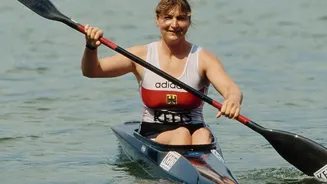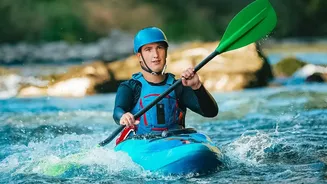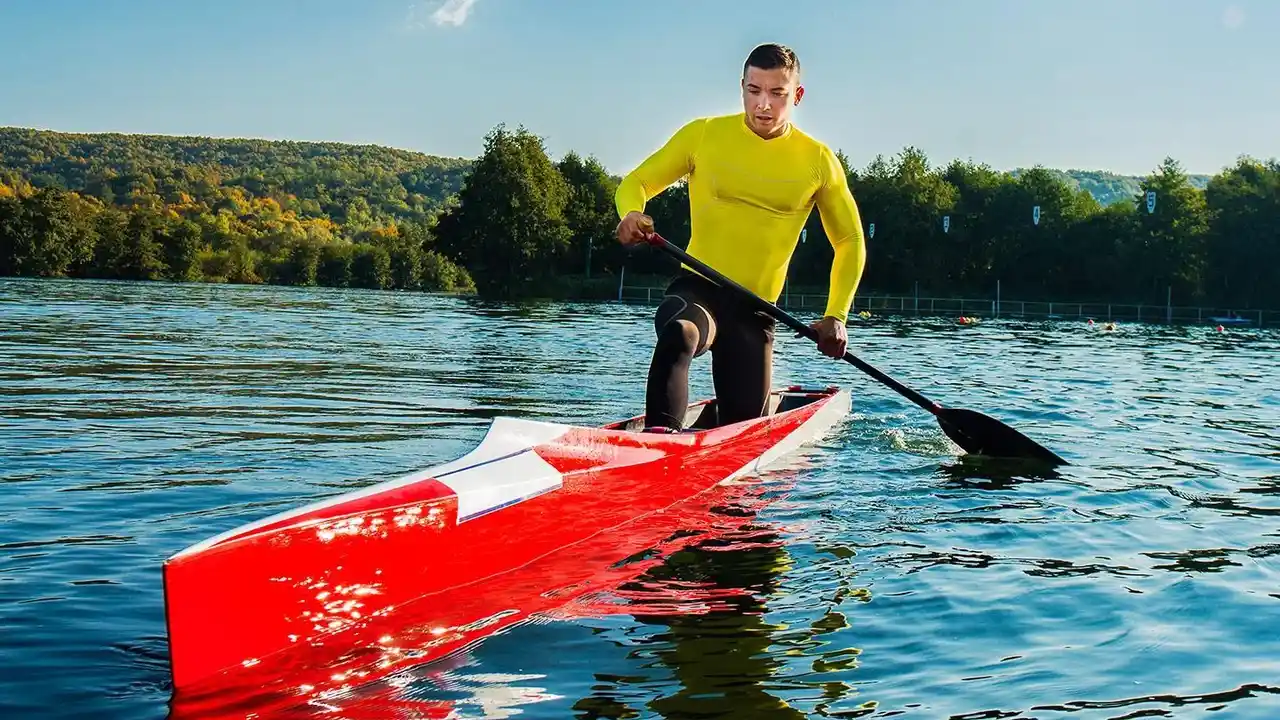







Kayaking and stand-up paddleboarding (SUP) are two of the most popular ways to enjoy the water. But when it comes to an upper-body workout, how do they compare? Let's break down the practical differences in endurance and strength building.
The Fundamental Movement: Pull vs. Push
At first glance,
both sports involve using a paddle to move through the water. However, the core mechanics are fundamentally different. Kayaking, from a seated position with a double-bladed paddle, is primarily a pulling and rotational motion. You plant a blade in the water and pull your body past it, engaging your core to rotate your torso for power. In contrast, stand-up paddleboarding involves a longer, single-bladed paddle used from a standing position. The stroke is more of a downward and backward push, using your entire body for leverage and stability.
Kayaking's Muscle Focus: Back and Biceps
If you want to target your back, kayaking is an upper-body powerhouse. The primary muscles driving the kayak forward are the large latissimus dorsi ('lats') in your back. Each stroke is a powerful pull that also heavily recruits your biceps, shoulders (deltoids), and the smaller muscles of your upper back like the rhomboids and trapezius. While your arms are certainly working, proper technique emphasizes using your larger, more powerful back and core muscles to do the heavy lifting, which builds significant pulling strength and muscular endurance over time.
Paddleboarding's Powerhouse: Core and Shoulders
Stand-up paddleboarding offers a more comprehensive full-body workout, but its upper-body demands are distinct. The constant need to balance on an unstable board means your core muscles—abs, obliques, and lower back—are firing nonstop. This provides a foundation of stability for your paddle stroke. The stroke itself heavily engages the shoulders and triceps as you reach forward and push the paddle down and back. While your back muscles are still involved, the emphasis is different from the concentrated pulling motion of kayaking. Many describe the SUP stroke as pulling your body to the paddle, using your core and lats for power.
The Endurance Factor: Repetition vs. Stability
The type of endurance each sport builds is also different. Kayaking often involves a higher cadence of repetitive strokes, building muscular endurance in the arms, back, and shoulders through constant motion. You can often sustain this for long periods. Paddleboarding endurance is a hybrid of muscular work and stabilization. Your upper body works during the stroke, but your legs, core, and stabilizer muscles are under constant tension to maintain balance. This dual demand can lead to a higher calorie burn per hour on average, as more of your body is working continuously just to stay upright.
So, Which Is 'Better' for Upper-Body Endurance?
There's no single winner; the 'better' option depends entirely on your fitness goals. If your primary goal is to build a strong back and arms with a focused, high-repetition upper-body workout, kayaking has the edge. It directly and intensely targets the major pulling muscles. If you're looking for a more holistic workout that builds incredible core strength, improves balance, and engages your upper body as part of a total-body system, paddleboarding is the superior choice. It develops functional strength by forcing your entire body to work in unison. While both are excellent low-impact cardiovascular exercises, they sculpt and condition the upper body in unique ways.