
The Sun's Volatile Temper
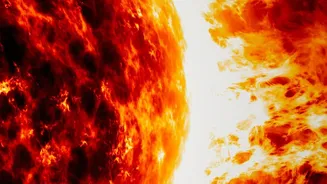
The Sun is not just a benign source of light and warmth; it has a dynamic and often violent nature. It periodically releases enormous bursts of energy and charged particles into space. These events, known as solar storms, can include solar flares (intense
flashes of radiation) and coronal mass ejections, or CMEs (massive clouds of solar plasma hurled into space). While many of these are harmless, an Earth-directed CME can have serious consequences. When these storms collide with our planet's magnetic field, they can trigger powerful geomagnetic disturbances that disrupt the technological backbone of modern society.
A Fragile Digital World
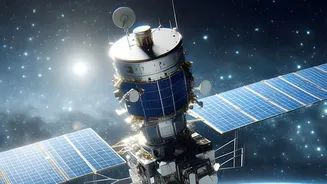
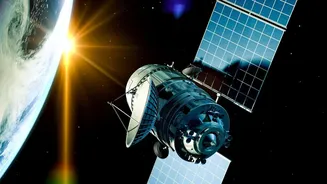
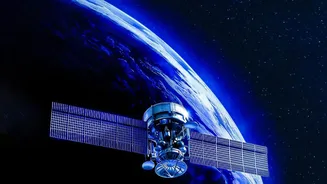
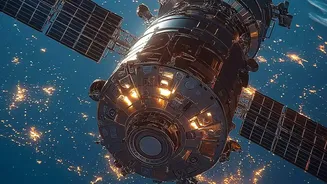
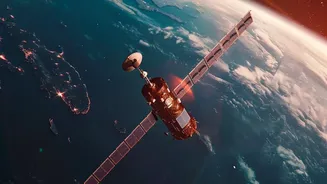
The primary risks are to our satellite networks and terrestrial power grids. For satellites in orbit, the high-energy particles from a solar storm can damage sensitive electronics, degrade solar panels, and disrupt communications. This affects everything from GPS navigation and financial transactions to weather forecasting. On the ground, geomagnetic storms can induce powerful, uncontrolled currents in long transmission lines. These geomagnetically induced currents (GICs) can overload transformers, causing them to overheat and fail, potentially leading to widespread and long-lasting blackouts. Historical events serve as stark warnings. The 1859 Carrington Event caused telegraph systems worldwide to fail, while a more moderate storm in 1989 led to a nine-hour blackout across Quebec, Canada.
India's Eye on the Sun: Aditya-L1
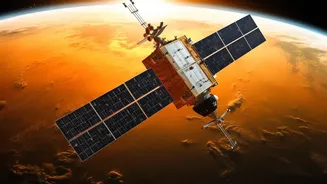
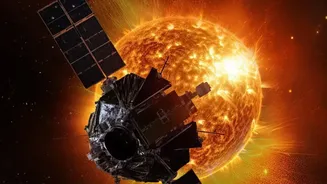
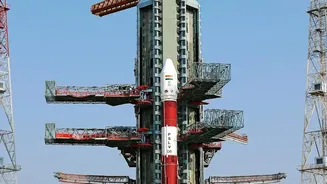
A crucial part of the global effort to strengthen our defences is improved monitoring, and India is playing a significant role. The Indian Space Research Organisation's (ISRO) Aditya-L1 mission, India’s first dedicated solar observatory, is a game-changer. Positioned at the Lagrange Point 1 (L1), it has an uninterrupted view of the Sun. Recently, scientists using data from Aditya-L1 made a breakthrough discovery, identifying small, short-lived brightenings in the Sun's atmosphere that appear hours before a major solar flare erupts. These pre-flare events, observed by the Solar Ultraviolet Imaging Telescope (SUIT) and other instruments on board, could serve as a vital early warning sign. This ability to detect the build-up to a flare provides critical lead time for taking protective measures.
From Prediction to Protection
This is where monitoring becomes defence. An early warning does not stop the storm, but it provides a crucial window for mitigation. With a forecast from missions like Aditya-L1 and its international counterparts, satellite operators can put their spacecraft into a protective 'safe mode,' turning off sensitive components to prevent damage. Similarly, power grid managers can take preventative action. They can redirect power loads, adjust grid configurations, or even temporarily disconnect vulnerable transformers to prevent catastrophic failure from GICs. Improved forecasting allows us to move from simply reacting to a crisis to proactively managing the risk, potentially saving trillions of dollars in economic damage.
A Coordinated Global Shield
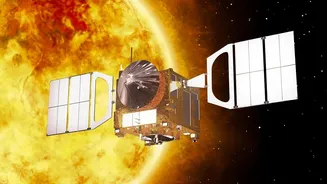
No single nation can defend against space weather alone. The effort is a testament to international scientific cooperation. Agencies like NASA in the United States, the European Space Agency (ESA), and ISRO in India work in concert, sharing data and models to create a more complete picture of solar activity. Initiatives under the umbrella of the United Nations and the World Meteorological Organization help coordinate these efforts, ensuring that data from various instruments is standardized and shared widely. This global network of observatories, both on the ground and in space, acts as a planetary alarm system. By combining different viewpoints and technologies, we can track solar storms from their birth on the Sun to their arrival at Earth, increasing the accuracy and timeliness of warnings for all.